




A class action filed against the No. 7 Beauty brand last week alleges its wipes labeled “biodegradable” cannot actually biodegrade under the conditions in which consumers dispose of them. The case is routine in structure. The legal theory underneath it is worth understanding for any company charging a sustainability premium for its products.
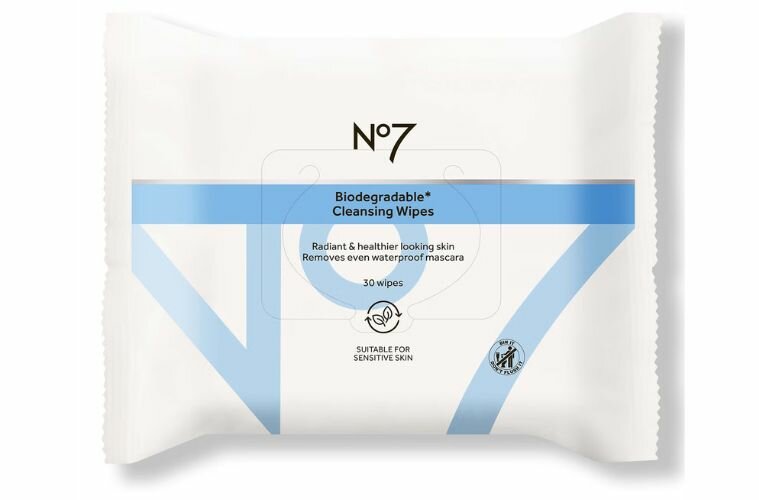
Three New York consumers filed a putative class action in the Southern District of New York on April 28 against Boots Retail USA Inc., the operator of the No. 7 Beauty brand. The complaint (Case 1:26-cv-03526) alleges that No. 7’s Biodegradable Makeup Removing Wipes and Biodegradable Cleansing Wipes display prominent, unqualified “biodegradable” claims on the front packaging — claims the plaintiffs say are false and misleading because the wipes will not biodegrade within a reasonably short period of time when disposed of in household trash, which is where the packaging itself directs consumers to put them.
No. 7 Beauty has not yet responded to the complaint. The case is at the initial filing stage and the allegations have not been proven.
Why the Green Premium Is the Core of the Legal Exposure in Biodegradable Claims Cases
Greenwashing litigation tends to focus on the accuracy of the environmental claim itself. What makes this complaint — and a broader category of similar cases — worth attention for sustainability and EHS teams is the financial mechanism the plaintiffs are using to establish damages. The complaint cites a 2025 study published in the Journal of the Agricultural and Applied Economics Association finding that consumers pay a measurable price premium for products labeled as biodegradable compared to conventional alternatives. It also references National Retail Federation research indicating that half to two-thirds of consumers say they will pay more for sustainable products.
That research isn’t in the complaint for academic interest. It’s there because it establishes that the “biodegradable” label has quantifiable economic value — and that when a company charges that premium for a claim that doesn’t survive regulatory scrutiny, the premium itself becomes the measure of damages. Plaintiffs argue they paid more than they would have for a product honestly marketed, or would not have purchased it at all. The price premium is what converts a misleading label into an economic injury under New York consumer protection law.
What the FTC Green Guides Say About Unqualified Biodegradable Claims and Landfill Disposal
The regulatory standard here is not ambiguous. The FTC’s Green Guides, codified at 16 C.F.R. § 260.8(c), state plainly that it is deceptive to make an unqualified degradable claim for items entering the solid waste stream if those items do not completely decompose within one year after customary disposal. The guides further specify that unqualified degradable claims for items customarily disposed in landfills are deceptive because landfills do not present conditions for complete decomposition within one year.
The complaint alleges that No. 7’s qualifying language — buried behind an asterisk on the back of the packaging and referencing EN13432 and ASTM D5511-18 testing standards — does not cure the problem. EN13432 is a European standard for industrial composting, not landfill conditions. ASTM D5511-18 tests biodegradation in anaerobic digestion environments. Neither standard reflects what happens to a wipe thrown in household garbage in a municipality that, like most in densely populated areas, lacks accessible composting facilities. The complaint also notes the particular irony that the back of the packaging instructs consumers in all capitals to dispose of the wipes with household waste — meaning the company simultaneously directs consumers to a disposal method that renders the biodegradable claim inaccurate.
What Sustainability and EHS Teams Should Take From This Case
The No. 7 case follows a pattern that has produced FTC enforcement actions, state attorney general investigations, and an increasing volume of private class action filings. The consistent thread is the same: a front-label environmental claim that is accurate under controlled test conditions but not under the actual disposal conditions consumers use, with qualifying language too technical or too obscure to constitute a meaningful disclosure.
For sustainability and EHS teams reviewing product claims, marketing copy, and supplier representations, the question this filing raises is not whether the testing that underlies an environmental claim is real. It’s whether the claim as consumers will reasonably understand it on the front label reflects what actually happens when they dispose of the product in the way they typically would. The FTC’s standard is consumer understanding under customary disposal conditions — not laboratory performance under optimized conditions.
The green premium research cited in the complaint is also a signal about where litigation is heading. As consumer willingness to pay for sustainability claims grows, the economic injury calculation in greenwashing cases becomes more concrete and more legally viable. A premium that once reflected marketing advantage is now, in litigation, the quantification of consumer harm.