




The global candle market is experiencing a strong resurgence as consumers increasingly embrace candles not only as decorative products but also as wellness, relaxation, and lifestyle essentials. Once primarily valued for basic illumination, candles have evolved into premium home fragrance products deeply connected to self-care, emotional well-being, interior aesthetics, and experiential living.
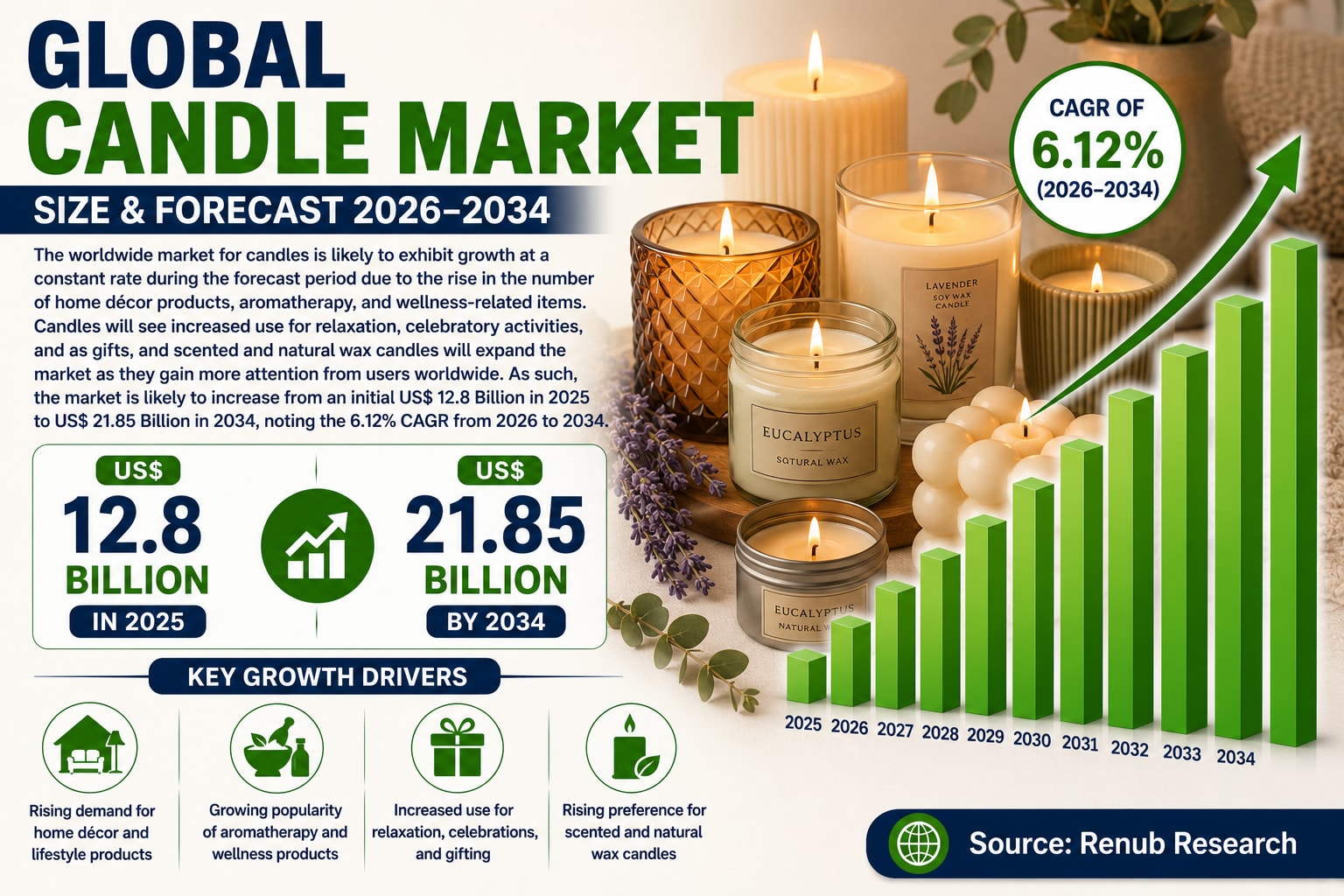
According to Renub Research, the global candle market is projected to grow from US$ 12.8 billion in 2025 to US$ 21.85 billion by 2034, registering a compound annual growth rate (CAGR) of 6.12% from 2026 to 2034.
The market’s growth is being fueled by rising demand for home décor products, growing interest in aromatherapy and wellness practices, increasing popularity of premium scented candles, and expanding consumer preference for eco-friendly and natural wax alternatives.
From luxury fragrance collections and artisanal candles to festive décor and meditation-focused wellness products, candles are steadily becoming a staple of modern lifestyle culture across the globe.
Candles Have Evolved Beyond Simple Lighting Products
Candles are traditionally made from wax and a wick that produces a controlled flame when lit. Historically manufactured using paraffin or tallow, modern candles increasingly use natural alternatives such as soy wax, palm wax, beeswax, and coconut wax.
Today, candles serve a wide range of purposes beyond lighting. They are used for:
Home décorAromatherapyRelaxation and meditationReligious and spiritual ritualsCelebrations and giftingHospitality ambianceWellness routines
Scented candles infused with essential oils and fragrance blends are especially popular because they create calming indoor environments while enhancing mood and emotional comfort.
Candles also carry emotional and cultural significance in many societies. They symbolize warmth, tranquility, celebration, and spirituality, making them widely accepted across multiple consumer segments worldwide.
In developed markets, candles are increasingly viewed as lifestyle and self-care products. In emerging markets, they still serve both practical and decorative functions, especially during power outages or festive occasions.
Home Décor and Lifestyle Trends Are Driving Demand
One of the strongest growth drivers in the candle market is the rising consumer focus on home décor and lifestyle enhancement.
Consumers today spend more time personalizing living spaces and creating aesthetically pleasing home environments. Candles are widely used to add warmth, elegance, fragrance, and ambiance to homes, restaurants, spas, and hotels.
Urbanization and rising disposable incomes are encouraging consumers to invest more heavily in decorative home accessories, including premium and designer candles. Social media platforms such as Instagram and Pinterest have also amplified interest in home styling trends, making candles an important element of modern interior aesthetics.
Seasonal demand continues to play a major role as well. Candles experience strong sales during:
ChristmasThanksgivingWeddingsFestivalsReligious celebrationsValentine’s DayHome gatherings
Hospitality businesses also rely heavily on candles to improve guest experiences and create calming environments.
In April 2025, Georgia-based artisanal brand Himalayan Handmade Candles launched its Spring 2025 fragrance collection featuring eco-conscious candle vessels and scents such as Lilac & Leather and Woodland Mist.
This reflects the increasing consumer demand for handcrafted and sustainable home fragrance products.
Aromatherapy and Wellness Trends Are Expanding the Market
The growing global emphasis on wellness, mental health, and stress management is significantly strengthening the candle market.
Consumers increasingly seek products that promote relaxation, mindfulness, emotional balance, and calmness. Aromatherapy candles infused with essential oils have become popular tools for meditation, yoga, spa routines, and self-care rituals.
Fragrances such as lavender, eucalyptus, sandalwood, vanilla, citrus, and chamomile are commonly associated with mood enhancement and stress relief.
The rise of wellness culture has transformed candles into more than decorative objects—they are now integrated into daily lifestyle routines. Wellness-focused consumers often use candles during:
Yoga sessionsMeditation practicesHome spa treatmentsBath ritualsRelaxation routinesSleep preparation
At the same time, interest in eco-conscious wellness products is driving demand for soy wax, beeswax, and other natural candle materials.
In June 2025, Goose Creek introduced a collaborative candle collection inspired by Nickelodeon’s SpongeBob SquarePants, blending entertainment themes with lifestyle fragrance products.
The launch highlights how candles are increasingly merging with broader wellness and lifestyle branding trends.
Product Innovation and Premiumization Are Strengthening Consumer Appeal
Continuous innovation is another major factor driving growth in the global candle industry.
Manufacturers are increasingly introducing:
Artistic candle designsLuxury packagingPersonalized candlesMulti-wick formatsEco-friendly containersLong-lasting wax formulationsUnique fragrance combinations
Premium candles have become particularly important in developed markets where consumers are willing to spend more on high-quality lifestyle products.
Luxury candles often emphasize craftsmanship, fragrance sophistication, elegant presentation, and emotional storytelling. Designer collaborations and limited-edition collections further increase consumer engagement.
Personalization has also become a strong trend, especially in gifting categories. Engraved jars, custom fragrance combinations, and seasonal gift sets are increasingly popular among consumers seeking unique experiences.
In February 2024, Jo Malone London partnered with Paddington Bear to launch a limited-edition collection featuring “Orange Marmalade Cologne” alongside scented candles and gift sets.
Such collaborations demonstrate how premium branding and emotional storytelling are becoming central to candle marketing strategies.
Natural Wax Candles Are Gaining Strong Momentum
Natural wax candles are increasingly replacing traditional paraffin-based products as consumers become more environmentally conscious.
Palm Wax Candles
Palm wax candles are gaining popularity because they are biodegradable, clean-burning, and visually distinctive due to their crystalline appearance.
These candles are particularly attractive in premium décor and hospitality applications. However, sustainability concerns related to palm oil sourcing have increased pressure on manufacturers to use certified sustainable palm oil supplies.
Soy Wax and Beeswax Candles
Soy wax and beeswax candles are also growing rapidly due to their eco-friendly image and cleaner burning properties. Consumers increasingly associate these products with healthier indoor environments and sustainable living.
The shift toward natural wax alternatives is becoming one of the defining trends of the modern candle market.
Luxury Candles Are Becoming Lifestyle Statements
The luxury candle segment is expanding rapidly as candles increasingly become status-oriented lifestyle products.
Consumers are no longer purchasing candles only for utility—they are purchasing them for atmosphere, emotional experience, craftsmanship, and aesthetic value.
Luxury candles are especially popular in:
High-end homesBoutique hotelsSpasWellness studiosDesigner retail spaces
Premium fragrance profiles, elegant packaging, artisanal craftsmanship, and exclusive branding all contribute to higher consumer spending in this category.
As consumers increasingly prioritize experiential living and wellness-focused environments, luxury candles are expected to remain one of the fastest-growing market segments.
Pillar and Taper Candles Continue to Hold Cultural Importance
Traditional candle formats continue maintaining strong demand globally.
Pillar Candles
Pillar candles remain popular because of their durability, versatility, and decorative appeal. These candles are commonly used in lanterns, centerpieces, hotels, and ceremonial settings. Their long burn time and visual elegance continue supporting demand.
Taper Candles
Taper candles maintain cultural significance due to their association with weddings, religious rituals, fine dining, and traditional interior décor. Their elegant appearance makes them especially popular in hospitality and ceremonial applications.
As consumers continue embracing traditional décor aesthetics, both pillar and taper candle segments are expected to remain relevant.
Supermarkets and Retail Chains Continue Expanding Market Access
Supermarkets and hypermarkets play a major role in the global candle market by increasing accessibility for mass-market consumers.
Impulse purchasing behavior during holidays and festive seasons significantly boosts candle sales within retail stores. Improved packaging, visual merchandising, and seasonal displays also support retail growth.
In developed economies, retail chains increasingly offer premium and eco-friendly candle selections, while emerging markets benefit from expanding availability of affordable decorative candles.
Online retail is also becoming increasingly important as consumers seek broader fragrance selections and customized gift products.
The United States Remains One of the Largest Candle Markets
The United States continues to represent one of the world’s largest candle markets due to strong consumer spending on home décor, wellness, and seasonal products.
Scented candles dominate the U.S. market, especially within categories associated with relaxation, self-care, and luxury living. Holiday seasons such as Christmas, Halloween, and Thanksgiving generate particularly strong sales.
Consumers increasingly prefer sustainable candle products made from soy wax and beeswax as environmental awareness grows.
In July 2023, Yankee Candle launched its “Daydreaming of Autumn” seasonal collection featuring fragrances such as Pumpkin Maple Crème Caramel and Spicy Sangria.
The popularity of seasonal fragrance collections remains a key driver of the U.S. market.
The United Kingdom Market Reflects Sustainability Preferences
The UK candle market is heavily influenced by wellness trends, sustainable living, and home ambiance preferences.
British consumers increasingly seek candles made from natural waxes with recyclable packaging and cruelty-free ingredients. Scented candles remain especially popular during colder months and festive seasons.
Private-label products from supermarkets and home décor retailers are also contributing significantly to market expansion.
In February 2024, Jo Malone London introduced its limited-edition Paddington Collection celebrating British heritage and fragrance culture.
Saudi Arabia’s Candle Market Benefits from Luxury Hospitality Growth
Saudi Arabia’s candle market is growing steadily due to rising disposable incomes, luxury hospitality expansion, and increasing interest in premium home décor.
Candles are commonly used in homes, luxury hotels, restaurants, and spas to create ambiance and enhance guest experiences. Fragrances inspired by oud, musk, and floral notes are especially popular because they align with regional fragrance preferences.
The expansion of tourism and hospitality projects under Saudi Arabia’s economic diversification initiatives is expected to continue supporting market growth.
Environmental Concerns and Competitive Pressures Remain Challenges
Despite strong growth prospects, the candle industry faces several important challenges.
Traditional paraffin candles are petroleum-based and may release soot and volatile organic compounds (VOCs), raising concerns about indoor air quality. Increasing environmental awareness and regulatory scrutiny are pushing manufacturers toward cleaner-burning alternatives.
At the same time, sourcing sustainable raw materials such as soy wax and beeswax can be affected by agricultural supply volatility.
The market is also highly competitive, with local, regional, and global brands competing across both premium and mass-market categories. Private-label products from major retailers continue putting pressure on pricing and margins.
Manufacturers must therefore balance innovation, sustainability, quality, and affordability to remain competitive.
Final Thoughts
The global candle market is evolving into a dynamic lifestyle and wellness industry shaped by emotional connection, sustainability, and experiential living.
As consumers increasingly prioritize home comfort, mindfulness, self-care, and aesthetically pleasing environments, candles are becoming far more than simple household products. They now represent relaxation, personal identity, ambiance, and emotional wellness.