




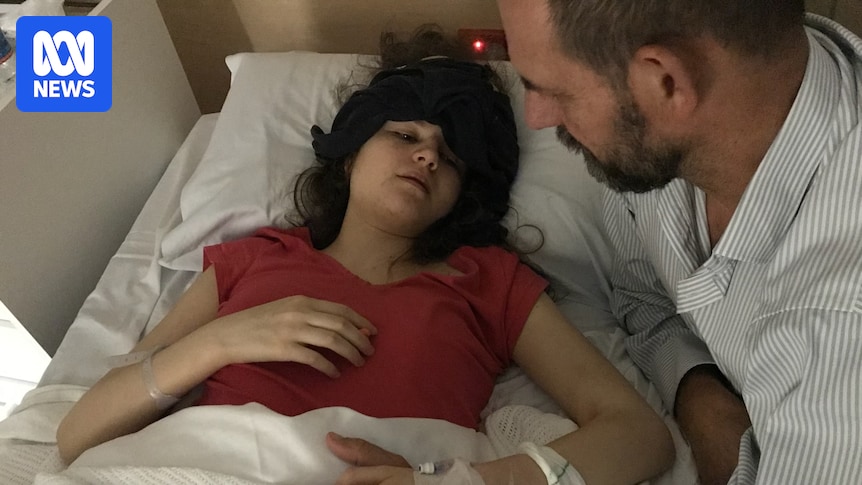
Ella Engel spent her late teens and early 20s isolated in her own bedroom.
She felt chronically fatigued, in pain and prone to dizzy spells or fainting when she stood up.
Ms Engel went eight years without any outside visitors and four years without seeing her own brother, who lived in the room next door, due to her extreme sensitivity of sound, light and touch.
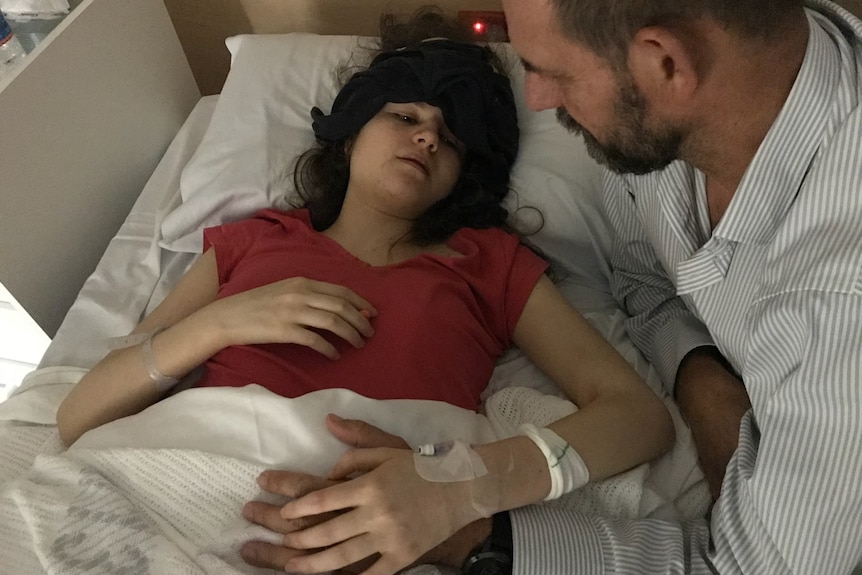
Ella Engel, pictured with dad John, was hospitalised multiple times as her condition deteriorated. (Supplied: Ella Engel)
In the years leading up to her isolation, Ms Engel met nearly 40 different doctors and specialists, seeking a diagnosis or way to ease the severity of her symptoms.
“Every appointment felt like starting over, retelling the same story, answering the same questions,” she said.
“I felt reduced to a case file, a cluster of symptoms, rather than a young girl watching her life progressively narrow.”
After multiple misdiagnosises, hospitalisations and a surgical intervention later deemed unnecessary, Ms Engel met GP and researcher Richard Schloeffel, who diagnosed her with a very severe form of myalgic encephalomyelitis/chronic fatigue syndrome (ME/CFS).
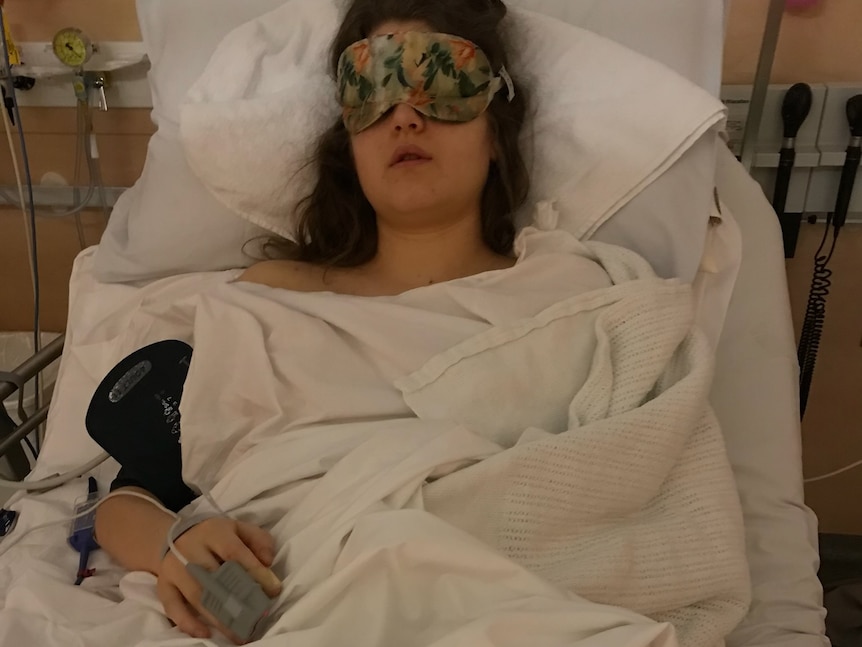
At her most unwell, Ella Engel could only communicate by blinking or wiggling her pinky finger. (Supplied: Ella Engel)
Ms Engel is not the only one who has struggled to get answers. There is no single test for ME/CFS and people wait an average of six years for a diagnosis, often missing out on early intervention.
Now, eight years on, Ms Engel’s blood is helping Dr Schloeffel and a team of Australian researchers learn more about ME/CFS.
She and 60 other people with the condition donated blood samples as part of a study recently published in Cell Reports Medicine, investigating whether ME/CFS was associated with biological changes in the body at a cellular level.
When compared with blood samples from another small group of healthy volunteers, there appeared to be differences in immune cells and molecules involved in energy production in the blood of people with ME/CFS.
“This study provides compelling evidence that ME/CFS is associated with dysfunction across multiple biological systems, challenging its dismissal as a psychological disorder,” the researchers wrote.
While the small study had limitations and more work was needed to demonstrate ME/CFS caused cellular dysfunction, other experts said the findings were a step in understanding biological processes underlying the debilitating illness.
Having more information about biological processes could help researchers develop tests for the condition in the future.
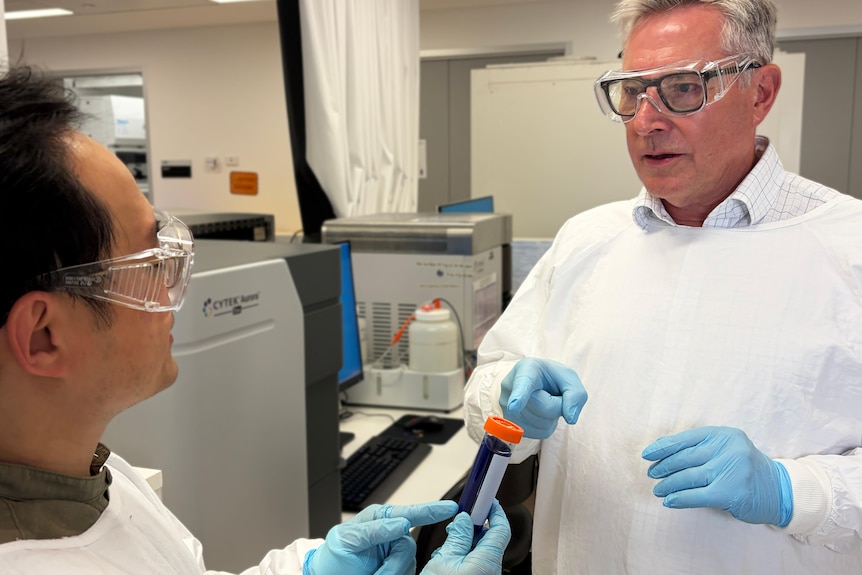
Richard Schloeffel, right, diagnosed Ella Engel and was one of the study’s authors. (Supplied: Phil Carey)
What is ME/CFS?
ME/CFS is a complex condition, characterised by extreme fatigue and other symptoms that make it hard to function, such as memory loss, pain, dysfunctional sleep and dizziness.
Dr Schloeffel, who has seen about 6,000 patients with ME/CFS over his 46 years as a doctor and now works as a clinical senior lecturer at the University of Sydney, said the condition’s hallmark feature was post-exertional malaise (PEM).
That is when symptoms worsen following physical or mental activity.
It is unclear what causes ME/CFS, but it can be triggered by viral or bacterial infections, injury or environmental exposures.

Ella Engel grew up a healthy kid, but her health started to sharply decline after a series of viral infections. (Supplied: Ella Engel)
In Australia, about 250,000 people are living with ME/CFS, with women about twice as likely to live with the condition as men.
Penelope McMillan, spokesperson for advocacy group ME/CFS Australia, said the true figure of Australians with the condition was about 500,000 if people with long COVID who met the diagnosis criteria were included.
But Ms McMillan, who also has ME/CFS, said unless you “almost trip over a knowledgeable clinician” the chances of getting a diagnosis were low.
“And that’s still not accounting for all the people who never get a diagnosis.”
Many patients, like Ms Engel, experience a diagnosis of exclusion, where medical professionals rule out other possibilities before considering ME/CFS.
“A system that relies on exclusion rather than identification leaves enormous room for error,” Ms Engel said.
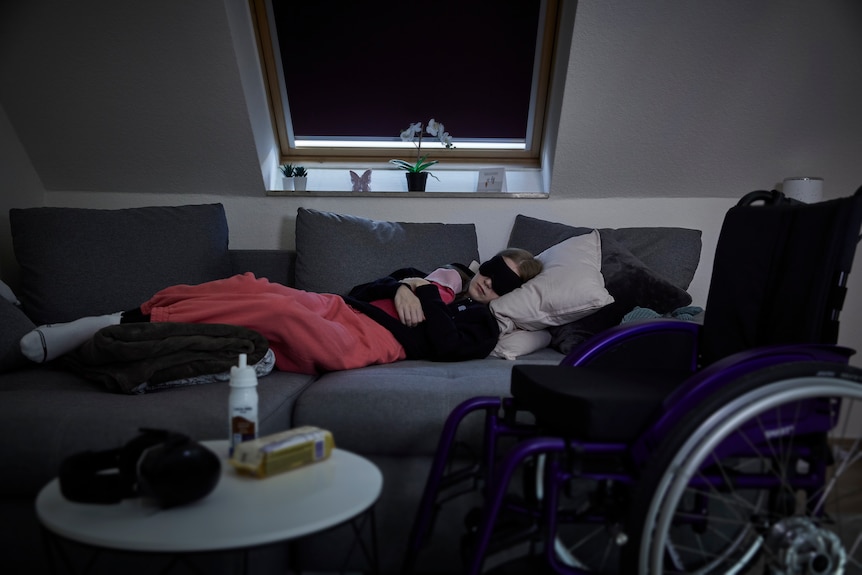
Doctors aren’t sure why ME/CFS affects twice as many women as men. (Supplied: German Association for ME-CFS/Sergej Presis)
Finding a way to test for ME/CFS with patients
To find out what was happening at a biological level in people with ME/CFS, a team led by Benjamin Heng, a research fellow at the University of Sydney, compared the cellular function of people with the condition to healthy volunteers of the same age and sex.
Dr Heng said energy production in the immune cells of people with ME/CFS was low and not “geared towards responding to pathogens”.

Benjamin Heng and Richard Schloeffel are working together on the complex study. (Supplied: Phil Carey)
Researchers also observed elevated plasma proteins in people with the condition, which Dr Schloeffel, a study co-author, said were often associated with circulation issues.
“If there’s disturbance in the vascular system, disturbance in the immune system, disturbance in the cell energy function, that would explain why people [with ME/CFS] have 200 or 300 symptoms,” he said.
“Because every tissue and organ in the body is impacted by this illness.”
Using machine learning, Dr Heng’s team then generated a series of laboratory tests he said could, in future, be used to help identify patients with ME/CFS.
Work is now underway to validate these tests that measure for a broad range of cellular function.
If validated, the tests could be used to help diagnose people with ME/CFS easier and earlier.

ME/CFS is a complex illness where extreme tiredness and other symptoms reduces a person’s ability to function. (Supplied: German Association for ME-CFS/Lea Aring)
Study size ‘significant’ for an in vitro study
The study has a relatively small sample size, involving 122 people in total.
But Emma Tippett, a Burnet Institute clinical research fellow who did not contribute to the study, said the group size was “significant” for this type of research.
“This figure of 61 [ME/CFS patients] is actually quite significant for an in vitro study, usually they’re closer to 10 or 20 [participants],” she said.
Dr Tippett said in vitro studies, which involved extracting blood from a person and running complex blood tests, were “extremely expensive and extremely time-consuming”.
“You are really limited in the number of specimens you can process from a resource prospective as well as a data productive point of view,” she said.ABC Health in your Instagram feed
Dr Tippett pointed out limitations in the study, such as a slightly uneven number of male participants: 23 healthy men and 14 men with ME/CFS.
“While it wasn’t significantly different, it might have an impact on findings,” she said.
Patients involved in the research were also at different stages in their disease process, Dr Tippett explained, with potentially different triggers for the condition.
But, even considering these limitations, Dr Tippett said the study was sound and helped strengthen researchers’ understanding of the complex condition.
“I was very happy to see this study, which confirmed some of the previous findings for ME/CFS as well as pushes forward some of our understanding,” she said.
Ms Engel’s health journey continues
Today, Ms Engel considers herself “one of the lucky ones” after regaining some of her mobility.
With help from Dr Schloeffel to manage her symptoms, Ms Engel has gone from having very severe, to moderate ME/CFS.
“Many people with ME don’t recover or notice any improvements,” she said.
She is grateful for the simple things in life, such as watching the sunrise, walking along the beach, showering by herself and eating a meal at the table with her mum and dad.

Ella Engel’s mum Sally Andrews, right, has been by her side every step of the way. (ABC News: Adam Griffiths)
“While my health has improved, I’m still navigating ongoing concerns and know I have further to go,” she said.
“Being part of research like this gives me hope that more effective treatments, and perhaps one day a cure, are within reach.”