




For cancer patients, treatment can mean hours in an infusion chair — tired, nauseous, far from home and often without easy access to healthy food.
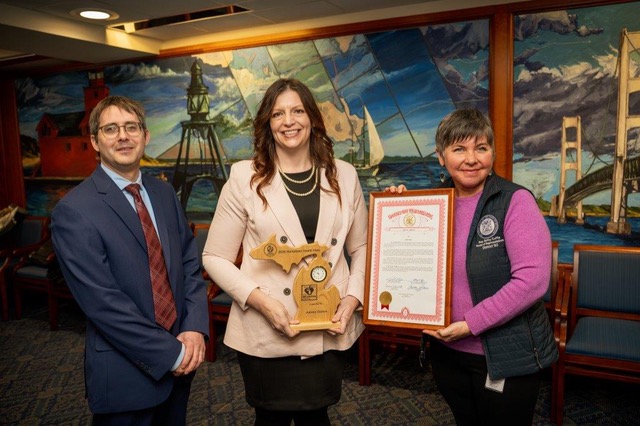
Ashley Ochoa (pictured, center) saw that challenge firsthand at Munson Healthcare’s Cowell Family Cancer Center. Some patients were spending up to six hours receiving chemotherapy. Others were traveling long distances, managing mobility issues, or facing financial stress that didn’t always show up on paper.
Her response: Fuel For Recovery, a program that delivers protein-packed smoothies, healthy meals, grocery vouchers and nutrition support to patients undergoing lengthy infusion treatments.
“We want to make sure the patient gets what they need when they need it,” Ochoa says.
Since launching in April 2025, the program has delivered 186 smoothies and 570 lunches through Oryana’s Sprout Café at the cancer center. Patient surveys show 86 percent said the program removed a barrier to getting nutrient-dense food, while 61 percent reported improved energy and overall well-being.
Ochoa, now Coordinator of Coding Operations for the Oncology Service Line at Cowell, developed the program with input from Munson nutritionists. It supports patients whose infusion therapies last four hours or more, while also offering grocery coordination and help from oncology nutritionists through local store apps.
For Beulah resident Karin Miner, who began chemotherapy for ovarian cancer in October, the program became a bright spot during difficult days.
“It was actually the highlight of the day and something to look forward to on a not-so-fun day,” Miner says.
Miner received six vouchers for meals or smoothies while undergoing six-hour infusion treatments. She says knowing food support was available brought reassurance during an overwhelming time.
Ochoa says that is exactly the point. Fuel For Recovery is designed not only to strengthen patients physically, but to ease the emotional strain of cancer treatment.
“Cancer patients are often overwhelmed,” she says.
For her work, Ochoa received a Hometown Health Hero Award from the Michigan Department of Health and Human Services, joining previous Munson honorees Paul Bock and Tammie Budrow.
Munson officials say the program is already having an impact beyond the patients it serves.
“Ashley’s work on the Fuel for Recovery program is an inspiring example of how innovation, compassion, and collaboration come together to directly improve the lives of our patients,” says Kathy LaRaia, Interim President of Munson Medical Center and Vice President of Oncology & Professional Services.
While Ochoa says there is interest in expanding the program beyond cancer care, financial and logistical hurdles remain. For now, Fuel For Recovery is helping address a basic but critical need: making sure patients have the nutrition to keep fighting.