




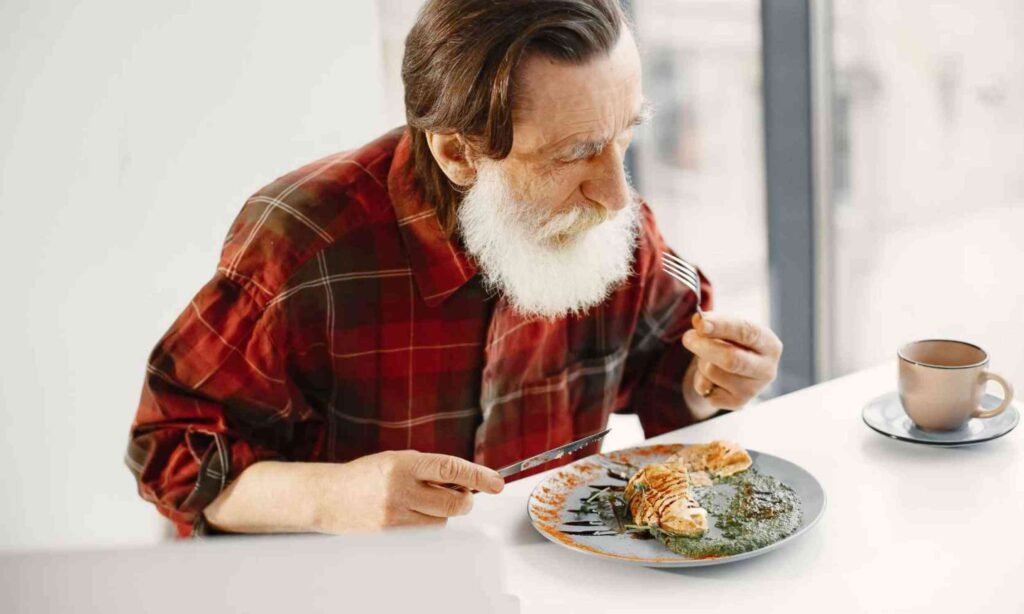
Yogurt at breakfast, a chicken sandwich for lunch, maybe beans at dinner. Most adults walking past 60 figure their plate is doing its job. They learned the basics decades ago, and the habits feel solid.
A new look at nearly 40,000 Europeans tells a different story. A surprising number are slipping below a threshold their bodies depend on – something that shows up not in the mirror, but in the things they can no longer do.
A quieter decline

Aging chips away at muscle slowly. Doctors call the loss sarcopenia, and older adults shed strength faster than weight – the consequences showing up as broken hips and lost independence. What has been harder to predict is when the slide begins.
A team led by Rizwan Qaisar, Ph.D., at the University of Sharjah went looking for an early warning. Working with collaborators across the Middle East and Europe, the researchers leaned on diet to find clues hidden inside ordinary eating habits.
Tracking 38,000 Europeans
Data came from SHARE, the Survey of Health, Ageing and Retirement in Europe. Records from 38,073 people aged 50 and older across 27 countries. Two years later, a second check.
That follow-up asked about everyday tasks: walking 100 meters, climbing stairs without resting, stooping to pick things up, reaching overhead, bathing, shopping, using the toilet.
Diet was measured by frequency. Each participant said how often they ate dairy, how often they ate legumes or eggs, and how often they ate meat, fish, or poultry.
Researchers folded those answers into one score, weighted by how much protein each food group typically delivers: 8 grams per 100 grams of dairy, 12 for eggs, 20 for meat.
Anyone in the bottom 10 percent counted as a low-protein eater. About 9.5 percent of the sample landed there. Scores do not measure grams on a plate – they capture the rough outline of a habit.
Where the men struggled
For men, the most consistent signal was grip. Handgrip strength is one of the cleanest health markers doctors have in their toolkit, tracking with mortality risk in research on aging adults.
Men with the lowest protein scores were 39 percent more likely to fall under the strength threshold between ages 50 and 65, and 35 percent more likely past 66.
Similar patterns showed elsewhere. Pulling or pushing a heavy chair was 44 percent harder for low-protein men aged 50 to 65, and older men had a 47 percent higher chance of struggling with bathing.
Family members tend to notice that kind of detail well before anyone uses the word “frail.”
Where the women struggled
Women’s patterns looked different. Grip stayed close to expected ranges in the younger group. But mobility broke down earlier.
Walking 100 meters was 51 percent harder for low-protein women aged 50 to 65. Stooping or kneeling slipped by about 20 percent. Reaching overhead, the same.
Shopping stood out. Women in that age bracket who ate the least protein had 65 percent higher odds of struggling to shop for groceries.
By 66 and older, that gap narrowed to 22 percent – still significant, but the early decade looked surprisingly fragile. What came next was starkest.
Twice the odds
Among women aged 50 to 65 with the lowest protein intake, the odds of having difficulty using the toilet were more than double – an odds ratio of 2.27. No other group came close on any task in the analysis.
Women that age are not what most people picture when they think of toileting struggles. No large study before this had broken out the early-50s to mid-60s window by sex and diet.
Results hint that anabolic resistance – the body’s slowed response to protein with age – may set in earlier in women than the field assumed.
Protein and older adults
Muscle in older adults appears to need a stronger signal from dietary protein to maintain itself, particularly from leucine-rich foods like meat and dairy.
Exactly why that happens is still being worked out, but the pattern holds across research on the topic.
What older adults are advised to eat reflects that. Anyone over 65 should take in at least 1 gram of protein per kilogram of body weight per day, up from 0.8 grams for younger adults.
A striking share of Europeans never get there. Many do not know the threshold exists.
Protein intake was ranked by food frequency, not measured in grams. Follow-up lasted two years – long enough to catch early decline, but too short to track long-term progression. Most functional outcomes relied on self-reports rather than direct performance tests.
What changes from here
Signals are modest but consistent: older adults eating the least protein lose strength, mobility, and small daily independences first.
Until this paper, no review had cleanly broken the risk down by both sex and age decade. New numbers reveal a clear split – men losing grip, women losing function – that earlier work glossed over.
Doctors counseling patients in their 50s now have something concrete to flag. A simple food frequency check could become an early screen, especially for women.
And the public health message gets sharper: protein guidance for older adults cannot stay one-size-fits-all.
The study is published in Nutrients.
—–
Like what you read? Subscribe to our newsletter for engaging articles, exclusive content, and the latest updates.
Check us out on EarthSnap, a free app brought to you by Eric Ralls and Earth.com.
—–