



Key Takeaways:Beauty maximalism replaces clean-girl perfection with visible, expressive theatricality.TikTok and Pinterest is accelerating emotional, color-driven makeup experimentation trends worldwide.The Met Gala confirmed makeup’s evolution from enhancement into visual storytelling.
Perfection and the “clean girl” had a good run. Then came the era that BeautyMatter dubbed the “messy girl,” but where is beauty now?
Somewhere between the glitter-streaked tears of Euphoria, the Taylor Swift–approved chrome freckles of Fazit, and the high-impact glam of pop stars like Zara Larsson—with blown-out blush, “glass skin,” and hyper-glossed lips pushed to camera-ready extremes—beauty has quietly shifted away from the pursuit of polish and towards something far more intentional: visibility.
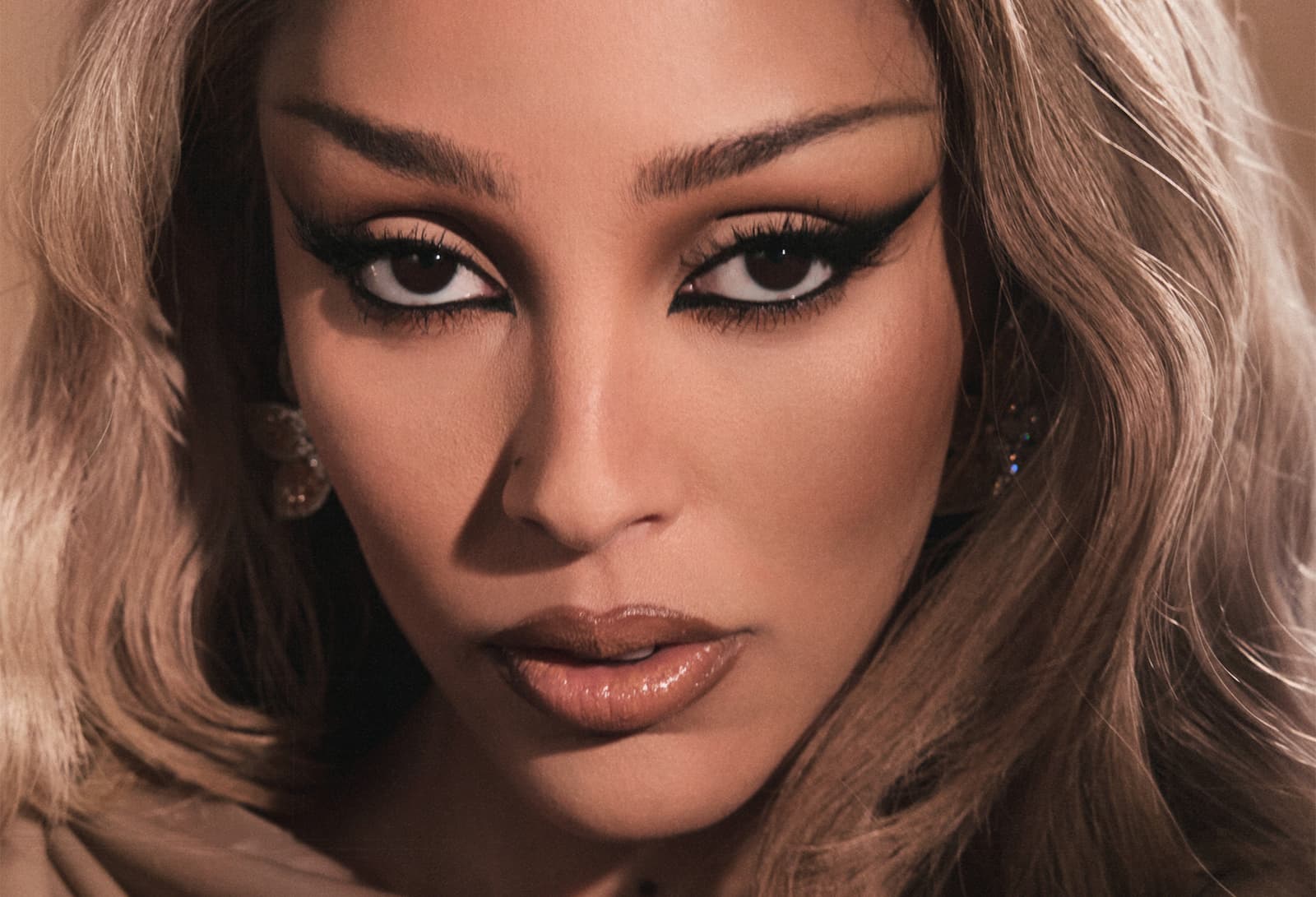
At this year’s Met Gala, the shift no longer felt like a digital trend cycle but rather an industry-wide inflection point, in which makeup moved beyond its traditional role as an enhancement and became central to a look’s narrative. Faces were not simply refined but constructed, with graphic liner cutting across lids in sculptural shapes, chrome finishes catching light like reflective surfaces, and lashes extending into something closer to ornamentation than correction. Makeup, in this context, did not complete the look; it carried it.
The Industry Built Effortless. Now It’s Unraveling.
For much of the 2020s, the beauty industry has been optimized around the idea of effortlessness. The rise of the “clean girl” aesthetic offered brands a clear and commercially viable framework: streamlined routines, skin-first messaging, neutral palettes, and the promise that the best makeup would look like nothing at all. It was aspirational, scalable, and above all, easy to market.
But in a content landscape that increasingly rewards distinction over conformity, that same model is beginning to show its limitations. Hyper-curated perfection, once synonymous with aspiration, now risks reading as repetitive and, more critically, as disconnected from the way consumers actually want to express themselves.
What journalist Jessica DeFino described in her 2026 trend predictions as “the rise of clowncore” offers a useful lens for understanding this shift. Rather than rejecting beauty outright, clowncore embraces exaggeration, visible artifice, and emotional expression, challenging the long-held assumption that beauty should appear seamless, natural, or invisible. In that context, maximalist makeup does not signal excess for its own sake but is rather a form of resistance to the pressure to look effortlessly perfect.
Maximalism, Repositioned
While the data clearly points to a resurgence of maximalism, the cultural context suggests something more nuanced. According to market research platform Spate, the search term “maximalist makeup” is up 96% year over year from 2025-2026 across platforms, yet consumer awareness remains relatively low outside of social media, as its popularity on Spate’s tracking system remains shallow, with most of the traction coming from TikTok. This creates a dynamic that indicates the trend is still in a formative state rather than fully mainstreamed, and is more popular among TikTok’s core user base of Gen A and Gen Z.
“We’re witnessing a powerful resurgence of full glam, maximalist makeup looks trending across TikTok,” Emily Caine, Head of Beauty at TikTok Shop UK, told BeautyMatter. “What’s particularly interesting to see is the ‘clean girl’ aesthetic stronghold in skincare routines, but now being paired with the fun, playful expression of full glam makeup.”
This distinction is critical. What is emerging now is not a return to the precision-led, highly structured glam of the mid-2010s, but a more fluid, intuitive version of maximalism. One that allows for imperfection, embraces experimentation, and prioritizes expression over technique.
The Hybrid Face as the New Default
Perhaps the most commercially significant shift is not the rise of maximalism itself, but this coexistence with minimalism. “Traditionally, beauty trends positioned ‘glam’ and ‘clean’ as opposing aesthetics,” Caine explained. “But our community has discovered you can absolutely embrace both.”
This hybrid behavior is already reshaping how consumers approach their routines. Skincare remains firmly rooted in function—barrier repair, inflammation management, long-term results—while makeup has become the space where creativity can take over. At a recent Beauty Crush Collective event, Frances Leonard, Senior Manager of Social Commerce UK + EMEA at Deciem, articulated this divide clearly, noting that while skincare is focused on calm and control, makeup is increasingly defined by expression and maximalism.
The result is a new kind of beauty logic: clinical below, creative above.
Visibility as Currency
If maximalism is gaining traction, it is in part because it performs, both culturally and commercially. “Maximalist makeup has become a broader expression of identity and confidence,” added Caine. “It can be vulnerable and unfiltered, or loud and over the top.”
In an ecosystem where content is currency, subtlety often fails to translate, while visibility travels. Zara Larsson’s makeup, created by Sophia Sinot, offers a clear example of this dynamic in action, where blush is deliberately placed high and saturated across the cheekbone, skin is luminous to the point of reflection, and lips are overlined and glossed to catch light with every movement. The effect is not understated but engineered to be seen, shared, and remembered. Makeup, in this context, functions as both product and content architecture.
The role of TikTok in accelerating this shift cannot be overstated. As a platform built around visual immediacy, it inherently rewards boldness, experimentation, and recognizable aesthetics.
“As a visual-first platform, TikTok empowers both brands and creators to experiment creatively, push boundaries, and go bigger and bolder,” said Caine. “TikTok Shop’s discovery-first model means users are constantly discovering new creators, techniques, and trends that suit their taste.”
With over 109.5 million posts under #Makeup and continued growth across tags like #Glam and #Maximalist, the platform has created an environment in which discovery outpaces adoption, allowing trends to feel culturally dominant even before they reach full commercial maturity.