




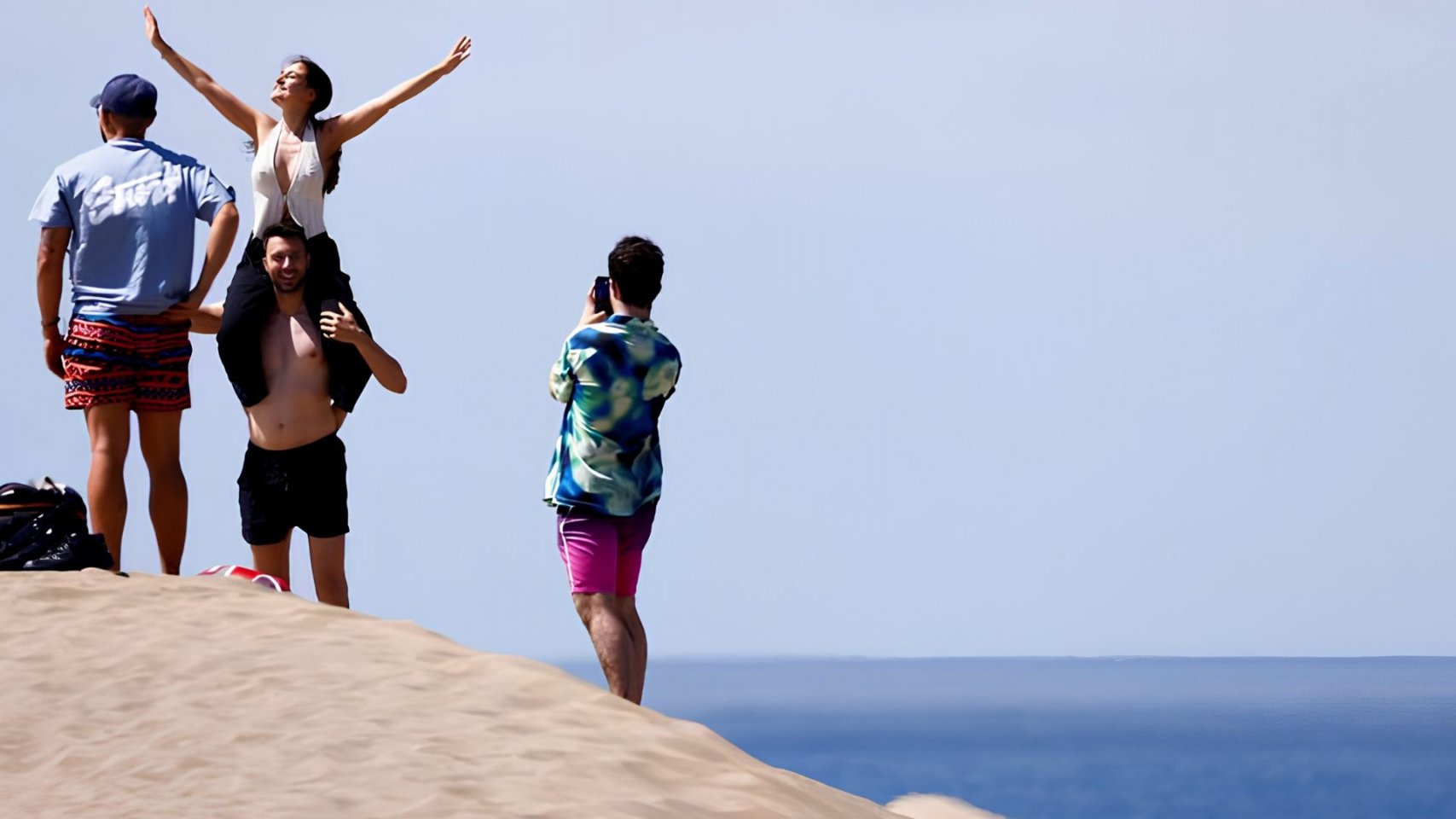
There is an almost biological irony in the fact that the elite of Spanish dermatology have chosen the south of Gran Canaria to hold their annual congress. In the conference halls of Maspalomas, at Expomeloneras, figures such as Ramón M. Pujol and Eduardo Nagore are dissecting the “transcriptional landscape of keratoacanthoma” and the latest Mohs surgery techniques this May, while on the other side of the windows, thousands of tourists indulge in the same sun exposure that fuels the statistics of malignant tumors analyzed at the symposium.
The agenda for Thursday, May 21st, highlights this contradiction. While the Congress of the Spanish Academy of Dermatology and Venereology (AEDV) presents studies on the “usefulness of dermatoscopy in Mohs surgery” and the prognosis of squamous cell carcinoma, the surrounding environment functions as a living laboratory of skin pathology. Maspalomas, known for its perpetual sunshine, is the setting where science attempts to mitigate the effects of a leisure model based on sun exposure, transforming the congress into an oasis of clinical rigor surrounded by a tanning culture that the academy itself labels a health risk.
The paradox extends to communications on trichology and aesthetics. Teams from the Hospital Clínic and the Ricart Medical Institute are debating the efficacy of nutraceuticals for alopecia and the management of folliculitis, in a destination where physical appearance and body exposure are the main economic drivers. It is the collision between reconstructive medicine and the skin-as-canvas industry: experts from Barcelona, Valencia, Madrid, and Pamplona are presenting their advances in eyelid and nasal reconstruction precisely in the area where the dermis suffers its most constant and commercialized damage.
This scientific meeting underscores an uncomfortable economic reality. The Canary Islands, and specifically Maspalomas, serve as a prestigious venue for discussing the “prevalence of skin cancer” and “targeted therapies” precisely because of the same climatic conditions that generate the need for such treatments. For the AEDV (Spanish Academy of Dermatology and Venereology), Maspalomas is not just a tourist destination, but the most visible battleground in the fight against photoaging and skin cancer, giving the choice of venue a clinical relevance that is as evident as it is paradoxical.