




New research from Japan suggests that a compound extracted from aged garlic has potential benefits for healthy aging. The study finds that the bioactive S-1-propenyl-L-cysteine (S1PC) supports inter-organ communication between fat tissue and the brain, which ultimately enhances muscle strength and can potentially protect elderly individuals from muscle frailty.
Researchers at the Institute for Research on Productive Aging (IRPA) in Tokyo, a non-profit aging research organization, and Wakunaga Pharmaceutical, the supplier of the aged garlic extract used in the study, have uncovered how S1PC compound works in the body to influence muscle function during aging.
They found that S1PC activates the enzyme liver kinase B1 (LKB1), an important regulator of cellular metabolism.

“Our findings present a previously unrecognized and unique function of S1PC in activating LKB1, and in promoting an inter-organ communication that ameliorates muscle frailty,” comments Dr. Shin-ichiro Imai, the chairman at the IRPA.
“We anticipate that S1PC is likely to have a broader anti-aging effect that warrants detailed investigation.”
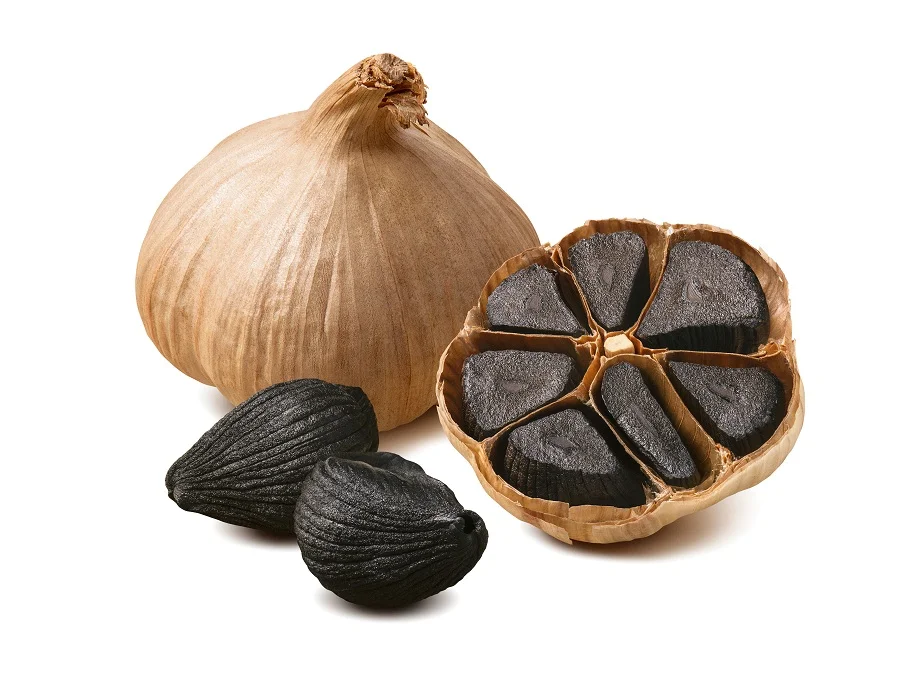 Bioactive S1PC in black garlic supports inter-organ communication between fat tissue and the brain, which ultimately enhances muscle strength.The study reveals a new communication pathway linking fat tissue, the brain, and skeletal muscle, which the authors say could offer new insights into how aging-related functional decline may be regulated.
Mechanism of action
The IRPA and Wakunaga team set out to identify evidence-based anti-aging interventions by investigating natural compounds in aged garlic extract.
They discovered that S1PC enhances the formation of a protein complex involving LKB1, which leads to the activation of the SIRT1 pathway. This pathway promotes the secretion of extracellular nicotinamide phosphoribosyltransferase (eNAMPT) from adipose (fat) tissue. The scientists explain that this eNAMPT enzyme is essential for synthesizing NAD+, a molecule involved in cell protection, DNA repair, and energy production.
The researchers conducted experiments on young mice (3–4 months old), which received a single five mg/kg dose of S1PC by feeding tube mid-morning. To track how the substance moved through the body, they collected 2 μL blood samples from the tail tip.
They found that instead of acting directly on muscle, eNAMPT travels within extracellular vesicles released from fat tissue through the bloodstream to the hypothalamus, the brain’s regulatory center. The researchers linked this interaction to boosted sympathetic nervous signaling, which ultimately improves muscle function.
Finally, they evaluated the long-term functional benefits in older mice. In an eight-month study, 15-month-old mice were fed S1PC daily. By the time they reached 22–23 months of age (and up to 27 months in some groups), the mice showed reduced frailty scores across 31 health markers, increased skeletal muscle force, and restored core body temperatures.
New communication pathway
Meanwhile, a human trial as part of this study showed that S1PC increased eNAMPT levels in circulation, particularly in individuals with sufficient fat tissue. In a double-blind study, 44 healthy Japanese male and female subjects (ages 20–49) took a single 25 mg S1PC tablet after not eating garlic and onions for the night before and the morning of the study day.
Researchers collected blood samples before the dose and at 30, 60, and 120 minutes post-administration to analyze changes in protein and metabolism levels.
 Meanwhile, a human trial as part of this study showed that S1PC increased eNAMPT levels in circulation, particularly in individuals with sufficient fat tissue.The trial found that while S1PC was rapidly absorbed into the bloodstream, it specifically triggered a significant increase in circulating eNAMPT levels within 120 minutes for those with higher body fat mass, supporting the link between adipose tissue and this metabolic response.
“During my clinical experience as a physical therapist, I was often frustrated to see older adults lose physical function and vitality simply because they had no specific disease requiring medical treatment. This gap in proactive care has driven my research,” says Dr. Kiyoshi Yoshioka, first author of the study.
“We hope our findings will help improve fitness and muscle strength in older individuals by the simple inclusion of a nutraceutical as part of the daily diet.”
Aged black garlic legacy
The researchers highlight S1PC may complement other approaches, such as NAD⁺-boosting compounds.
As a popular supplement consumed in traditional Chinese medicine and Ayurveda, aged garlic extract has been consumed for generations, suggesting a favorable safety profile for S1PC. One previous study highlighted its potential for reducing artery plaque buildup.
“We have succeeded in expanding the current understanding of how different organs coordinate responses during aging. Further research is needed to determine improvements in muscle function in humans and to evaluate the long-term effects of S1PC. The presence and possible role of LKB1 in the brain also needs evaluation,” says Imai.
With an increasingly aging population globally and the higher health care burden linked to increased muscle frailty in older individuals, research into aging has been gaining ground. “Drugs that improve age-associated health conditions are costly and unsustainable in the long run. On the other hand, currently existing health diets lack scientific evidence-based backing,” highlight the researchers.
In other recent advances in well-aging, Nestlé recently partnered with Nanyang Technological University Singapore to kick off a multi-year collaboration focusing on longevity alongside women’s health, which is an underserved area of study. The partnership plans to establish a joint research lab in Singapore and share the facilities for clinical studies and data analysis.