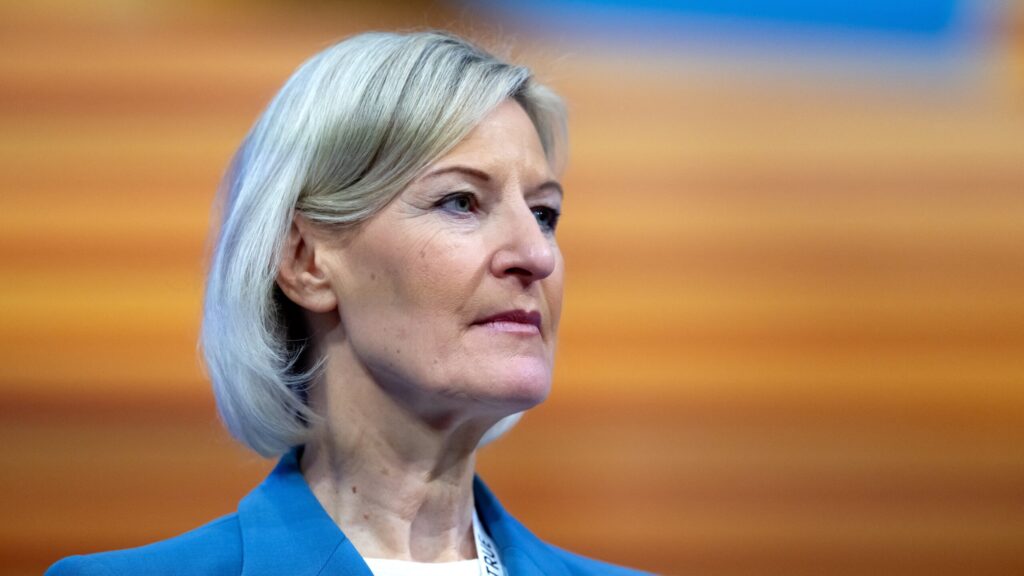
Angelika Niebler—Head of the Christian Social Union’s EP delegation since 2014—from the European People’s Party is being investigated for allegedly misusing EU funds. Following a request by the European Public Prosecutor’s Office, the procedure to waive her immunity began in early November 2025.
She is being investigated for allegedly instructing her assistants to help manage private and business appointments that were not directly linked to her work as an MEP. She is also suspected of having hired an assistant to work for one of her former MEP colleagues. According to the EP’s rules of procedure, assistants paid from the EU budget may only support MEPs in their parliamentary duties. Therefore, if any of the allegations against Niebler are proven, she could be found guilty of misusing EU funds.
Nevertheless, early May the European Parliament’s Legal Affairs Committee (JURI) voted to uphold the immunity of Angelika Niebler. Niebler’s immunity decision still awaits a final confirmation vote from the EP’s plenary, but the House is hardly expected to change JURI’s decision. With her parliamentary privileges kept, she cannot be questioned as part of the investigation.
The choice to protect MEP Angelika Niebler’s immunity came as a surprise to many, as her case resembles the investigation into the alleged misuse of funds by the French National Rally (RN), a probe that saw a very different outcome. RN was accused of ‘embezzling’ EU funds by employing EP assistants who did not work on EP-related matters. The case against RN resulted in its de facto leader, Marine Le Pen, being prosecuted and banned from running for public office for five years. Le Pen’s sentence of ineligibility, which she is now challenging, bars her from running in the 2027 presidential election.
Shortly after RN positioned Jordan Bardella as its new presidential candidate, replacing Le Pen, the European Public Prosecutor’s Office moved to investigate him as well for allegedly misusing EU funds. Bardella is accused of having used EU money for media training that prepared him for appearances linked to the 2022 French presidential election. According to the EP’s rules, these funds can only be used for European-level political affairs, and not for national-level political engagement.
The sharp contrast between Angelika Niebler’s case and that of the French National Rally has led some to highlight what they see as politically motivated double standards applied by the EP against right-wing parties. While the immunity of an influential German member of the EP’s largest party has been maintained, members of the Patriots for Europe group have been subjected to legal scrutiny in very similar cases.
It adds insult to injury that this is not the first time Angelika Niebler has been suspected of misusing her parliamentary powers. In 2016, she was accused of working for law firms—parallel to her mandate in the EP—that were not registered in the EU’s transparency register but were lobbying on EU legislation. An open letter signed by NGOs said that ‘Niebler’s additional paid work in the legal sector places her in a position of a potential conflict of interest.’
‘This is not the first time Angelika Niebler has been suspected of misusing her parliamentary powers’
In her defence, the MEP stressed that she only ‘advised’ her clients but never ‘represented their interests.’ As an MEP, Niebler had access to information that could give a competitive advantage to the clients she ‘advised’, so critics highlighted that the situation she is in could still constitute a conflict of interest.
Despite the 2016 scandal, Angelika Niebler is still keen on ‘advising’ clients alomgside her parliamentary position. On an annual basis in 2026, she received the fifth-highest additional income on top of her parliamentary salary in the 720-member European Parliament. Her additional annual income amounted to over 177,000 euros. She received 5,250 euros (pre-tax) a month from Gibson, Dunn & Crutcher LLP for ‘freelance work as counsel’, and 4,583 euros (pre-tax) a month from the TÜV SÜD Foundation for her board membership. This is on top of her monthly income from five other positions (plus her salary as a lawmaker).
As Angelika Niebler’s immunity decision also shows, waiver-of-immunity procedures are increasingly politicized in the European Parliament. When the Qatargate scandal initially hit the European Parliament, it was quick to lift the immunities of the suspected MEPs—but not anymore. In December 2025, the EP decided to shield an Italian MEP, Elisabetta Gualmini, accused of involvement in the same cash-for-influence scandal.
Similarly, the EP voted to keep the immunity of Ilaria Salis, who is accused of having participated in violent attacks against pedestrians in the streets of Budapest. Another member of the Antifa group Salis is believed to have belonged to was sentenced to eight years in prison.
These examples, critics argue, demonstrate that the EP is increasingly inclined to maintain the immunities of pro-EU MEPs, while right-wing groups such as the Patriots are subjected to numerous investigations.
Related articles: