




Beta Glucan Market Enters a Strong Growth Phase
The global beta glucan market is witnessing steady and significant growth as consumers increasingly focus on immunity, preventive healthcare, and functional nutrition. Once used primarily in specialized health products, beta glucan is now becoming a mainstream ingredient across dietary supplements, fortified foods, beverages, pharmaceuticals, and even animal nutrition products.
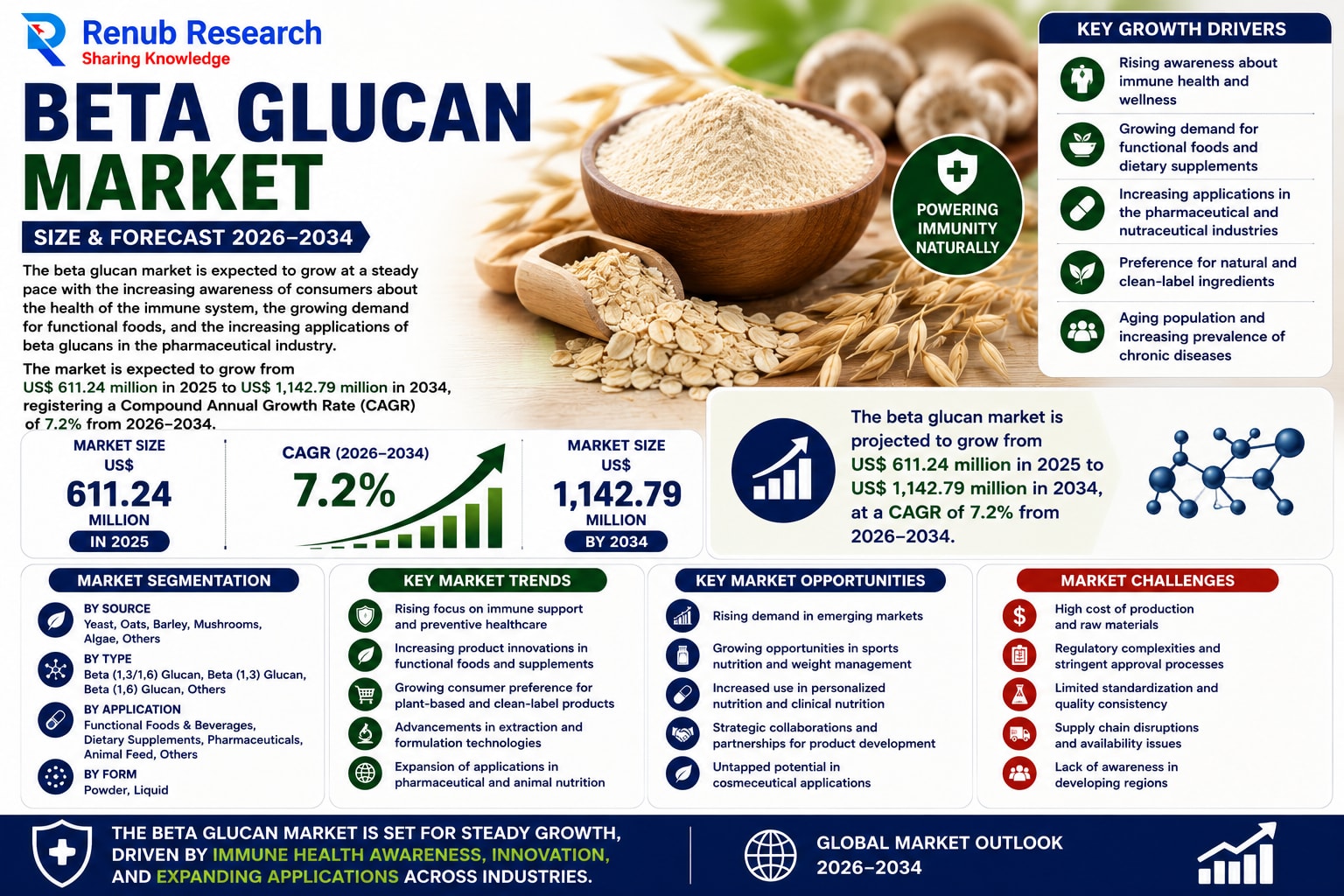
According to Renub Research, the beta glucan market is projected to grow from US$ 611.24 million in 2025 to US$ 1,142.79 million by 2034, expanding at a compound annual growth rate (CAGR) of 7.2% between 2026 and 2034. Growing awareness of immune health, increasing demand for functional foods, and expanding pharmaceutical applications are among the key factors driving this market forward.
Beta glucan is a soluble dietary fiber naturally found in oats, barley, yeast, mushrooms, algae, and certain bacteria. It is widely recognized for its health benefits, including immune system support, cholesterol reduction, blood sugar regulation, and digestive health improvement. Because of these scientifically supported benefits, beta glucan has become a highly valuable ingredient in health-oriented food and wellness products.
As consumers increasingly prioritize long-term wellness and natural nutrition, beta glucan is emerging as one of the most important functional ingredients in the global health and nutrition industry.
Preventive Healthcare Trends Are Fueling Demand
One of the strongest growth drivers behind the beta glucan market is the rising global focus on preventive healthcare and immune support. Consumers today are increasingly seeking natural ingredients that can help strengthen immunity, improve metabolic health, and reduce the risk of chronic diseases.
The growing aging population, increasing health consciousness, and heightened awareness following recent global health concerns have all accelerated demand for immune-support supplements and fortified foods. Beta glucan’s well-known immune-modulating properties make it especially attractive for consumers looking for science-backed wellness solutions.
Healthcare professionals and nutrition brands are also increasingly promoting beta glucan as a clinically supported ingredient for improving immunity and cardiovascular health. The report highlights Fujitsu’s development of “Policy Twin,” a digital twin technology aimed at improving preventive healthcare services, reflecting the broader global shift toward prevention-focused healthcare strategies.
As preventive nutrition continues becoming a major global healthcare trend, demand for beta glucan products is expected to rise steadily.
Functional Foods and Clean-Label Products Drive Expansion
The rapid growth of the functional food and beverage industry is another major factor supporting the expansion of the beta glucan market. Modern consumers increasingly prefer foods that provide health benefits beyond basic nutrition, including support for heart health, digestion, immunity, and blood sugar management.
Beta glucan fits perfectly within the clean-label movement because it is naturally derived, plant-based, and easily recognizable by consumers. Food manufacturers are incorporating beta glucan into breakfast cereals, bakery products, dairy alternatives, soups, beverages, and plant-based foods to improve nutritional value while maintaining clean ingredient lists.
The report highlights BENEO’s launch of Orafti® β-Fit, a clean-label wholegrain barley flour containing 20% beta glucans that supports heart health and blood sugar management. Such innovations demonstrate how companies are expanding their functional fiber portfolios to meet growing consumer demand for healthier food products.
The rising popularity of high-fiber diets, plant-based eating, and transparent ingredient labeling is expected to continue strengthening market growth worldwide.
Pharmaceutical and Animal Nutrition Applications Are Expanding
Beyond functional foods, beta glucan is increasingly being used in pharmaceutical and animal nutrition industries, creating additional growth opportunities for the market.
In pharmaceuticals, beta glucan is widely studied and utilized for immune support therapies, wound healing applications, metabolic health management, and adjunct treatments for inflammatory conditions. Its natural origin and favorable safety profile make it highly attractive for preventive healthcare and clinical nutrition applications.
In animal nutrition, beta glucan is gaining popularity as an immune booster, gut health enhancer, and antibiotic alternative in livestock and aquaculture feed. Growing interest in antibiotic-free farming and sustainable agriculture is helping accelerate demand across this segment.
The report notes Lallemand Bio-Ingredients’ acquisition of Biotec BetaGlucans, reflecting increasing investment and consolidation within the global beta glucan industry.
Rising Health Awareness Supports Long-Term Growth
Consumer understanding of the relationship between diet and long-term health continues improving globally. Conditions such as obesity, diabetes, cardiovascular disease, and digestive disorders are encouraging consumers to actively seek functional ingredients that support healthier lifestyles.
Beta glucan’s ability to support cholesterol management and blood sugar regulation makes it particularly attractive in markets facing rising metabolic disease rates. At the same time, the growing popularity of natural wellness products is strengthening consumer confidence in plant-derived functional ingredients.
As scientific research continues validating the benefits of beta glucan, the ingredient is expected to gain even broader acceptance across mainstream health and nutrition markets.
High Production Costs Remain a Major Challenge
Despite strong growth prospects, the beta glucan market still faces several challenges. One of the biggest issues is the relatively high cost associated with extracting, purifying, and processing beta glucan from natural raw materials.
Different sources such as oats, barley, yeast, and mushrooms vary significantly in terms of beta glucan concentration and quality, affecting production consistency and cost structures. Advanced extraction technologies are often required to preserve bioactivity and purity, further increasing manufacturing expenses.
These high production costs can create affordability challenges, especially in price-sensitive developing markets where consumers may prioritize lower-cost alternatives.
Regulatory Complexity Continues to Affect Market Expansion
Another major challenge involves regulatory approval and health claim standardization. Claims related to immunity, cholesterol reduction, and blood sugar management are highly regulated in many countries. Manufacturers often need extensive scientific validation and clinical trial data to support marketing claims.
Different regional regulations also complicate global commercialization strategies. Lack of consistent labeling standards and varying definitions regarding beta glucan content can create confusion for both consumers and manufacturers.
Companies operating internationally must therefore invest heavily in compliance, research, and product validation.
Cereal Beta Glucan Leads the Market
Cereal-derived beta glucan remains the largest segment within the global market due to the popularity of oats and barley as recognized heart-healthy ingredients. Oat and barley beta glucans are widely used in breakfast cereals, baked goods, beverages, and functional foods.
Consumers strongly associate cereal beta glucan with cholesterol reduction, digestive health, weight management, and blood sugar control. Food manufacturers also favor cereal sources because of their mild flavor, processing flexibility, and strong regulatory acceptance across many regions.
As fiber-rich diets and preventive healthcare trends continue growing globally, cereal beta glucan is expected to maintain its leading market position.
Mushroom Beta Glucan Gains Premium Appeal
The mushroom beta glucan market is expanding steadily due to rising interest in medicinal mushrooms and natural immunity solutions. Beta glucans derived from mushrooms such as shiitake, maitake, and reishi are especially valued for their potent immunomodulatory properties.
Consumers seeking traditional wellness remedies and natural health supplements increasingly prefer mushroom-derived beta glucans despite their higher production costs. Advances in extraction technology are also improving product consistency and bioavailability, supporting wider commercial acceptance.
Soluble Beta Glucan Sees Rising Demand
The soluble beta glucan segment is growing rapidly because of its excellent functionality in beverages, soups, dairy alternatives, and liquid supplements. Soluble beta glucan dissolves easily in water and supports cholesterol management, gut health, and blood sugar regulation.
Food and beverage manufacturers increasingly prefer soluble beta glucan because it enhances nutritional value without negatively affecting taste or texture. The rising popularity of functional drinks and convenient wellness products is further strengthening demand within this category.
Food and Beverage Industry Remains the Largest Application Segment
The food and beverage sector continues representing the largest application area for beta glucan due to growing consumer demand for functional and fortified products. Manufacturers are incorporating beta glucan into cereals, bakery items, dairy products, beverages, and plant-based foods to improve fiber content and health positioning.
Urbanization, busy lifestyles, and rising health awareness are all encouraging consumers to choose foods that offer additional nutritional value. Beta glucan’s versatility and compatibility with multiple food formats continue making it highly attractive for product innovation.
United States Leads the Global Market
The United States remains one of the largest beta glucan markets globally due to strong consumer awareness regarding preventive healthcare, functional nutrition, and natural wellness products. Beta glucan is widely used in supplements, health beverages, cereals, and nutraceutical formulations across the country.
The report highlights Layn Natural Ingredients’ expansion of its biotechnology facility and launch of “Galacan,” a highly bioavailable and water-soluble alternative to traditional beta glucans. This reflects the ongoing innovation and research activity within the U.S. market.
India and Saudi Arabia Show Strong Potential
India’s beta glucan market is growing rapidly due to rising middle-class incomes, increased health awareness, and growing interest in immunity-support products. Nutraceuticals, fortified beverages, and plant-based ingredients are becoming increasingly popular among Indian consumers.
The report also references clinical research involving beta glucan products for psoriasis treatment and COVID-19 patients in India, highlighting the expanding healthcare applications of the ingredient.
Saudi Arabia’s market is still developing but shows strong long-term potential because of rising interest in preventive healthcare, dietary supplements, and functional nutrition. Urban consumers are increasingly adopting premium wellness products focused on immunity and metabolic health.
Competitive Landscape
The global beta glucan market includes major companies such as Ceapro Inc., Tate & Lyle PLC, Koninklijke DSM, Cargill Incorporated, Kerry Group, Givaudan SA, Euglena Co. Ltd., and Merck KGaA.
Competition is increasingly centered around ingredient purity, scientific validation, product innovation, and sustainable production methods. Companies investing in biotechnology, advanced extraction technologies, and clean-label solutions are expected to lead future market growth.
Final Thoughts
The beta glucan market is rapidly evolving as consumers worldwide prioritize immunity, preventive healthcare, and functional nutrition. Growing scientific validation, rising clean-label demand, and expanding applications across food, pharmaceutical, and animal nutrition industries are creating strong long-term growth opportunities.
With the market projected to grow from US$ 611.24 million in 2025 to US$ 1,142.79 million by 2034, the future of the beta glucan industry appears highly promising. Companies that successfully combine scientific innovation, affordability, and clean-label positioning will likely shape the next generation of global health and wellness products.