




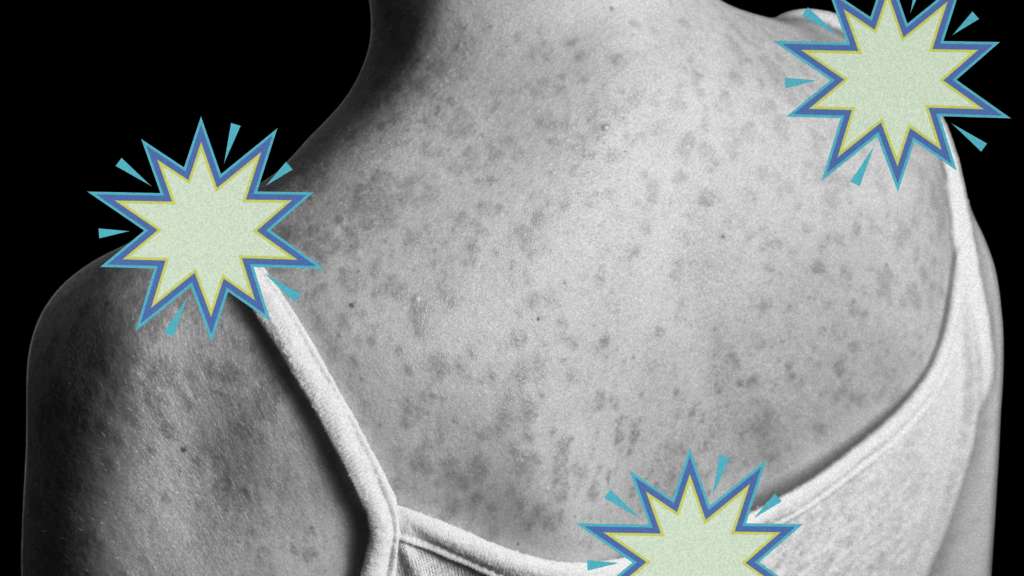
Most people recover from measles. But even then, “their immunity to very common infections that they encounter, maybe on a daily basis, is weakened,” says Rik de Swart, a virologist at Erasmus University Medical Center in Rotterdam in the Netherlands who has studied the phenomenon, which is sometimes known as immune amnesia. In some cases, it can take years to get back to normal.
What makes measles so dangerous
Measles spreads through the air and is highly contagious: Up to 90% of unvaccinated people exposed to someone with measles will get it. It was once common for millions of people—most of them children—to die every year from the disease. In 1963, the first vaccine for the illness was released, and rates in the U.S. plummeted. Measles was declared eliminated in the U.S. in 2000.
That same year, biologists in Japan identified a receptor on the surface of cells that the measles virus uses to break in. Although measles spreads through the air, this receptor, called CD150, wasn’t primarily found in nose and lung mucous membrane cells. It was somewhere quite a bit more insidious: immune cells. “This receptor is especially expressed on memory cells of the immune system,” says de Swart. “That means that the virus predominantly infects, and then kills, memory cells of the immune system.” These are the cells that remember pathogens you’ve encountered in the past and help protect you when you meet them again.