




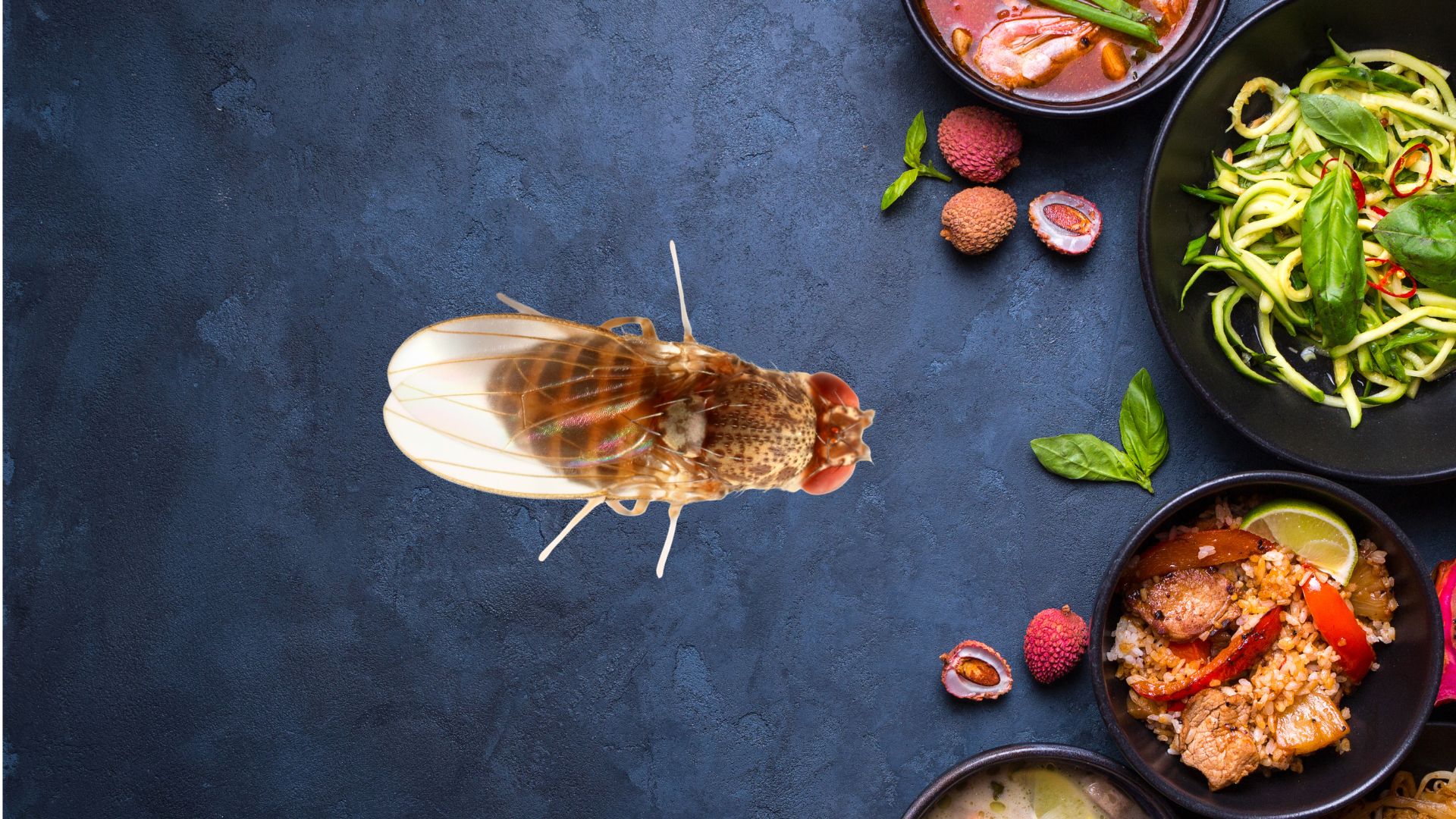
Researchers at Ashoka University have discovered that a fruit fly’s diet can drastically alter its ability to survive bacterial infections at higher temperatures. The study reveals that feeding female fruit flies a low-carbohydrate, high-protein diet significantly increases their survival against a deadly natural pathogen, even as temperatures rise. As climate change continues to heat up our planet and alter the nutritional quality of available food sources, scientists are urgently trying to understand how these combined environmental stresses will impact the spread and severity of infectious diseases.
The research team raised female fruit flies from egg to early adulthood under varying environmental conditions. They placed the flies in controlled incubators at either a standard room temperature of twenty-five degrees Celsius or a warmer twenty-nine degrees Celsius. Alongside these temperature changes, the flies were continuously fed one of three distinct diets: a high-carbohydrate diet, a regular diet, or a low-carbohydrate diet.
Once the flies reached adulthood, researchers infected them with a naturally occurring bacterium called Providencia rettgeri. They then tracked how many flies survived the infection, measured the amount of bacteria inside their bodies, and evaluated other health factors like reproductive success and how long they could survive without food. The study shed light on biological resource allocation. Fighting off an infection requires a massive amount of metabolic energy, and an organism’s body must constantly decide how to divide its limited nutritional resources between staying alive, reproducing, and coping with environmental stress like heat.
The results showed that unmated female flies raised on a low-carbohydrate diet exhibited the highest survival rates after infection, regardless of whether they were in a standard or warm environment. Interestingly, this survival advantage vanished once the flies mated, likely because the biological cost of egg production drained the energy needed to mount a strong immune response. Even more surprisingly, the scientists found that warmer temperatures made the flies more vulnerable to infection only when they were eating a regular diet. Those on either a high or low-carbohydrate diet did not experience this temperature-induced drop in survival. The researchers also noted that, despite these stark differences in survival, the number of bacteria inside the flies remained the same across all groups. This indicates that the diets did not necessarily help the flies kill the bacteria better, but rather helped their bodies tolerate the physical damage caused by the infection.
By examining diet, temperature, and mating status together, this study provides a much more realistic picture of the complex, intersecting challenges animals face in nature. However, because the researchers simultaneously altered the ratios of both sugar and yeast to create their experimental diets, they could not pinpoint the independent effects of carbohydrates versus proteins. Additionally, when measuring reproductive output, they counted only the final number of adult offspring produced, so they could not detect whether the different diets affected the initial viability of individual eggs.
Understanding the complex relationship between what an organism eats, the temperature of its habitat, and its ability to fight off disease could become critical information in our warming world. As global warming continues to alter ecosystems, it will create warmer environments where pathogens can thrive and degrade the nutritional value of crops and natural food sources. By decoding these complex interactions in a simple model organism like the fruit fly, scientists can build better predictive models for global health. This could help society anticipate and manage future disease outbreaks in both vulnerable wildlife and human populations living on the frontlines of a changing climate.