




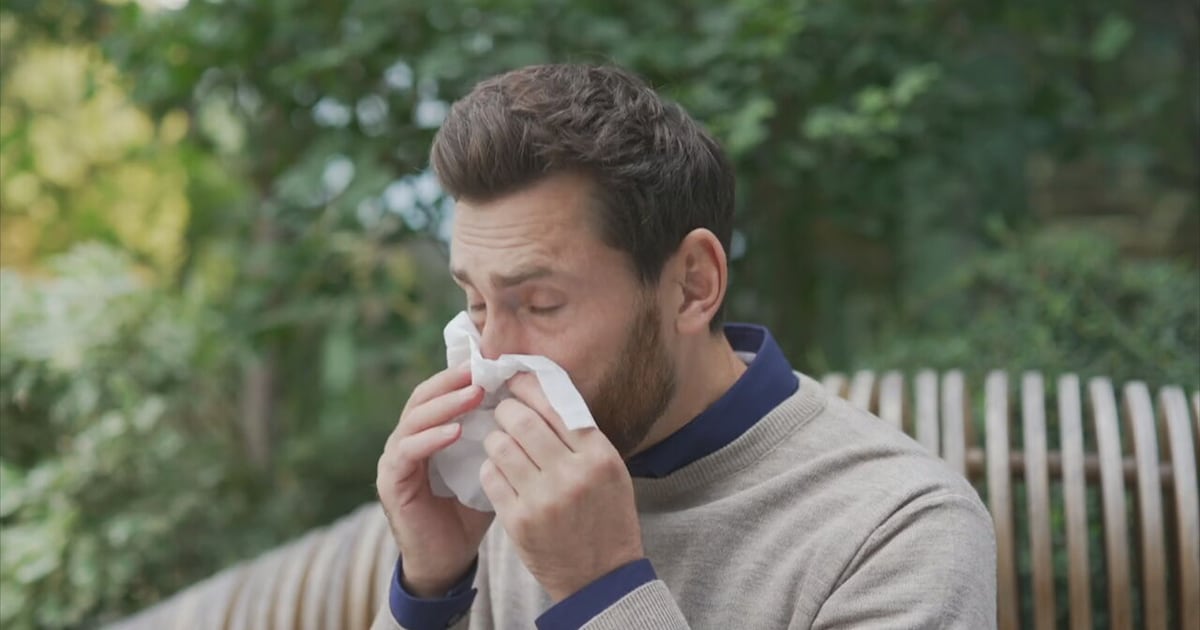
Allergy season is expanding, with outdoor and indoor allergies often tied to an individual’s environment and the current season. Dr. Noah Greenspan, program director of the Pulmonary Wellness and Rehab Center in New York City, notes that air quality has worsened over time, contributing to an increase in allergens.
This means more allergens are present from sources like grass, ragweed, trees and pollen. These environmental factors often dictate the type of outdoor and indoor allergic reactions individuals experience.
Allergy symptoms can vary from person to person. Common symptoms include itchy watery eyes, a stuffy nose, an increase of mucus, dry mouth, a sore throat and inflammation in the airways and sinuses.
Dr. Greenspan described how allergies manifest physically, using an example. “So they can vary from person to person okay but let’s go from head to toe. So people can have skin allergies, so contact allergy right? That’s like you are.. you know.. you switch laundry detergents and you didn’t realize that one of the ingredients in this one somehow irritates your skin and you go to bed the first night and you’re itchy.” Greenspan explained.
These symptoms are the body’s protective response to allergens. It becomes problematic when the immune response is disproportionate to the exposure. Dr. Greenspan stated that individuals need to monitor their symptoms.
“When it goes into hyperdrive and people’s immune response and their allergen response and their response to allergens becomes disproportionate to what they’re exposed to, that’s when it becomes problematic,” Greenspan said. These symptoms can sometimes indicate an underlying condition, requiring individuals to retrace their steps to find the source of the reaction and determine its severity. Allergies are not static and can change over time in individuals. Someone who previously had no allergies may become susceptible, while those with mild allergies might develop more severe reactions. Dr. Greenspan noted this variability.
“Somebody who has never had allergies before may for some reason be susceptible now. Somebody who had mild allergies may now have you know more severe allergies and conversely, we see people who had bad allergies and then all of a sudden for whatever reason they don’t have allergies anymore,” Greenspan said.
This highlights the importance of ongoing monitoring. For relief, over-the-counter antihistamines or decongestants are recommended. Nasal saline sprays are also effective. Using an air purifier can help clear airways, particularly when waking up and at the end of the day. Individuals with long COVID may experience increased baseline inflammation, which can affect their allergy responses.
If over-the-counter remedies and lifestyle adjustments are insufficient, it is time to consult a physician.
Download the FREE Boston 25 News app for breaking news alerts.
Follow Boston 25 News on Facebook and Twitter. | Watch Boston 25 News NOW
©2026 Cox Media Group