




Protein Supplements Market Size, Share, Trends & Outlook Report 2034
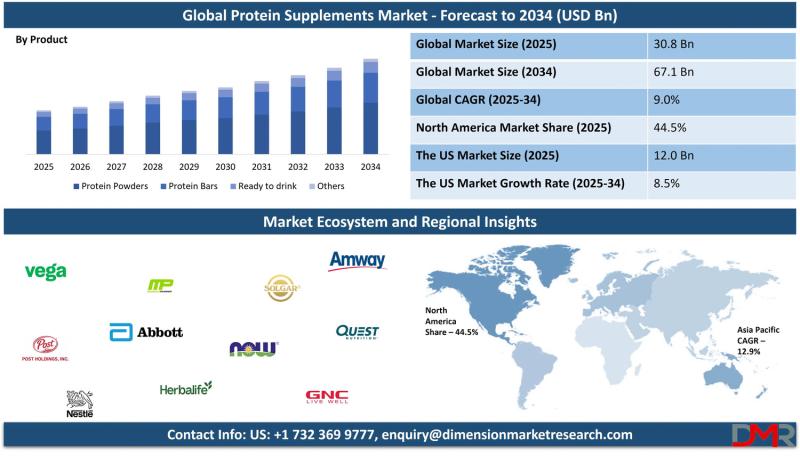
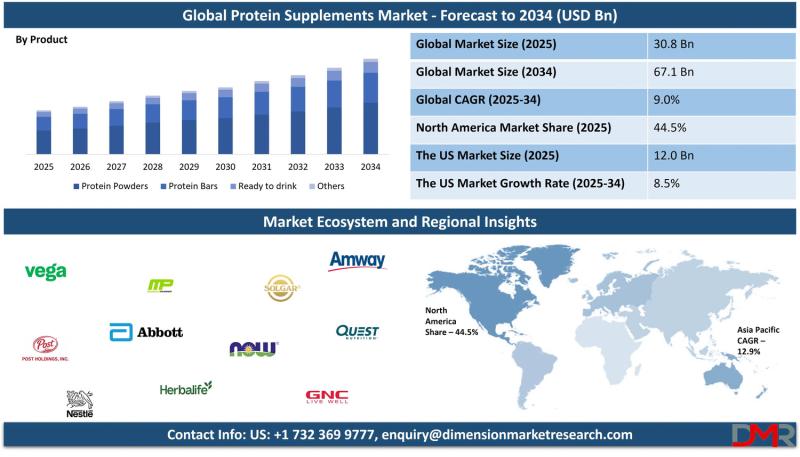
The global Protein Supplements Market is poised for robust growth, with market valuation projected to rise from an estimated USD 30.8 billion in 2025 to USD 67.1 billion by 2034, registering a strong compound annual growth rate (CAGR) of 9.0%. According to Dimension Market Research, this expansion is being driven by four converging forces: rising health and fitness awareness across all demographics, rapid innovation in plant-based and functional protein formulations, expanding applications beyond sports nutrition into clinical and elderly nutrition, and the accelerating shift toward personalized and precision nutrition solutions.
Protein supplements-concentrated nutritional products derived from animal and plant sources formulated to support muscle growth, post-exercise recovery, weight management, and overall dietary nutrition-have become integral to modern health and wellness practices. According to Dimension Market Research, the U.S. market alone is projected to reach USD 12.0 billion in 2025 and grow to USD 27.2 billion by 2034 at a CAGR of 8.5% , driven by high consumer awareness and strong fitness culture, with widespread adoption across all age groups. With Europe reaching USD 8.6 billion (8.9% CAGR) and Japan USD 1.5 billion (9.4% CAGR), the sector is witnessing a global acceleration as protein supplementation moves beyond traditional athletic users into mainstream health-conscious consumers.
📄 Get Your Sample Report Today → https://dimensionmarketresearch.com/request-sample/protein-supplements-market/
🔷 The News Angle: From Bodybuilding Niche to Everyday Essential-The Protein Supplement Evolution
The dominant narrative reshaping the global protein supplements market is the fundamental transition from a niche product for bodybuilders and athletes to a mainstream dietary staple consumed by fitness enthusiasts, aging adults, weight-conscious consumers, and health-focused individuals across all demographics.
Fitness culture as accelerator is the most powerful catalyst. Growing awareness of lifestyle-related diseases and preventive healthcare has significantly increased protein supplement consumption. Consumers now associate adequate protein intake with muscle health, immunity, and metabolic balance. Fitness participation, home workouts, and personalized nutrition plans have expanded protein usage beyond professional athletes. The U.S. Department of Agriculture reports that average per capita protein availability exceeded 110 grams per day in 2024, reflecting sustained high-protein dietary patterns. The World Health Organization highlighted increased protein intake recommendations for aging populations in updated 2024 nutrition guidelines, recognizing protein’s critical role in preventing sarcopenia and maintaining functional independence in older adults.
Plant-based protein revolution is equally transformative. Advancements in plant protein extraction, fermentation, and blending technologies have improved taste, digestibility, and amino acid profiles. This innovation addresses lactose intolerance, vegan preferences, and sustainability concerns. The European Commission indicates that plant-based protein production capacity grew by over 18% across the EU in 2024. Growing consumer awareness around environmental impact and animal welfare further supports adoption. Proteins derived from pea, soy, rice, and blends are gaining traction as manufacturers improve amino acid balance, taste, and solubility. Regulatory support for plant-based nutrition and clean-label positioning enhances credibility.
Functional expansion beyond sports nutrition represents the third pillar. Protein supplementation is increasingly used for muscle preservation, elderly nutrition, and clinical dietary support. The Japan Ministry of Health, Labour and Welfare noted a 21% rise in functional nutrition product approvals in 2025. Consumers increasingly seek protein-enriched snacks, beverages, and meal replacements that support satiety, energy, and general wellness. This segment benefits from convergence between nutrition and convenience food categories, with demand particularly strong among working professionals, aging populations, and weight-conscious consumers.
🔷 Key Insights: Data Points Defining the Protein Supplements Market
North America Leads (44.5% Share in 2025): High consumer awareness, strong fitness culture, well-developed retail ecosystem, high disposable income, regulatory clarity, and continuous innovation drive regional dominance.
Animal-Based Leads Source (62.4% Share): High bioavailability, complete essential amino acid profiles, proven effectiveness in muscle protein synthesis, and well-established dairy supply chains drive dominance.
Protein Powders Lead Product (54.1% Share): Versatility, cost-effectiveness, ease of customization, long shelf life, efficient storage, and dominance in online/subscription sales channels drive leadership.
Sports Nutrition Leads Application (58.6% Share): Consistent demand from athletes, fitness enthusiasts, and recreational exercisers; integral to muscle recovery, endurance, and strength development.
Male Consumers Lead Gender (61.2% Share): Strong association with muscle building, strength training, and sports performance; higher participation in resistance training and competitive sports.
Millennials Lead Age Group (44.7% Share): Strong health awareness, fitness engagement, convenience-driven consumption, high digital engagement, and willingness to experiment with new formats.
U.S. Protein Consumption: Average per capita protein availability exceeded 110 grams per day in 2024 (USDA).
Plant-Based Capacity Growth: Plant-based protein production capacity grew by over 18% across the EU in 2024 (European Commission).
Functional Nutrition Approvals: Japan noted a 21% rise in functional nutrition product approvals in 2025 (MHLW).
Generation Z Fastest-Growing Age Group: Influenced by social media trends, fitness content, functional beverage popularity, clean ingredients, and sustainability-driven branding.
📄 Get the Insights You Need to Drive Real Impact → https://dimensionmarketresearch.com/request-sample/protein-supplements-market/
🔷 Market Dynamics: Drivers, Restraints, and Strategic Opportunities
Drivers: Health Awareness & Plant-Based Innovation
The primary driver is rising health and fitness awareness. Growing awareness of lifestyle-related diseases and preventive healthcare has significantly increased protein supplement consumption. Consumers now associate adequate protein intake with muscle health, immunity, and metabolic balance. Fitness participation, home workouts, and personalized nutrition plans have expanded protein usage beyond professional athletes. Governments and healthcare organizations advocating balanced macronutrient intake further reinforce demand. The shift toward proactive health management positions protein supplements as an essential dietary component.
Simultaneously, innovation in plant-based and functional proteins drives market expansion. Advancements in plant protein extraction, fermentation, and blending technologies have improved taste, digestibility, and amino acid profiles. This innovation addresses lactose intolerance, vegan preferences, and sustainability concerns. Functional enhancements such as added probiotics, vitamins, and adaptogens increase product value. Supply chain improvements and ingredient diversification have reduced costs, enabling broader market access and accelerating category expansion.
Restraints: Regulatory Compliance & Price Sensitivity
Despite momentum, significant barriers remain. Regulatory and quality compliance challenges create obstacles. Protein supplements face strict regulatory scrutiny regarding ingredient safety, labeling accuracy, and health claims. Compliance costs increase barriers for new entrants and smaller manufacturers. Variations in global regulatory standards complicate cross-border trade. Product recalls and contamination concerns can damage consumer trust, impacting brand credibility and slowing market expansion.
Additionally, price sensitivity and market saturation restrain growth. Premium protein products often carry higher prices due to specialized ingredients and branding. In price-sensitive markets, this limits adoption. Intense competition and product commoditization in mature regions reduce differentiation, leading to margin pressure. Consumers may shift to whole-food protein alternatives when economic conditions tighten, restraining growth potential.
Opportunities: Personalized Nutrition & Emerging Economies
Advances in digital health, biomarker testing, and AI-driven diet planning create opportunities for personalized protein supplementation. Tailored formulations addressing age, gender, activity level, and health conditions are gaining traction. This customization enhances consumer engagement, loyalty, and willingness to pay premium prices, opening high-margin growth avenues. AI accelerates ingredient selection and nutrient balancing for improved efficacy, personalizes protein intake recommendations based on individual health data, and improves inventory planning through demand forecasting.
Rising disposable incomes, urbanization, and growing fitness culture in emerging markets support protein supplement adoption. Improved retail infrastructure and e-commerce penetration enhance accessibility. Government initiatives promoting nutrition security and sports participation further strengthen long-term growth prospects in regions including Asia-Pacific and Latin America. Rapid urbanization, rising disposable incomes, and increasing health and fitness awareness across China, India, and Southeast Asian nations are driving accelerated adoption.
🔷 Selective Segmentation: Where the Growth is Concentrated
By Source (Animal-Based-62.4% Share): Animal-based protein supplements account for the majority share due to high bioavailability and complete essential amino acid profiles. Whey and casein proteins dominate because of proven effectiveness in muscle protein synthesis, strength development, and post-exercise recovery. These proteins are widely supported by clinical research, reinforcing trust among athletes, bodybuilders, and healthcare professionals. Well-established dairy supply chains ensure consistent raw material availability and cost efficiency. Continuous innovation in whey isolates, hydrolyzed forms, and low-lactose variants has improved digestibility and absorption. Plant-based is the fastest-growing source segment, driven by rising veganism, flexitarian diets, and sustainability concerns.
By Product (Protein Powders-54.1% Share): Protein powders dominate due to versatility, cost-effectiveness, and ease of customization. They are widely consumed across fitness, sports performance, and clinical nutrition due to flexible dosing and compatibility with various diets. Long shelf life and efficient storage make powders a preferred format for manufacturers and distributors. Product innovation through flavor diversification, functional ingredient additions, and improved solubility continues to strengthen consumer appeal. Powders dominate online and subscription-based sales channels, reinforcing repeat purchases. Ready-to-drink products are experiencing rapid growth due to convenience, portability, and alignment with busy consumer lifestyles.
By Application (Sports Nutrition-58.6% Share): Sports nutrition dominates, driven by consistent demand from athletes, fitness enthusiasts, and recreational exercisers. Protein supplementation is integral to muscle recovery, endurance improvement, and strength development within structured training programs. Rising gym memberships, home fitness trends, and sports participation support continued consumption. Brands heavily invest in performance-focused formulations and scientific validation to maintain credibility. Endorsements by athletes and fitness influencers further strengthen visibility. Functional foods are growing rapidly as protein supplementation expands into everyday dietary routines.
By Gender (Male-61.2% Share): Male consumers account for the majority share, largely driven by strong association between protein supplementation and muscle building, strength training, and sports performance. Higher participation rates in resistance training and competitive sports support sustained demand. Marketing strategies traditionally focus on performance enhancement, physique development, and recovery benefits, reinforcing male dominance. Established consumption habits and brand loyalty further contribute to repeat purchases. Female adoption is rising rapidly, supported by increasing focus on wellness, weight management, and active lifestyles.
By Age Group (Millennials-44.7% Share): Millennials dominate, supported by strong health awareness, fitness engagement, and convenience-driven consumption habits. This group actively seeks functional nutrition solutions aligned with busy lifestyles. High digital engagement influences purchasing through online platforms, subscriptions, and influencer recommendations. Millennials are more willing to experiment with new flavors, formats, and plant-based alternatives. Generation Z represents the fastest-growing age group, influenced by social media trends, fitness content, and functional beverage popularity, favoring ready-to-drink formats, clean ingredients, and sustainability-driven branding.
🔷 Regional Analysis: North America Leads, Asia-Pacific Emerges as Fastest-Growing
North America (44.5% Revenue Share in 2025): North America accounts for the largest market share, driven by high consumer awareness regarding protein intake and its health benefits. The region benefits from a well-developed retail ecosystem, including specialty nutrition stores, supermarkets, and advanced e-commerce platforms ensuring wide product accessibility. Strong regulatory clarity enhances consumer trust and product standardization. High disposable income levels support premium product adoption, while continuous innovation in formulations and flavors reinforces regional leadership. An established fitness culture, high gym membership rates, and widespread sports participation drive consistent demand. Strong investment in research and product development enables rapid commercialization of new protein formats.
The U.S. Market (USD 12.0 billion in 2025, 8.5% CAGR): The U.S. market is driven by high consumer awareness, strong fitness culture, and widespread adoption across all age groups. A mature retail ecosystem including online platforms and specialty nutrition stores supports market penetration. Regulatory oversight by food safety authorities has improved product standardization and labeling transparency. Innovation in plant-based and functional protein blends is prominent, supported by strong R&D investment. The presence of established manufacturers and private-label brands intensifies competition while promoting continuous product differentiation and premiumization.
Europe (USD 8.6 billion in 2025, 8.9% CAGR): Europe’s market benefits from strong regulatory frameworks emphasizing product safety, sustainability, and clean labeling. Regional policies promoting health-conscious diets and reduced meat consumption support demand for plant-based proteins. The European Green Deal has indirectly accelerated sustainable sourcing and eco-friendly packaging adoption. Sports nutrition, clinical nutrition, and functional foods are key growth sectors, with Western Europe leading in innovation and Eastern Europe showing rising adoption driven by affordability and urbanization.
Asia-Pacific (Fastest-Growing Region-Japan at 9.4% CAGR): Asia-Pacific represents the fastest-growing region, supported by rapid urbanization, rising disposable incomes, and increasing health and fitness awareness. Growing middle-class populations across China, India, and Southeast Asian nations are adopting protein supplementation as part of lifestyle and preventive healthcare routines. Government-led nutrition and wellness initiatives promote balanced diets and active living. The expansion of e-commerce platforms and mobile payment systems improves product accessibility. Japan’s market (USD 1.5 billion in 2025, 9.4% CAGR) is influenced by aging demographics, preventive healthcare culture, and functional nutrition demand, with protein supplementation increasingly used for muscle preservation, elderly nutrition, and clinical dietary support.
📄 Get the Full Premium Report Now- https://dimensionmarketresearch.com/checkout/protein-supplements-market/
🔷 Competitive Landscape: Global Nutrition Giants, Specialized Brands, and DTC Innovators
The protein supplements market is highly competitive, characterized by product differentiation, brand positioning, and innovation-led strategies.
Global Nutrition Leaders: Abbott, Glanbia plc, Nestlé, Herbalife Nutrition, Amway, GNC Holdings, Iovate Health Sciences, Post Holdings, BellRing Brands, and The Hut Group (Myprotein) dominate with extensive product portfolios, global distribution networks, and strong brand recognition. Abbott announced two new shakes for the Ensure Max Protein line (December 2025): Ensure Max Protein 42g for active adults and Ensure Max Protein 2 in 1 Muscle Support with 30g of protein and CaHMB to help slow muscle breakdown.
Specialized and Premium Brands: Quest Nutrition, Dymatize Enterprises, Universal Nutrition, CytoSport (Muscle Milk), Garden of Life, Vega, NOW Foods, Solgar, MusclePharm, and Vitaco Health Group focus on specific consumer segments including clean-label, plant-based, organic, and science-backed formulations.
Emerging DTC and Digital-First Brands: The Hut Group (Myprotein) leads in the direct-to-consumer space. Bloom Nutrition launched Bloom Clear Protein (January 2026), made with clear whey protein isolate and grass-fed collagen peptides, providing 20 grams of protein in a light, fruit-forward format that transforms into a refreshing beverage without the heaviness of creamy shakes.
Recent Developments Highlighting Market Momentum:
January 2026: Bloom Nutrition launched Bloom Clear Protein with clear whey protein isolate and grass-fed collagen peptides.
December 2025: Abbott announced two new Ensure Max Protein shakes designed to support muscle health and nutrition goals.
January 2026 (Reported): Bloom Nutrition’s product launch highlights the trend toward lighter, more refreshing protein formats beyond traditional creamy shakes.
🔷 The Road Ahead: What Decision-Makers Need to Know
For B2B decision-makers-nutrition brand executives, ingredient suppliers, retail buyers, fitness industry investors, and healthcare nutrition planners-the strategic imperative is clear: protein supplements have moved from a niche athletic product to a mainstream dietary essential. The 9.0% CAGR reflects sustained demand driven by fitness culture, aging demographics, plant-based innovation, and the expansion of protein supplementation into everyday functional foods.
Key strategic imperatives include:
Dominant strategies for protein powders remain essential. With 54.1% market share, powders are the foundation of the category, offering versatility, customization, and subscription-friendly economics.
Invest in plant-based protein formulations. The fastest-growing source segment demands investment in taste, texture, amino acid profiles, and solubility to compete with animal-based alternatives.
Expand into functional foods and ready-to-drink formats. Busy lifestyles drive demand for convenient, portable protein solutions. RTD products offer premium positioning and cross-category integration.
Target female consumers and Gen Z with tailored formulations. Female adoption is rising rapidly; Gen Z is the fastest-growing age group. Clean labels, sustainability, and functional benefits resonate strongly with both segments.
Leverage AI for personalization and demand forecasting. AI enables personalized protein recommendations based on individual health data, accelerates formulation, and optimizes supply chain efficiency.
The full report from Dimension Market Research provides granular segmentation by source (animal-based, plant-based), product (protein powders, protein bars, ready-to-drink, others), application (sports nutrition, functional foods), distribution channel (supermarkets/hypermarkets, pharmacy, online, others), gender (male, female), age group (millennials, Generation Z, baby boomers), and 20+ regional markets, offering actionable intelligence for strategic planning.
📄 Explore the Report with TOC → https://dimensionmarketresearch.com/report/protein-supplements-market/
For Sales or Inquiries, Contact
Robert John
957 Route 33, Suite 12 #308 Hamilton Square, NJ-08690 USA
Email: enquiry@dimensionmarketresearch.com
United States: (+1 732 369 9777)
Tel No: +91 88267 74855
Dimension Market Research (DMR) is a market research and consulting firm based in India & US, with its headquarters located in the USA. The company believes in providing the best and most valuable data to its customers using the best resources and analysts to work on, to create unmatchable insights into the industries and markets while offering in-depth results of over 30 industries, and all major regions across the world. We also believe that our clients don’t always want what they see, so we provide customized reports as well, as per their specific requirements, to create the best possible outcomes for them and enhance their business through our data and insights in every possible way.
This release was published on openPR.