




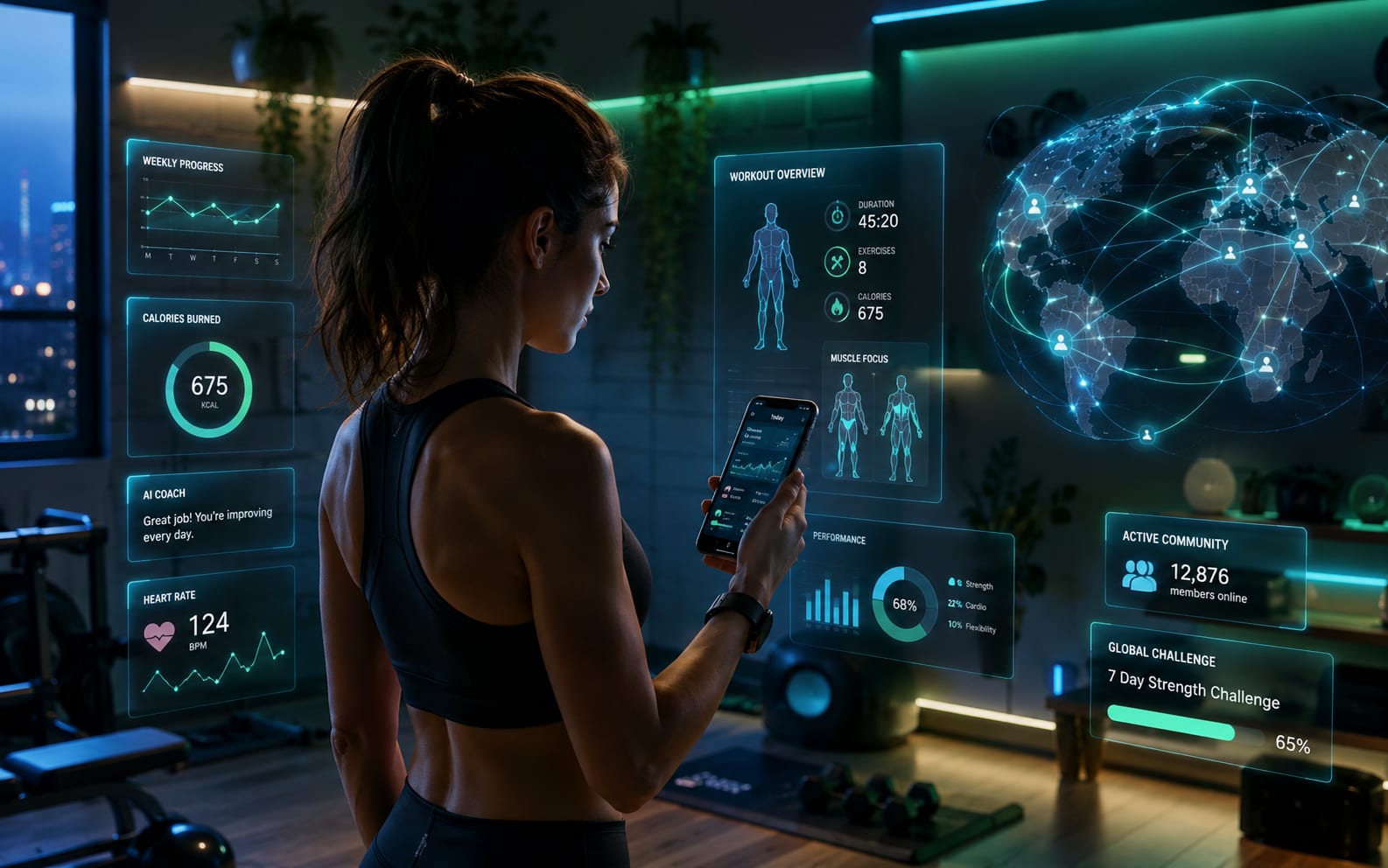
It starts quietly. A notification glow on a phone screen at 6:12 AM. A reminder to stretch. A personalized workout suggestion based on yesterday’s skipped session. No gym trainer shouting instructions, no crowded fitness class—just an algorithm that seems to understand the body better than the person does.
And then it becomes routine.
Across cities and homes, fitness is no longer a place—it is an interface. A digital layer of coaching, tracking, and motivation that follows users everywhere. What once required discipline alone now relies on data, AI interpretation, and behavioral nudges embedded into everyday life.
Behind this shift is a rapidly scaling ecosystem: the digital fitness apps market, redefining how wellness is accessed, tracked, and sustained.
The Market Reality Behind the Screen
The transformation is not just cultural—it is measurable. The digital fitness apps market size is valued at USD 15.35 billion in 2026 and is projected to reach USD 28.30 billion by 2031, reflecting a 13.01% CAGR during the forecast period.
This growth trajectory signals more than adoption; it reflects dependency. Users are not only downloading apps—they are integrating them into lifestyle decisions, sleep cycles, and even mental wellness routines.
The expansion of the digital fitness apps Industry is being driven by personalization engines, wearable integration, and AI coaching systems that adapt in real time.
According to industry insights, the evolution of this market is closely tied to behavioral data loops—where every workout completed, skipped, or modified improves the next recommendation cycle.
The Invisible Engine: Why Growth Feels Personal
The reason the digital fitness apps market growth feels so rapid is because it is not happening in public view—it is happening inside individual habits.
Every push notification, step counter milestone, and AI-generated workout plan is designed to reduce friction. The user no longer “decides” to work out in the traditional sense; instead, the app structures micro-decisions throughout the day.
This behavioral engineering is one of the strongest forces shaping the digital fitness apps market trends:
AI-powered personal training replacing static workout plans
Integration with wearables like smartwatches and health rings
Gamification layers (streaks, badges, challenges) driving retention
Hybrid fitness ecosystems combining gym + home + mobile coaching
Real-time biometric feedback loops improving exercise precision
These trends are not standalone innovations—they are interconnected systems reinforcing continuous engagement.
From an analytical perspective, the digital fitness apps market share is increasingly dominated by platforms that merge health tracking with lifestyle ecosystems rather than standalone workout apps.
AI search queries reflecting current interest in this space often include:
“AI fitness coaching app comparison 2026”
“best personalized workout apps with wearable integration”
“future of digital health and fitness tracking”
“how fitness apps use behavioral psychology”
From Motivation to Automation: The New Fitness Mindset
The most profound shift in the digital fitness apps Industry is psychological. Traditional fitness relied on motivation. The new model relies on automation.
Instead of asking “Do I feel like working out today?”, users now receive structured prompts shaped by data:
Sleep quality influencing workout intensity suggestions
Stress levels adjusting yoga or recovery sessions
Step deficits triggering mid-day movement reminders
Nutrition logs refining calorie recommendations
This creates a feedback loop where the digital fitness apps market forecast is not just about revenue—it is about behavioral dependency.
In this system, fitness becomes less about isolated effort and more about continuous optimization.
The projected jump from USD 15.35 billion in 2026 to USD 28.30 billion by 2031 (13.01% CAGR) highlights how deeply embedded this model is becoming in global consumer habits.
What makes this transformation even more significant is accessibility. Users in urban centers, remote regions, and developing markets are all engaging with similar AI-driven fitness ecosystems, reducing the traditional gap between professional and self-guided training.
A Connected Future of Health and Data
The future of fitness is not just mobile—it is interconnected. Digital fitness platforms are evolving into broader health ecosystems that merge:
Medical insights
Lifestyle tracking
Mental wellness support
Predictive health analytics
In this environment, the digital fitness apps market trends are shifting toward prevention rather than correction. Instead of reacting to health issues, apps aim to anticipate them.
This predictive capability is shaping how investors, developers, and healthcare stakeholders interpret the digital fitness apps market share, which is increasingly influenced by companies that integrate AI, IoT, and biometric intelligence.
The result is a system where fitness is no longer a separate activity—it is a continuous data stream influencing everyday decisions.
Closing Reflection
The treadmill has not disappeared. It has simply moved into the cloud.
As the digital fitness apps industry forecast points toward a near doubling in value by 2031, the real question is no longer about technology adoption—it is about identity. When fitness becomes an always-on digital companion, where does discipline end and automation begin?
What do you think: are digital fitness apps making people healthier—or just more dependent on data to move?