


![K-pop duo Flare U poses for a photo during its debut showcase held at Blue Square Woori WON Banking Hall in Yongsan District, central Seoul, on May 13. [FNC ENTERTAINMENT]](https://www.vitaminrush.com/wp-content/uploads/2026/05/1778683261_3ddeb1b0-3375-45c2-b2f4-bab0f90223eb-115x115.jpg)
A new Pew Research Center survey found that half of adults under 50 now get health and wellness information from influencers and podcasts, despite widespread concerns over misinformation online
Fitness and wellness-focused content takes up a major share of social media consumption, largely driven by health influencers with large platforms that capture the attention of millions. It turns out that people aren’t just engaging with that content more than ever — they’re using it as a core resource, according to a new survey from Pew Research Center.
While many Americans say they struggle to identify accurate health information, 4 in 10 U.S. adults — and half of those under 50 — now claim they get their health and wellness information from social media influencers and podcasts.
Pew Researchers dove into social media to take a closer look at some of the top accounts, analyzing 6,828 profiles with at least 100,000 followers on YouTube, TikTok or Instagram that regularly post about health and wellness, pairing that research with two surveys of U.S. adults about their experiences with wellness influencers.
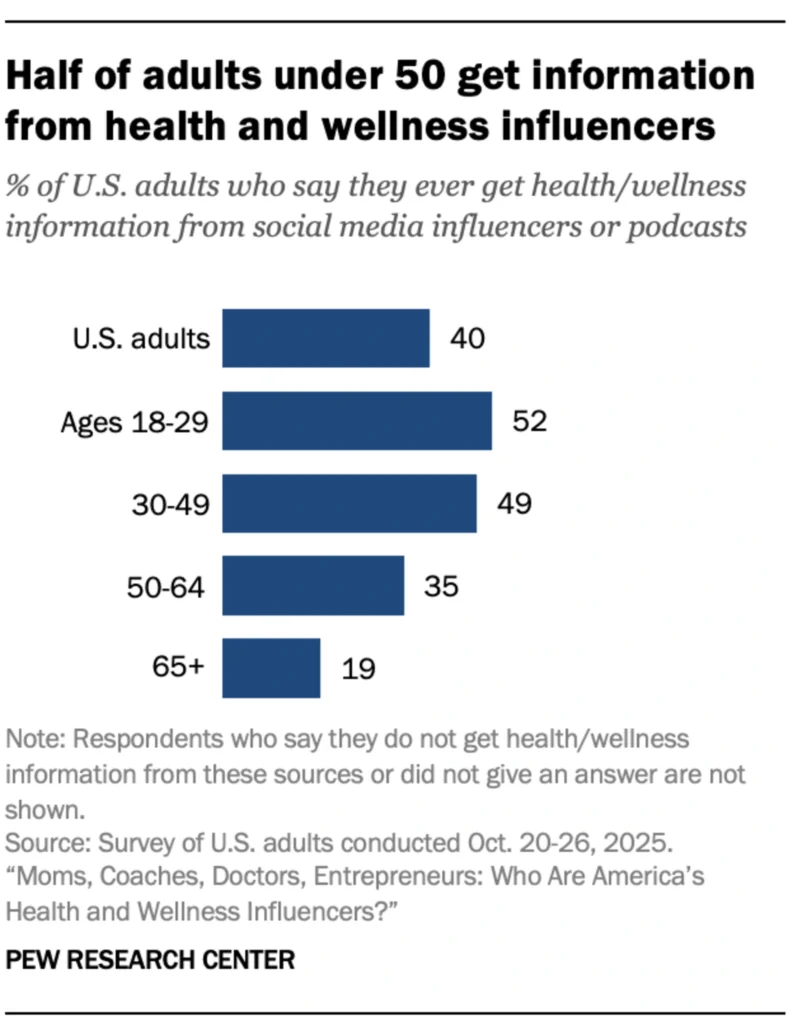 credit: Pew Research Center
But who are these influencers capturing the attention of so many Americans?
Here’s how those accounts broke down, with 41% describing themselves as some sort of healthcare professional:
17% self-described as conventional medical professionals like doctors, dentists and nurses;
7% were allied health professionals such as physical therapists or pharmacists
7% claimed to be alternative health professionals, such as functional medical practitioners, naturopaths, chiropractors or massage therapists
6% were dietitians and nutritionists
4% were mental health professionals such as psychiatrists and social workers
The remaining accounts self-described as follows:
31% of these influencers identified as coaches, such as diet, fitness and/or life coaches, with many offering one-on-one services or guides
28% said they were entrepreneurs or business owners, often mentioning a wellness studio or medical practice they own or licensed products or treatments they offer
It seems algorithms are kind to health and wellness influencers — most Americans who get their health and wellness info from creators responded that they usually come across the content on their feeds, rather than actively seeking it out.
Demographically, certain groups are more likely to say they receive health and wellness information from influencers, the survey found, namely adults under 50; Black, Hispanic and Asian Americans; and people without health insurance.
As for the demographics of the influencers themselves, 64% were women, while 34% were men, according to Pew. Despite that significant discrepancy, men seem to be among the most successful, carving out nearly half (46%) of the 8% among this cohort with 1 million or more followers. Men also took up a higher proportion of those who identified as doctors.
As for female influencers, women are about three times as likely to describe themselves as some variation of “mom” or “mother” (17%) than men are to mention their role as a father (6%).
Overall, not many are drawing from personal experience in their content, with 13% recounting stories about medical conditions, weight-loss or fitness journeys, or experience as a caregiver.
Those findings seem to conflict with research from last year, which indicated that the more authentic a fitness and wellness influencer is, the higher growth and engagement they’ll achieve.
The future of the influencer economy could be precarious, even as more people engage with wellness-driven content.
A 2025 survey revealed that Americans were increasingly rejecting fitness influencers, as nearly half (47%) of active U.S. adults claimed they trusted their own instincts over fitness experts, influencers or tracking tech when it comes to fitness decisions.