




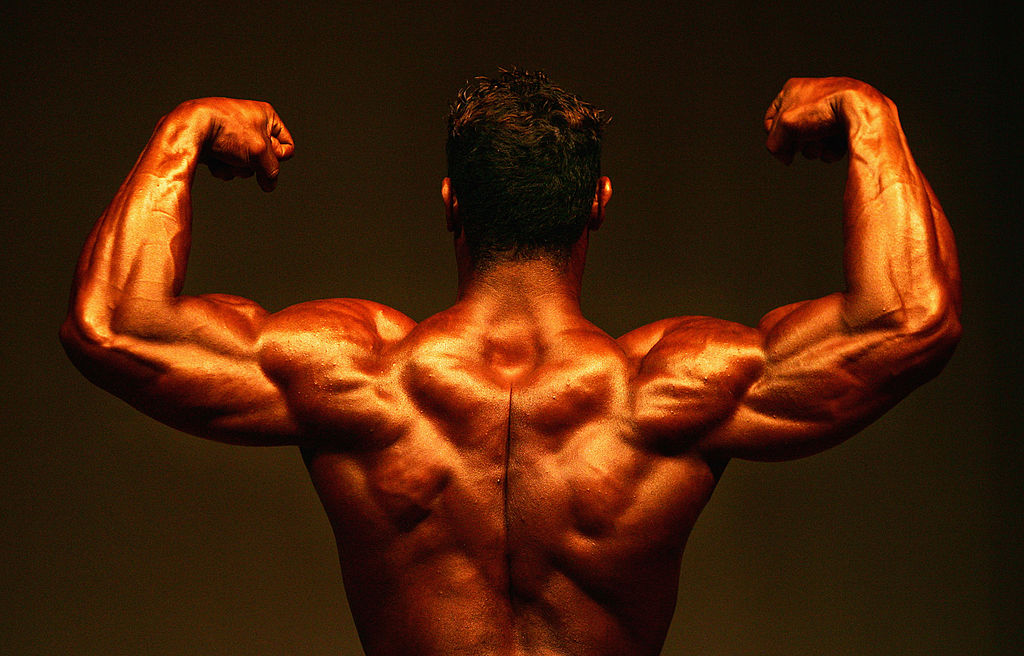
Are the kids alright? Perhaps not. According to a survey by UK Anti-Doping, around a third of 16- to 25-year-olds in Britain have purchased selective androgen receptor modulators after encountering advertisements online. These are known as SARMs, which sound like something nasty you’d pick up in a Chinese biowarfare lab. In reality, they’re not much better: SARMs are synthetic concoctions that mimic the effects of male sex hormones, and are not approved for medical use in the UK. Though they can enhance athletic performance and muscle-building in the gym, they can also lead to liver failure, strokes and shrinking testicles.
Leaving aside whether a third of young Britons really do buy SARMs after seeing them advertised online, the casual use of performance-enhancing drugs is certainly on the rise. This trend is likely fueled by social media, where young people feeling insecure about their physical appearance start comparing themselves to others. If the influencer barking or cooing at them isn’t selling SARMs, then maybe they’re selling testosterone replacement therapy, which, in any case, is now even advertised on the Tube. Or maybe they’re selling peptides — chains of amino acids used in several products from bootleg fashion to injury recovery.
Peeling back the frontiers of body modification is in vogue. Looksmaxxers such as Clavicular have emerged from the dark recesses of the internet into magazine profiles. The Enhanced Games, a knock-off version of the Olympics in which athletes are allowed to dope, is being held in Las Vegas this month. One carnival sideshow is “ballmaxxing”, where men swell their scrotal sacs to the size of children’s fists by injecting them with saline infusions.
All this is one side of what might be described as the K-shaped, bifurcating effect of the internet on our engagement with the artificial. Just as there are those injecting themselves with research chemicals, or satisfying their sexual and emotional needs via gooning and AI chatbots, there are others finding meaning in a total refusal of the artificial, particularly of the online. This is seen in embracing “good” bacteria via probiotic pickles and yogurt, or even unpasteurized raw milk. This tribe of the analog-curious are sometimes known as the Bohemian Peasantry, or Bopeas, as coined in UnHerd a few years ago.
Both the Bopea and the peptide-loving self-optimizer are on understandable quests. As more of “real life” transfers from the physical realm to the internet, pressure grows to conform to the smoothed-out, flawless version of the human as passed through an Instagram filter. There’s no point in half-measures: it’s either all in or nothing at all.
The loopy thing is when these extremes come together. Like with tradwives, who can only sell their “down-on-the-farm” ideal of submissive femininity via the unceasing churn of the TikTok algorithm. Or RFK Jr, the US Health Secretary who chugs raw milk and doesn’t love vaccines but injects testosterone. Even at the level of an individual trend, company or person, there are spasms between reaction and futurism. What we will not be seeing much more of any time soon is a measured, considered middling approach. You’re either looksmaxxing, or you’re tradmaxxing, or you’re out of the game entirely.