




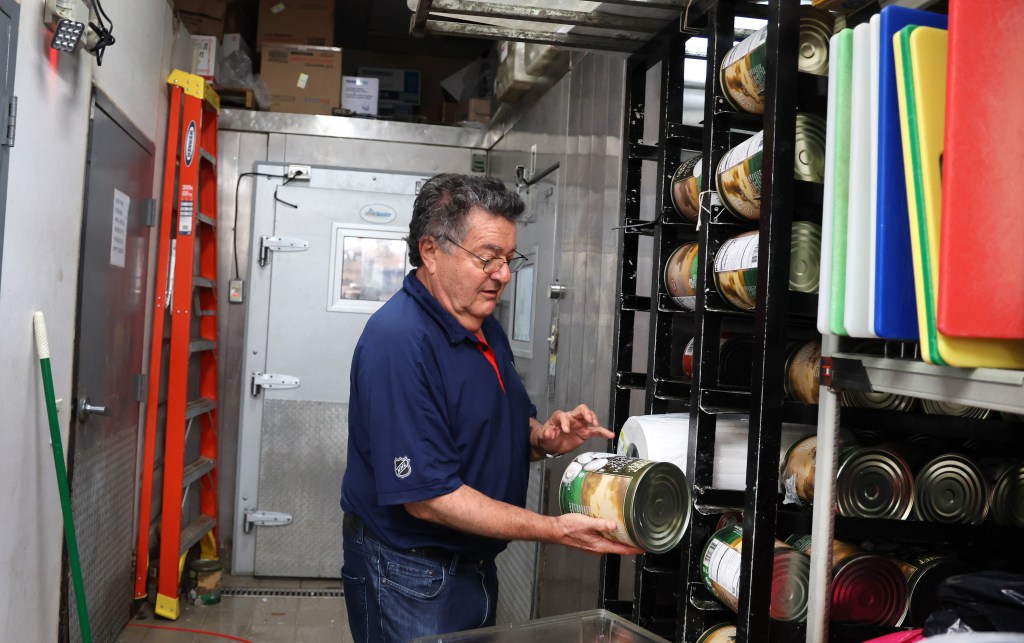
South Florida is home to an abundance of kosher and kosher-style restaurants, markets, bakeries, caterers and ice cream shops. But diners may wonder: How kosher are they really?
There’s an assortment of standards, philosophies, rules and types of rabbinic supervision for products that are deemed kosher. Consumers looking for guidance may get confused by the multiple certifying agencies, many with their own guidelines for which foods are allowed and which prohibited.
It’s not only Jews who seek out kosher products. According to Star-K, an international kosher certification organization, many Americans with specific dietary needs buy kosher food, including those with celiac disease and lactose intolerance, and Muslims, whose certifying system, known as halal, resembles that of the kosher process.
We’ve compiled a sampling of kosher certification agencies in South Florida, with descriptions of their services.
Glossary of terms
Before we proceed, here are a few terms that are important in the kosher world.
Kosher: Kosher means “fit” or “proper” in Hebrew. Judaism’s kosher laws stem from the biblical books of Leviticus and Deuteronomy, which detail which animals may be eaten, such as cows and lambs, and which are prohibited, such as pigs and shellfish. These rules have evolved over the centuries after being interpreted by rabbis. The animals must be killed according to detailed regulations, and meat and dairy products cannot be eaten together.
Kashrut: Also known as “kashrus,” it’s the body of Jewish dietary laws that describe what may be eaten and how the foods should be processed.
Mashgiach: The mashgiach is a kosher supervisor who ensures food is prepared according to the rules of kashrut. According to the Kosher Institute of America: “The work is hands-on and detail oriented. A mashgiach has to know how to verify kosher symbols, inspect produce, confirm that equipment was [koshered] properly, and watch for mistakes that could compromise a facility’s kosher status.”
Hechsher: A seal of approval that shows an establishment or a food product has passed inspection.
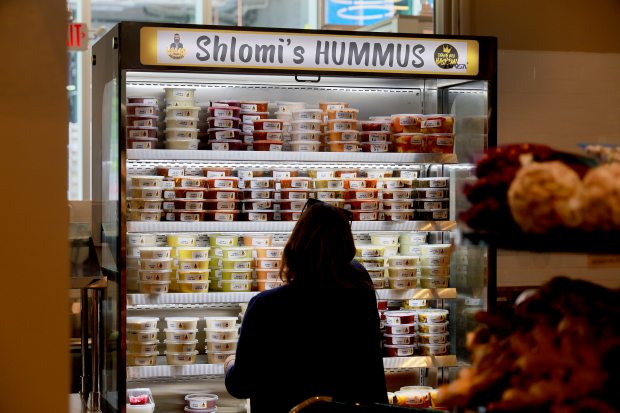 A variety of hummus combos are available at KC Market in Boynton Beach, which is certified by the Orthodox Rabbinical Board of Broward and Palm Beach Counties. (Mike Stocker/South Florida Sun Sentinel)
Glatt: According to the OU Kosher Certification Service, the Orthodox movement’s kosher arm, glatt “literally means ‘smooth,’ indicating that the meat comes from an animal whose lungs have been found to be free of all adhesions. Recently, the term ‘glatt kosher’ is increasingly used more broadly as a generic phrase, implying that the product is kosher without question.”
Pareve: A description of foods that are allowed to be eaten with meat or dairy, such as eggs, kosher fish, vegetables and coffee.
Shochet: A Jewish ritual slaughterer.
“Jewish” or “Kosher style”: These are flexible terms that refer to the history of the foods and not their level of kashrut. There are many nonkosher South Florida restaurants that promote the cultural roots of their menus, such as Poppies, a Delray Beach delicatessen, where the menu shows “Jewish deli favorites.” Similarly, Bagel Snack in Pompano Beach offers a “classic Jewish breakfast scramble,” made of lox, eggs and onions.
Then there are the restaurants that advertise their “kosher style” food. At Cafe Landwer in Hallandale Beach and Boca Raton, meat is kosher, but the staff serves cheeses from the same kitchen, which observant Jews would traditionally separate.
At Motek Mediterranean restaurants in Palm Beach and Miami-Dade counties, which also bill themselves as “kosher style,” the chicken, beef and lamb are glatt kosher, but the staff does not maintain a separate kitchen or utensils for dairy. The restaurants are open on Saturdays, the Jewish Sabbath, and there is no rabbinical supervision.
“This approach reflects a respect for the spirit of kashrut, particularly in ingredient sourcing, while not adhering to the full set of requirements necessary for official kosher certification,” Motek spokeswoman Michela DellaMonica said.
Kosher certification agencies
Orthodox Rabbinical Board of Broward and Palm Beach Counties; orbkosher.com
The 26-year-old ORB is one of the major kosher certifiers in South Florida, supervising more than 235 sites, including caterers, bakeries, restaurants, senior living facilities and schools, said Rabbi Sholey Klein, the executive director. Its staffers monitor some of South Florida’s most popular and biggest kosher supermarkets, including KC Market (three locations in Broward and Palm Beach counties) and Aroma Market & Catering (two locations).
Here’s how Aroma describes its meat on its website: “Kosher meat must come from approved animals (such as beef, lamb, or venison) and be slaughtered in a precise, humane way by a trained shochet. The lungs are inspected for imperfections, and the meat is carefully soaked and salted to remove any remaining blood.” Klein said the ORB has more than 400 kosher supervisors on staff. Restaurants and markets that serve meat have full-time monitors, he added, while establishments that don’t serve meat have part-time supervisors and surprise inspections from ORB staff.
Kosher Miami; koshermiami.org
Kosher Miami was founded in 2002 and says it “adheres to only the strictest standards of Kashrus.” The agency supervises more than 150 sites, including restaurants, cafes, frozen yogurt shops, bakeries, grocery and candy stores. Among its members is Kosher Kingdom (Miami), 3 Scoops (Hollywood) and Holy Toast (Surfside, Wynwood). Several sites have full-time supervisors, but Kosher Miami also has other oversight systems, such as video cameras, the agency said in a statement to the Sun Sentinel.
Sephardic Kosher Supervision; Facebook.com
Rabbi Moshe Otero, director of Sephardic Kosher Supervision, said he oversees 10 South Florida sites, mostly manufacturers. A Spanish speaker, he also works with Latin American food producers who want to get their products certified kosher. One of the manufacturers he supervises is NOSHY, a Pompano Beach plant-based snack kitchen.
According to NOSHY co-owner Lindsay Perez: “They oversee our ingredient sourcing and production process to ensure everything meets kosher standards. This includes verifying that all ingredients are approved, reviewing our facility and processes, and providing ongoing supervision to maintain compliance.”
Sunshine State Kosher; sunshinestatekosher.org
Sunshine State Kosher started with one client in 2018 and now has 50, according to Rabbi Allen Saks, its founder along with Rabbi Moshe Berger. Saks said their goal is to make it easy for places of business to keep kosher, so they make themselves accessible to answer questions and visit.
They mostly certify sites that don’t require a supervisor to be present at all times, such as ice cream shops where no meat is served. Sunshine State works with four Jeremiah’s Italian Ice sites and seven Playa Bowls (acai bowls and smoothies), as well as multiple home bakeries. They also supervise The Lucky Dip (kosher pizza) and The Lucky Dog (chicken, hot dogs, burgers) in Hollywood.
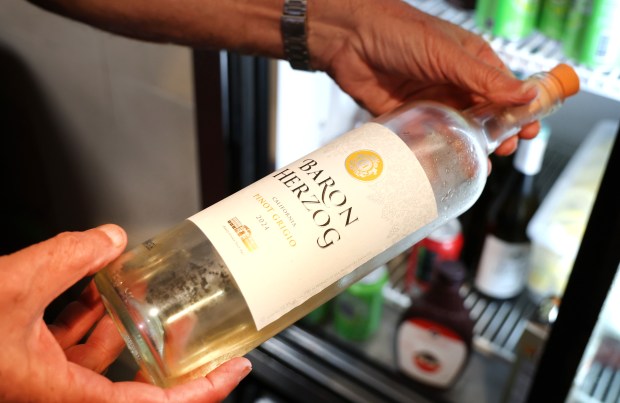 Rabbi Paul Plotkin examines a wine bottle for a kosher certification label at Ben’s Kosher Delicatessen, Restaurant & Caterer in Boca Raton. (Carline Jean/South Florida Sun Sentinel)
Rabbi Paul Plotkin, supervisor of Ben’s Kosher Delicatessen, Restaurant & Caterer (Boca Raton and New York)
Ben’s restaurants are overseen by Plotkin, a retired rabbi who led Temple Beth Am, a Conservative congregation in Margate, for 33 years. The restaurants are kosher but not “glatt” kosher. Ben’s only serves foods that are pareve or meat. Supervisors are on site six days a week on an unannounced schedule; Plotkin also does surprise checks and monitors video surveillance cameras.
Ben’s is open on Saturdays, an unusual trait for a kosher restaurant because many Jews believe Jews should not cook or eat food cooked from scratch on the Sabbath. But Ben’s can remain open, according to Plotkin, because a non-Jew takes temporary ownership each week: “The store is leased to a gentile on Friday before Shabbat candlelighting, and Ben’s takes the restaurant back the next day after dark.”
RAM Kosher Vegan & Vegetarian; ramkoshervegan.com
Rabbi Andre Malek, the founder, supervises restaurants and products that are meatless. Among his South Florida sites are True Vegan restaurant (Delray Beach), Origamy Gelato Weston in Sunrise and Maoz Vegetarian (a falafel stand in the food court at Town Center at Boca Raton).
Malek, who lives in Aventura, said he is a pescatarian and oversees vegan and vegetarian eateries because they don’t require full-time monitoring. He and about a dozen supervisors make surprise inspections and also check security cameras to make sure the restaurants are using kosher products.
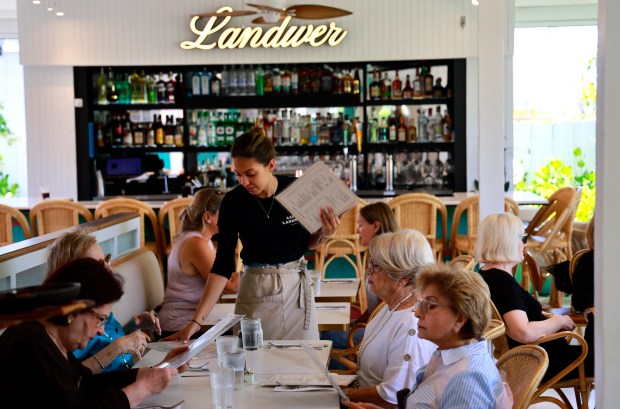 Cafe Landwer in Hallandale Beach serves Israeli and Mediterranean food. (Mike Stocker/South Florida Sun Sentinel)