




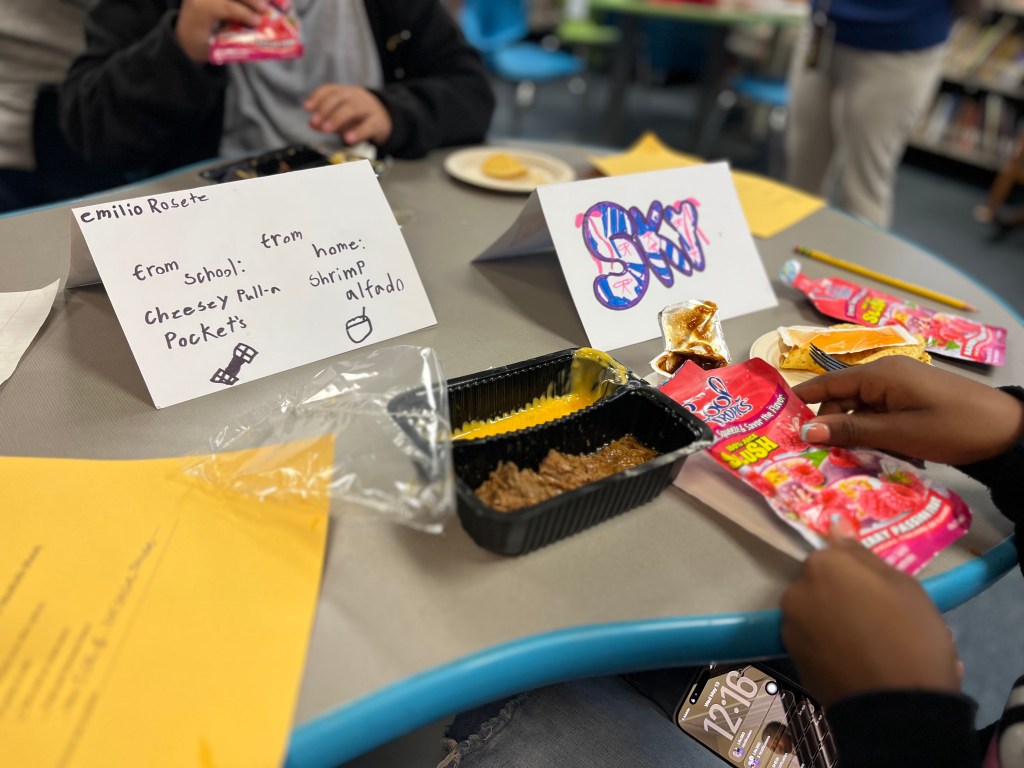
Fourteen lucky students have been gaining hands-on food and nutrition education through a district-led pilot program.
The focus group — cleverly titled “Food For Thought” led by Vallejo City Unified School District Director of Student Nutrition Services Jade Brandon and Assistant Director Kim Reyes, gives students an exclusive look at menu creation, federal and state nutrition guidelines, and real-world food system learning.
“We started this at the beginning of the school year, reached out to a couple of school sites trying to get some principal buy-in to really try and give our students a voice in what we’re serving in schools,” said Reyes.
Throughout the year, students ages 9 to 14 have met monthly at their home school site, Solano Widenmann Leadership Academy, to test recipes, learn how meals are developed in accordance with nutritional guidelines, and share critical feedback.
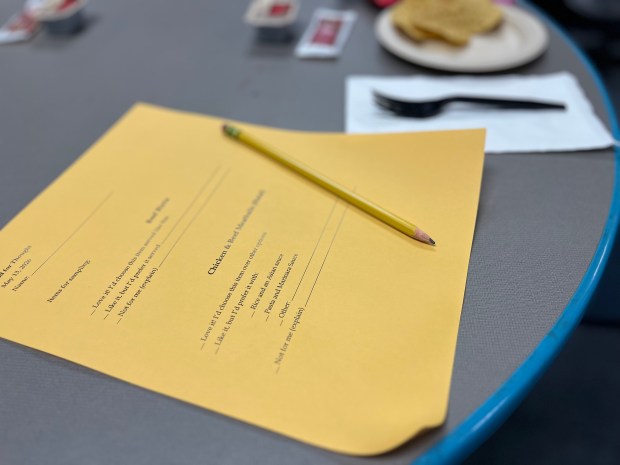 Solano Widenmann Leadership Academy students take part in “Food for Thought,” a pilot program that invites them to engage in their school’s nutrition conversation. (Photo by Sarah Rodriguez)
“In our first meeting with students, we asked, ‘What do you wish was on the menu?’ and we heard a lot of Chick-fil-A,” Reyes laughed. “We explained to them why we couldn’t do that and talked about what we could do — what was possible, talked about what was missing from the menus.”
In a recent session, students worked to develop their own culinary creations to bridge those menu gaps. In teams, they developed and taste-tested their own chicken sandwich recipes, experimenting with various breads, sauces, and cheeses.
They named their sandwich, discussed how it could successfully be marketed to their peers, and — after a vote — launched the winning recipe to be featured on menus throughout the district.
Sixth-grader Ricky Nutt, a contributing member of the winning group, which titled their sandwich the “Italian Special” because it included pesto aioli, says a key factor was their consideration of the food’s appearance.
When it comes to school food, “a lot of people don’t like to eat it because of the looks of it,” said Nutt. When it came to his chicken sandwich creation, “I felt like we could make it taste better and make it look better, too.”
In an effort to market the item to peers, the focus group participants additionally created posters to display throughout the district. Nutt’s poster hangs proudly in the cafeteria, where students can see it every day.
“It feels really cool, it’s crazy how I made the sandwich, and now it’s in the whole school district,” he said, an item that students can order every other Wednesday.
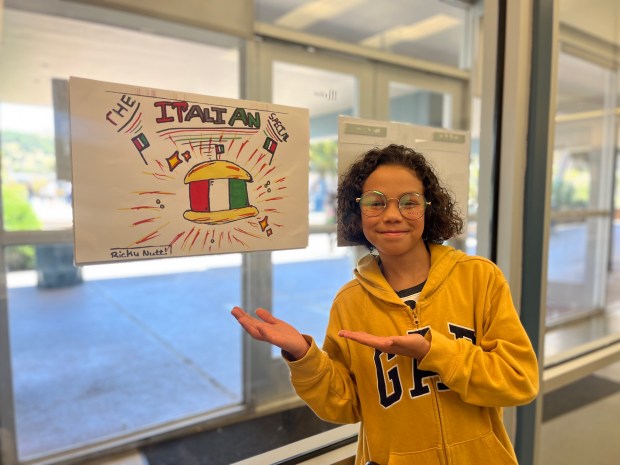 Sixth-grade student, Ricky Nutt, poses with the poster he made to promote his group’s newest culinary creation. The “Italian Special” is a chicken sandwich with pesto aioli, now offered district-wide. (Photo by Sarah Rodriguez)
Launched this year, the program brought together like-minded students according to feedback from an interest survey last year. Next year, the hope is that its reach will only expand.
By integrating real-world food systems learning, organizers hope that students will eventually incorporate ingredients grown by their own hands through recently implemented Farm to Fork’s on-site hydroponic system.
In the near future, the goal is to give Solano Widenmann students the ability to not only learn how hydroponics work, but also grow produce that can later be used in school meals.
“These students are going to help us choose some things to grow so they’ll get to really taste the difference between things that are homegrown and things that they can buy in the store,” said Reyes. “We want them to just really understand the food chain and where things are coming from.”
In their last session on Wednesday, students got to sample two potential future menu items: Beef Birria with cheese sauce and chicken and beef halal meatballs.
Students like sixth-grader Abigail Jordan enjoyed the food more than others. “The food was very good, made me want to dance for 10 minutes straight,” she said.
After tasting the items, they discussed likes, dislikes, and potentially tastier means of serving the foods, either in a soup, a sandwich, or as a pasta with an added sauce.
The focus group, according to district organizers, serves several purposes.
“It gives students a platform to provide input on menu items, while also educating them on the federal and state nutrition guidelines that shape what schools can and cannot serve,” a statement to the Times-Herald read. “Through this process, students gain a deeper understanding of why school meals look and taste the way they do, and become more thoughtful, informed contributors.”