




Google can be said to be the most prominent tech company in May. Taking advantage of the Google I/O conference, it released a large number of new products all at once –
There is an intelligent system that disrupts the mobile phone system and Gemini Intelligence, Googlebook that disrupts the computer usage paradigm, and Fitbit Air, a screenless smart bracelet that aims to disrupt the smartwatch market – it is embedded with Gemini and focuses on AI health functions.

To this end, Google not only revived Fitbit, which was almost discarded, but also invited NBA star Stephen Curry as its spokesperson. The ambition is obvious, which is to capture a share of the smart wearable market.
However, Fitbit Air is not targeting Apple Watch, but rather competing with the popular “WHOOP” in recent years. WHOOP is a tech upstart that has been established for 12 years and has emerged in the past two years. Screenless bracelets are their main products.
WHOOP is quite unique in both product definition and marketing strategy. They don’t sell bracelets; they give them away for free! However, if you want to use it normally, you have to pay a substantial subscription fee to activate the AI health function.
In March this year, WHOOP completed a $600 million financing round, with a valuation of over $10 billion.
In an era when even charging heads come with a screen, why has a screenless smart bracelet become so popular?

Seamless Design, Extreme Simplicity
WHOOP is not a startup. In fact, it was founded in 2012, earlier than the first – generation Apple Watch, and was listed among the pioneers of smartwatches along with brands like FitBit and Pebble.
In an era when technology was not as advanced, not much could be integrated on the wrist. So, for fitness – and – health – focused brands like Fitbit and WHOOP, their first – generation products were basically screenless bracelets. Feedback and interaction were completed through the mobile app, which was essentially no different from tying a bunch of sensors on the wrist.

Image source: Tom’s Guide
With the development of technology and the education of users’ minds by Apple Watch, similar smart bracelet products soon came with a small screen. At that time, a touch – screen on the wrist was the trend. Otherwise, why would you wear an expensive bracelet for no reason?
WHOOP doesn’t think so. To this day, their bracelet products still have no screen, as if they were forgotten by the wave of smart wearable transformation in the past decade.
At first, making a screenless bracelet was a compromise. Now, still doing so is a “persistence”.
In fact, the “screenless” feature makes WHOOP an extremely simple product, without much complexity and limitations, bringing freedom in use.
Founder Will Ahmed believes that once a screen is added to WHOOP, functions such as time, health reminders, and message reminders will be continuously added, turning it into a smartwatch. In this field, it’s difficult to compete with brands like Apple and Samsung.

Will Ahmed
Many users on Reddit also said that the reason they choose WHOOP is that it doesn’t have a distracting screen and is pure enough.

WHOOP is essentially a health sensor. You can wear it on different parts of your body. The official also offers close – fitting clothing accessories that can be used with WHOOP. This flexibility is hard to match for smartwatches and smart rings.
The logic of Apple Watch is to bring more information to the wrist; the logic of WHOOP is to let the device step back completely.
Ultimately, the reason why Apple Watch was established and entered millions of households is that Apple found the main positioning of “sports and health” for it.

Image source: CNET
This brings an interesting reversal: Apple Watch was supposed to end the competition of smart bracelets. However, as smartwatches become more and more popular, more and more people can understand the value of “tying sensors on the body”, which instead highlights the value of WHOOP’s extreme simplicity.
To this day, there are still many people who prefer traditional mechanical watches with aesthetic value and also yearn for the health monitoring function of Apple Watch. However, wearing two watches at the same time on both hands can be a bit awkward. Ifanr also interviewed a real user @flypig around us, and he told us:
Because I have many mechanical watches, which I think are very nice accessories, I change them according to my mood. But I also have the need to record my physical state. I don’t want to wear a mechanical watch on my left hand and an Apple Watch on my right hand. I’ve tried it, and it still looks too strange to wear two watches.
In terms of product form, WHOOP has many advantages over Apple Watch. Without a screen, it has a battery life of two to three weeks and is extremely lightweight. The top – of – the – line version weighs less than 30 grams and is almost imperceptible when worn. The cost of the hardware itself is extremely low, and the membership provides lifetime warranty, which is very suitable for extreme sports enthusiasts. It only costs $50 – 80 to replace a lost bracelet.
Since the WHOOP bracelet has no interaction and only needs to be “worn”, it means that there is no usage threshold for children, especially for the elderly who need more health monitoring.
Making people willing to wear it and wear it for a long time is the most important advantage of smart wearable products. In this regard, the extremely simple WHOOP is already a quite valuable product.
Universal Access, from Athletes to Everyone
In 10 years, the smart wearable field has changed rapidly. The earliest industry competitors, Fitbit and Pebble, have become silent after the entry of large companies like Apple.
WHOOP has not only survived tenaciously for 12 years but also become very popular in the past two years. This seemingly “come – from – behind” story may have been foreshadowed from the very beginning.
At the beginning, WHOOP didn’t target the general public. Its functions go beyond the conventional physical signs such as steps and heart rate, and directly focus on three major indicators: “sleep”, “recovery”, and “load”. It uses quantitative scores to tell users how well they have recovered when they wake up each day and whether they are suitable for training today.

This function stems from the experience of founder Will Ahmed as a squash player in college. He found it difficult to balance training volume and recovery, so he developed WHOOP, which focuses on tracking recovery, exercise load, and sleep indicators.
A product created by athletes naturally understands athletes best. Therefore, WHOOP initially targeted the very unique user group of athletes.
Although this made them less well – known among the general consumers, it allowed them to avoid competing with Fitbit and Apple Watch and won exclusive orders from many professional sports teams, including the American Professional Baseball League.
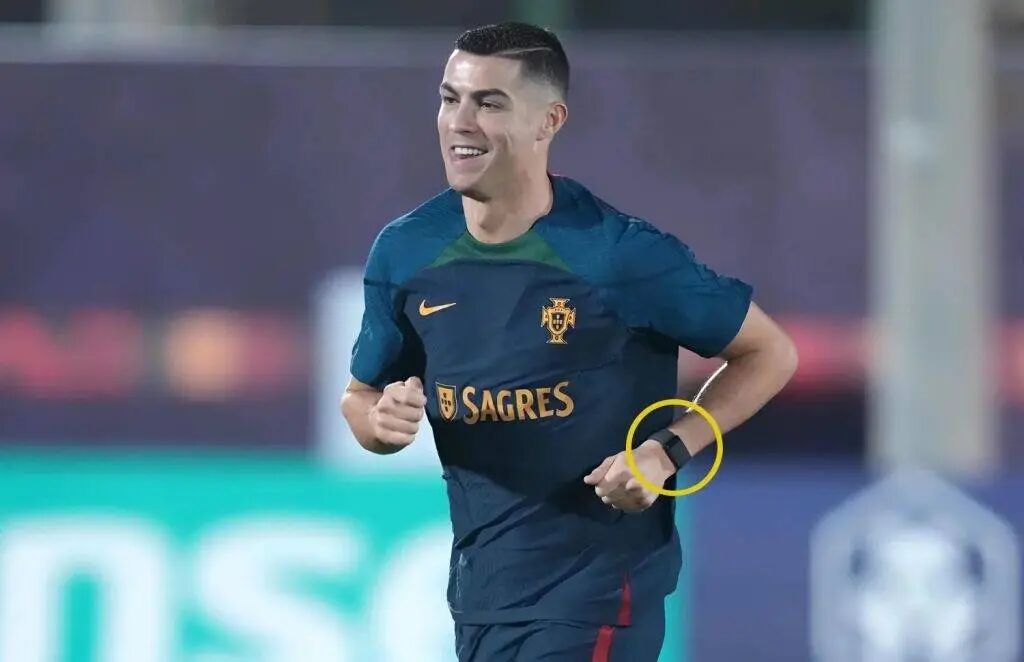
Moreover, the professional nature of WHOOP soon attracted heavyweight users such as NBA star LeBron James and “CR7” Cristiano Ronaldo as “volunteer promoters”, so there is no worry about exposure and popularity.
This is also the smart part of WHOOP. For any consumer product, it’s difficult for a mass – market product to break into the high – end market, but it’s much easier the other way around.
For the middle – class, WHOOP comes with the aura of “the same as that of elite athletes”, establishing a “professional” brand image, and only lacks an opportunity for purchase.
Since 2018, WHOOP has changed its product from a one – time purchase price of $500 to a subscription – based model starting from 6 months at $30 per month, significantly lowering the entry threshold and officially entering the mass consumer market.
This change has completely rewritten WHOOP’s business model: from a “hardware” brand to a service provider selling software.
The bracelet is the starting point of WHOOP’s business model, but not the core. The bracelet is almost “given away” to users. WHOOP sells “subscriptions” directly on its official website. What you buy is a one – year membership, and the cost is directly included in the subscription fee. You can have a one – month free trial or even get a bracelet for free.
Of course, different membership levels of WHOOP come with different strap configurations. The good thing is that WHOOP doesn’t require you to pay for the hardware, and you can change the package at any time.

After buying an Apple Watch, as long as the hardware itself has no faults, in theory, you have the lifetime right to use the product. As for WHOOP, once you stop renewing the subscription, the strap in your hand has no value.
The hardware form can only attract users to experience, while the software experience can truly retain users’ hearts, which is especially true for WHOOP.
WHOOP’s mobile app turns physical data into a “body dashboard” that requires almost no learning cost. With various visual charts, you can clearly see how well you slept, how intense your exercise was, and what your physical age is.

Ordinary people may have difficulty understanding whether their “recovery” score is high or low. However, through color – coding, the physical state becomes very intuitive – green means good recovery, and you can train normally today; red is like a warning sign, reminding you that your body hasn’t recovered yet and it’s better to stop exercising.
After the global pandemic, more and more people have started to pay attention to their “physical state” rather than simply recording sports data. This trend coincides with WHOOP’s transformation from a “sports equipment” to a “lifestyle brand”.
Meanwhile, with the continuous addition of health monitoring functions such as atrial fibrillation and blood pressure trends, along with the comprehensive upgrade of WHOOP 4.0 in terms of battery life, size, and wearing experience, and the low – threshold free – trial mechanism, more and more ordinary users who are not keen on sports have started to contact and accept this brand.
From the star – power influence of athletes to the low – threshold and high – value usage method, WHOOP has transformed from a tool for athletes to a new middle – class social symbol, just like Lululemon, cold – water baths, and oat milk.
You may not really exercise, but as long as you wear WHOOP on your hand, it seems that you have entered a lifestyle system that is highly self – disciplined, health – conscious, and constantly optimizing yourself – at least that’s how it seems to outsiders.

Buying AI Hardware Means Paying for AI
WHOOP’s subscription – based business model is quite advanced for smartwatches, but it is surprisingly similar to the current popular “AI hardware”.
Take Plaud as an example. If you are a real target user of a recording pen, you basically can’t avoid subscribing to a membership to get enough recording – transcription time. The core of its experience is the app that is responsible for organizing, understanding, and retrieving the recorded content.

In the past, when making products and hardware, we used to advocate “All in One”, equipping as many functions as possible in a limited device body.
Now, we can see that many successful “AI hardware” products have returned to a simpler form: single – function, restrained interaction, but capable of