




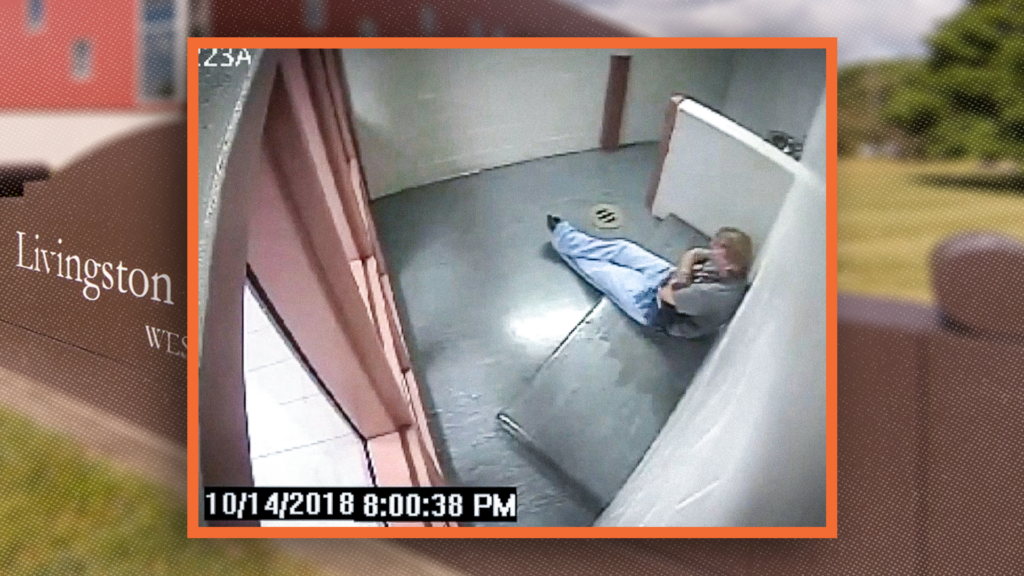
Imagine you’re a sheriff’s deputy and a detainee arrives, unresponsive and moving slowly after ingesting a large quantity of unknown pills. After a doctor clears him for jail, with a warning that any “deterioration” will require immediate medical care, the detainee is sent into a cell where he vomits profusely and remains unresponsive in the same position all night. Should you, as the deputy, call for help? And should you be legally held responsible if your inaction leads to the detainee’s death?
Earlier this week, the 6th Circuit Court of Appeals ruled no, granting qualified immunity—the legal doctrine that protects police officers from federal civil rights lawsuits unless they violate a “clearly established” constitutional right—to all 11 Livingston County, Michigan, officers involved in the 2018 death of John Griswold. This ruling reversed a March 2025 decision by Judge Robert White of the U.S. District Court Eastern District of Michigan, who had denied immunity to seven officers and the county.
In October 2018, Brighton police arrested Griswold, a father of two with no criminal record, following a dispute with his brother, Tim, who would later tell ABC News affiliate WXYZ that John had been irritable due to anti-anxiety and antidepressant medications. Family members informed officers that Griswold had ingested at least 10 unknown pills, later identified as ulcer medication. En route to the county jail, Griswold “slurred his speech,” “struggled” to stay upright, and reported he could “hardly walk.”
At the jail, nurse Trina Barnett observed Griswold sweating with “pin point pupils” and ordered an emergency room evaluation. After arriving at St. Joseph Mercy Livingston Hospital, attending physician William Kanitz diagnosed Griswold with QTc prolongation—a condition linked to antidepressants that causes abnormal heart rhythms—but found no immediate risk. However, in his discharge papers, Kanitz warned the officers to seek help for “significant changes or worsening” or if there was “recurring vomiting.” Griswold died the next morning from “sudden cardiac death,” according to court documents.
While the district court initially sided with Griswold’s estate—suggesting inadequate training had led to officers’ deliberate indifference—the 6th Circuit disagreed.
According to the appeals court, to prove that officers violated Griswold’s 14th Amendment rights as a pretrial detainee, his condition would have to be serious enough to require treatment or his need for medical attention would have had to be “obvious” to the average person.
In its ruling, the court found that Griswold’s case failed to meet the standards set in similar cases, including Blackmore v. Kalamazoo County (2004) and Preyor ex rel. Preyor v. City of Ferndale (2007), and Burwell v. City of Lansing (2021), because he only vomited once and “displayed no outward signs of distress” while making “minor movements” throughout the night that would “suggest to jail officials that he was in no immediate need of medical attention.”
But the officers’ own testimony would suggest that they had recognized outward signs of distress, but failed to act on them. After Griswold vomited around 8 p.m., officers checked in on him 25 times throughout the night. This includes Deputy Patrick Turchi, who is seen on video entering Griswold’s cell, even though Turchi testified that he didn’t recall being in the cell or observing the vomit.
After Griswold spent all night covered in his own vomit, officers are seen on video serving him breakfast outside his cell, a minute before Griswold’s death throes began. According to court records, two deputies looked into the cell around the same time Griswold “started convulsing.” He was dead about 10 minutes later.
Livingston County does not provide a medical professional between 10:00 p.m. and 6:00 a.m., leaving jail deputies responsible for checking inmates’ medical conditions. Yet both the sheriff and his deputies testified that they weren’t trained to assess medical distress or recognize symptoms requiring “immediate medical attention.”
While their lack of knowledge aided in the jail officers’ arguments for qualified immunity, it might not exempt Livingston County from the Griswold estate’s failure to train theory. Judge White found there was sufficient evidence that the County’s “inadequate” training caused Griswold’s death.
Kali Henderson, the attorney representing Livingston County and the sheriff’s office, tells Reason that “no one did more for Mr. Griswold” than the officers at the Livingston County Jail. Attorneys for Trinity Health Livingston Hospital, Kanitz, and the Griswold Estate did not respond to Reason’s request for comment at the time of publication.
There should be nothing unreasonable about expecting law enforcement to provide or procure medical assistance to an unresponsive person covered in their own vomit, especially an inmate whose every freedom relies on an officer’s discretion.