




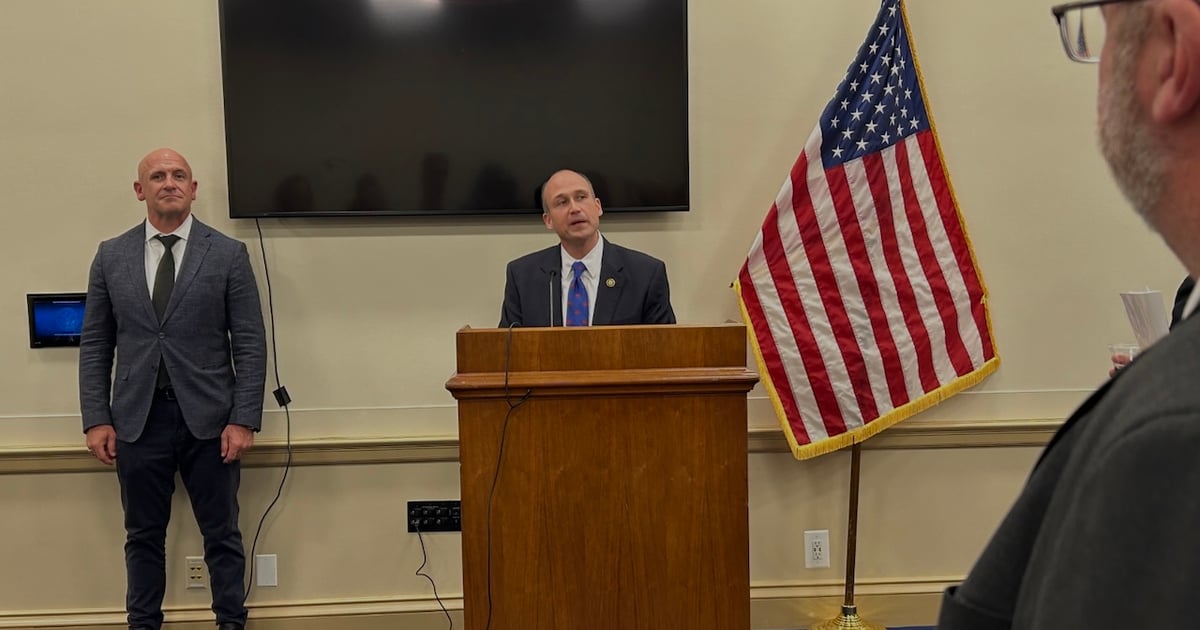
The Natural Products Association (NPA) hosted its annual Fly In Day on Tuesday in Washington, D.C. NPA pushed its agenda relating to flexible and health savings accounts reimbursement, the drug preclusion provision and the need for a federal preemption bill to forestall the rising tide of state-level regulations.
The annual exercise, which is a common feature of many trade organizations across many industries, brings together representatives of companies and the staffs of members of Congress from the districts where those companies do business. NPA president and CEO Daniel Fabricant, Ph.D., lauded the turnout, claiming that more than 130 NPA members were in attendance at the gathering. The event coincides with NPA’s celebration of its 90th year in existence.
NPA restricted the agenda to three items, seeking to make the elevator pitches for congressional staff members as brief as possible. Many of the meetings were as short as 15 minutes.
One of the items on the agenda was getting lawmakers’ support for a change in the rules to allow funds saved in individual Flexible Spending Accounts (FSAs) and Health Savings Accounts (HSAs) to be used to buy dietary supplements. NPA has made the case that many items can be paid for with these funds — even including recreational equipment — so it makes little sense that supplements are not on that list.
The organization has also stressed that the change would be an administrative one — altering Internal Revenue Service rules — not a legislative one that would require a new bill to be sponsored and passed into law.
Another agenda item had to do with the so-called “race to market” that arose from the drug preclusion clause in the Dietary Supplement Health and Education Act (DSHEA). That portion of the law states that if an ingredient has been the subject of an Investigational New Drug (IND) filing, it cannot subsequently be brought to market as a supplement. If an ingredient makes it to market as a supplement first, though, subsequent drug development is still open, and the two forms can coexist. (The fish oil market, with both supplement and drug forms, is the best example of this.)
NPA’s pitch to lawmakers harped on the steep disadvantage that this places on supplement companies. A drug maker could file an IND almost as a placeholder, permanently walling off that ingredient from the supplement realm. And ingredient developers complain they’ve had difficulty even finding what INDs have been filed before they spend potentially millions of dollars on an R&D project.
A third agenda item would require a new law to be passed, and NPA had one ready to offer to lawmakers to ask for their support. The bill, H.R. 7366, has been introduced by Rep. Nick Langworthy (R-N.Y.). Titled the Dietary Supplement Regulatory Uniformity Act, its purpose is to reassert federal regulatory authority over dietary supplements and to head off a growing movement by state legislatures to put their own boundaries on the business.
Most of those relate to age restriction bills that prevent the sale of certain muscle building and weight-loss supplements to minors. The motivation behind these is the disputed notion that the use of these supplements by minors can exacerbate eating disorders. But other state-level bills have cropped up, too, including new requirements around testing of protein supplements.
Langworthy spoke to the group about his bill during a reception after the event on Capitol Hill.
He said the way in which supplements were regulated at the federal level by FDA, before the state regulation wave started, created a thriving marketplace that has served the American public well.
“That framework has given consumers confidence that products are properly labeled and safe, while also allowing businesses to operate under one clear set of rules. That consistency is vital to maintaining the integrity in the industry,” Langworthy said.
The new push toward a scheme of 51 different sets of state-level rules can have only one outcome, he said.
“More red tape. More confusion. Higher costs for businesses. Few choices for consumers. And very little evidence that any of it meaningfully improves public health,” he said.
“Businesses are now being forced to comply with costly state-specific requirements while consumers are seeing hyperbolic warnings that often conflict with federal scientific determinations,” Langworthy added.
Langworthy concluded his remarks with observations about how important direct advocacy is to influencing lawmakers and creating change in Washington.
“Members of Congress and their staff are pulled in a million different directions every day, often bouncing from issue to issue. If I didn’t have meetings like this, I would not be the sponsor of this bill,” he said.