




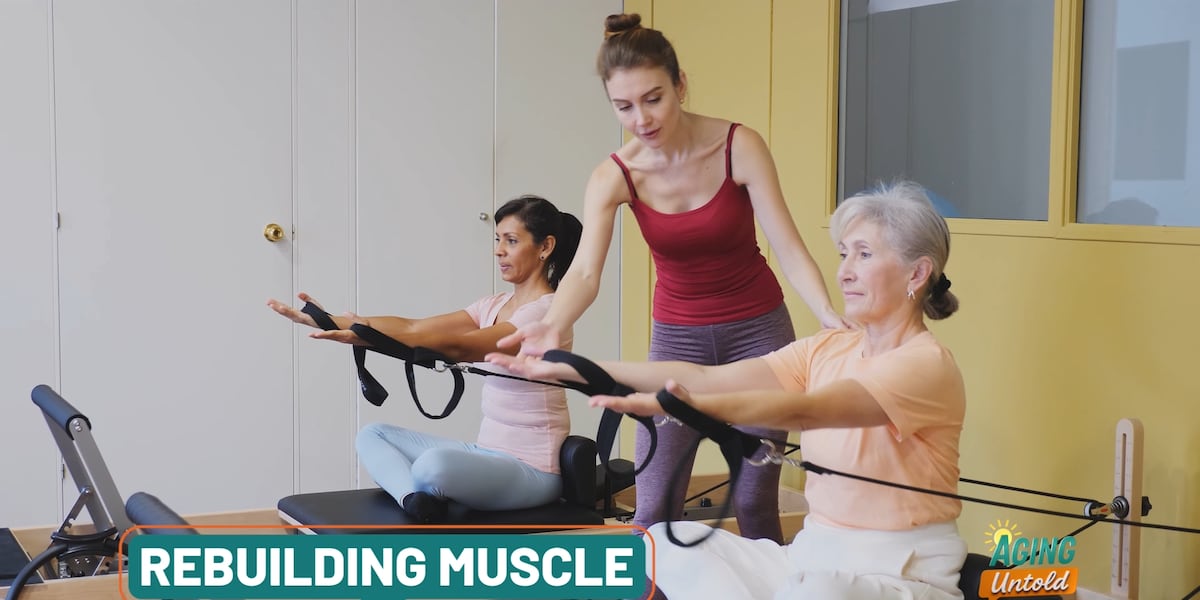
(Aging Untold) — Loss of muscle mass begins as early as age 30, and older adults ages 50 to 70 typically lose about a third of their muscle mass, according to AARP.
But aging isn’t the only factor.
Malnutrition, lack of physical exercise and some medical conditions can also lead to muscle loss, but there are several things that you can do about it.
What happens in the body
“Muscle is the currency of longevity,” Dr. Rhea Rogers, a board-certified physician, said. “It’s so important to try to maintain that muscle.”
Age-related muscle loss is called sarcopenia.
Rogers said muscle is a metabolic organ that controls blood sugar, and insulin resistance starts at the muscle level. When muscle mass decreases, everything metabolically declines.
The body doesn’t process and synthesize protein as well with age. When muscles contract during exercise, they release hormones called myokines that help protect the heart and brain, improve memory and decrease inflammation, she said.
“That’s why exercise is considered so important,” Rogers said.
The connection to independence
Sam Cradduck, a gerontologist, said maintaining muscle mass is essential for independence.
“If you want to remain independent, you better be maintaining muscle mass because that is your balance, that is your standing up, your climbing your stairs, recovering from illness,” Cradduck said.
Cradduck said the lymphatic system requires muscle to move fluid through the body. When muscle goes, everything else declines.
“It is the one thing in aging that we really do have control over,” Cradduck said.
Muscle is medicine, Cradduck said.
“It’s a pill that you don’t swallow,” she said.
Simple exercises at home
Cradduck said people don’t need to join a gym to build muscle.
“When you stand up, sit down, sit down and stand up again,” Cradduck said. “If you do just five times and then you walk off, you’ve just exercised without even realizing it.”
Wall push-ups are another option.
Amy O’Rourke, an aging expert, said people lose muscle every decade, citing Harvard Health.
“What I think, especially women do, and I think men do too, they get on a scale and they look at it, they go, ‘Oh, I’m the same weight I was,’” O’Rourke said. “And they don’t realize that muscle weighs more than fat.”
O’Rourke said calisthenics at home and eating protein daily are accessible options. Walking builds strength.
More than just walking
Katherine Ambrose, an aging-well coach, said she’s a fan of hiring a fitness trainer if possible.
“It’s really strength building, building muscles that is more than just walking,” Ambrose said. “That is more than just the things that we’re encouraged to do.”
Ambrose said doctors sometimes tell seniors to take it easy, but the opposite is needed.
“Muscle allows us to do everyday things that keep us independent from getting out of our chair, climbing stairs, carrying groceries, taking care of ourselves and our home,” Ambrose said. “But also to fully participate in life.”
Muscle protects bone
Rogers said people don’t realize that losing muscle means losing bone.
“Everybody’s looking at how you can preserve bone, and preserve the muscle,” Rogers said. “That’s what preserves the bone.”
Muscle mass also protects bone during falls.
Hormones and aging
Rogers said hormone optimization is key. For people with kidney disease who can’t eat the same amount of protein, supplements and essential amino acids can help preserve muscle.
Ambrose said she’s been surprised to learn that hormones can be taken when older.
“A lot of people are under the impression that I went past menopause a long time ago, so hormones won’t help me now,” Ambrose said.
Rogers said hormones aren’t only for symptom relief but for disease prevention and healthy aging.
“A lot of people think that they got older, so they lost their hormones,” Rogers said. “But I will tell you, you lost your hormones, so you got older.”
Six key takeaways Muscle loss begins at age 30, with adults ages 50 to 70 losing about one-third of their muscle mass, according to AARP Muscle is a metabolic organ that controls blood sugar and releases protective hormones during exercise Simple exercises like standing up and sitting down five times can build muscle Losing muscle leads to bone loss; maintaining muscle protects bone density and cushions falls Hormone optimization can help build muscle at any age, even after menopause Walking, calisthenics, protein intake and resistance training are all accessible ways to maintain muscle mass
Copyright 2026 Gray Media Group, Inc. All Rights Reserved.