




This article contains affiliate links; if you click such a link and make a purchase, we may earn a commission.
“Hearst Magazines and AOL may earn commission or revenue on some items through these links.”
Probiotics, a.k.a. “good bacteria,” boast an array of benefits. The best probiotics for women may even boost feminine health (by bolstering vaginal health), help maintain a strong immune system, and keep digestive health in check.
Probiotics are live microorganisms that can deliver health benefits when you ingest them, per the National Center for Complementary and Integrative Health (NCCIH). You may think of bacteria and other microorganisms as germs that are bad for your body, but many are helpful, working to digest food, tackle cells that can cause disease, or help produce vitamins, the NCCIH explains. Probiotic supplements contain microorganisms that are very similar to the ones that naturally live in your body. There are many different types of probiotics, but the most common ones are bacteria in groups called Lactobacillus and Bifidobacterium—and each type of strain works a little differently.
Meet the Experts:Zhaoping Li, M.D., Ph.D., the director and chief of the Division of Clinical Nutrition at the David Geffen School of Medicine at UCLA; Keri Gans, R.D., author of The Small Change Diet; and Jessica Cording, R.D., C.D.N., author of The Little Book of Game-Changers.
Ideally, you’d get all the probiotics from your diet. Fermented foods and drinks like yogurt, kombucha, kimchi, miso, and sauerkraut are great additions to your snacks and meals, says Zhaoping Li, M.D., Ph.D., the director and chief of the Division of Clinical Nutrition at the David Geffen School of Medicine at UCLA. “What we really need as women is to have the best nutrients, and that’s through food that we take in every day,” she says.
That said, most people aren’t getting all the probiotics and nutrients they need from their daily diet, which is why supplementation may be beneficial. “Taking a probiotic supplement is easy,” Dr. Li points out. That said, Dr. Li recommends incorporating probiotic supplements with an all-around choice to improve daily nutrition. “Just having probiotics on a bad diet will not help,” she says.
Our top picks
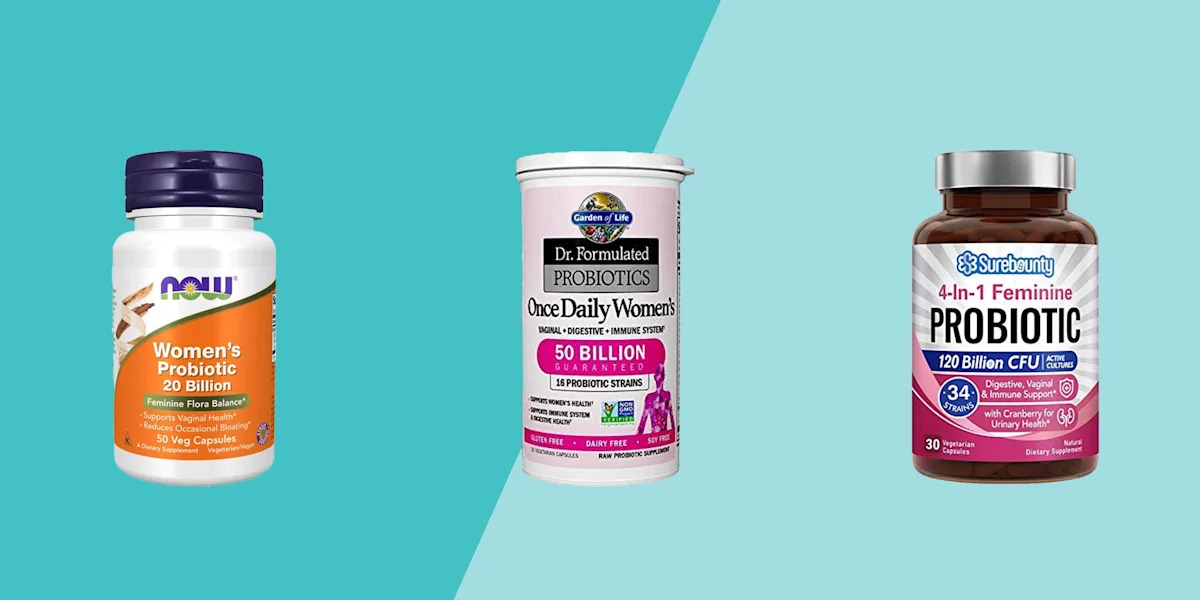
Below, check out the best probiotic supplements for women, all of which meet expert criteria.
Dietary supplements are products intended to supplement the diet. They are not medicines and are not intended to treat, diagnose, mitigate, prevent, or cure diseases. Be cautious about taking dietary supplements if you are pregnant or nursing. Also, be careful about giving supplements to a child, unless recommended by their healthcare provider.
You Might Also Like