





Competition in private-label (PB) products amid high inflation is broadening from ultra-low-price staples such as bottled water and toilet paper into functional categories including protein drinks, vitamins, pet food and ready meals. As more consumers weigh nutrition, convenience and ingredient quality alongside price, retailers’ PB strategies are shifting from “price substitutes” to “lifestyle-oriented products.”
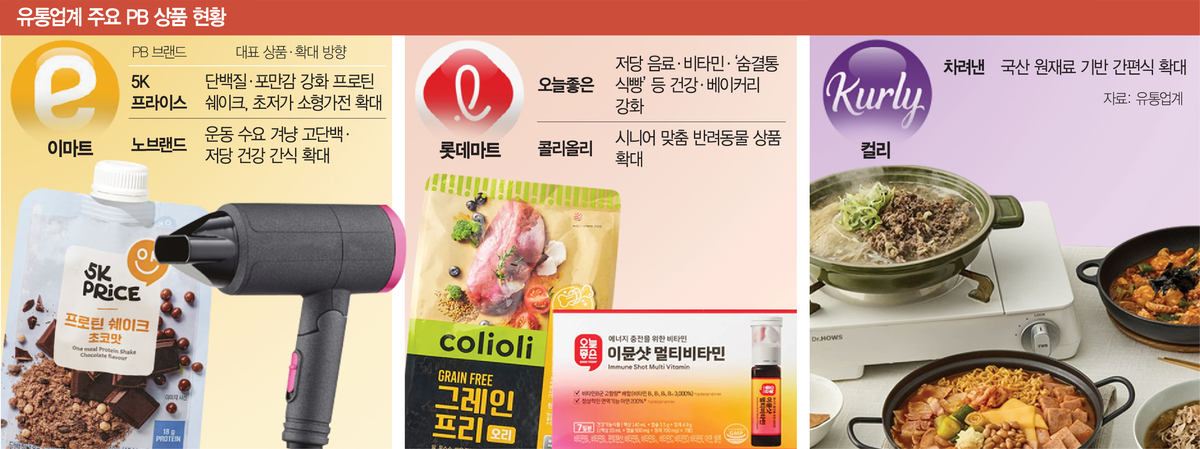
According to the retail industry on the 18th, three “5K Price Protein Shake” products launched by E-Mart in March surpassed cumulative sales of 390,000 units as of the 14th of this month. The 40-gram product contains 18 grams of protein and is priced at 980 won per unit. Even as shopping baskets have grown heavier, continued demand for exercise and diet management has driven consumer interest in PB products that offer affordable protein supplementation.
5K Price is an ultra-low-price PB brand E-Mart unveiled in August last year. It mainly consists of products priced under 5,000 won, undercutting prices of regular branded items. Initially focused on processed foods, the lineup has recently expanded to small home appliances such as steam irons, hair dryers and body fat scales. Some small appliances sold out quickly after launch and ended sales early.
No Brand, E-Mart’s flagship PB, is also expanding products targeting health-food demand. In February, E-Mart partnered with health-food brand “Kkobakkkobap” to launch seven No Brand high-protein, low-sugar snacks. The lineup, which includes galbi-flavored chicken breast, protein bars, Greek yogurt and thin noodles, surpassed cumulative sales of 370,000 units as of the 14th of this month.
Lotte Mart is expanding health-related categories including low-sugar drinks, protein foods and vitamins through its PB “Oneul Choeun.” Representative items include low-sugar protein bars, Immune Shot multivitamins, vitamin D and joint-health supplements that emphasize functional benefits. Recently, four Oneul Choeun products won two gold and two silver awards at Monde Selection, the international food quality evaluation institution.
Bakery and pet products are also becoming targets of PB expansion. Lotte Mart’s “Sumgyeol Tongsikppang,” launched last month, sold 150,000 units within four weeks of launch. Made with a long-fermentation process to enhance texture, the product shows that PB items are drawing consumers not only with lower prices but also with quality. The pet PB “Colli Olli” plans to expand from about 50 to about 70 items, focusing on age-specific products such as senior-only feed and snacks.
Ready-meal PBs are also taking root as repeat-purchase items. Kurly’s ready-meal PB “Charyeonaen” recorded cumulative sales of about 2.5 million units from its launch in April last year through the end of April this year. Analysts say the emphasis on ingredients — such as using domestic Korean beef shank and bone and Wando seaweed in its hanwoo seaweed soup, and domestic quail eggs and vegetables in its soy-braised dishes — has driven consumer response.
The retail industry is broadening its PB lineup because consumers’ selection criteria have shifted. While price sensitivity has risen amid high inflation, demand is growing for products that offer high satisfaction for the price rather than simply the cheapest options.
“PB is no longer just about lowering prices but is shifting toward quality and functions that prompt repeat purchases,” a retail industry official said. “With price sensitivity heightened by high inflation, competition in lifestyle-oriented PB products such as health foods, ready meals and pet items will expand further.”