






“We have many traditions like this that nobody has thought to put to a clinical test,” he said. “The opportunities are enormous.”
The minister was equally candid about the scale of ambition required. When a project valuation of 2.4 to 2.5 billion baht was cited from the stage, he dismissed it as insufficient to register on Thailand’s GDP.
“That figure is too small,” he said, drawing laughter from the audience. “We need to think far bigger.”

Dr Krithpaka used her address to outline the NIA’s “4G” framework — Grand, Growing, Global, and Grant — and to stress that agency support is now deliberately calibrated towards proof of outcome rather than proof of concept alone.
Funding will flow preferentially to projects that can demonstrate measurable health data, she said, echoing the minister’s call for scientific rigour.
She also confirmed that on 29 May the NIA will formalise cooperation agreements with more than 30 organisations — including the Food and Drug Administration and multiple hospitals — creating a regulatory sandbox where innovations can be trialled and scaled.
Dr Krithpaka also announced that Thailand’s startup ecosystem ranking, assessed under the international Startup Blink index, would be published later that afternoon, with preliminary indications pointing to positive news for the country’s standing. A formal announcement by the MHESI minister is scheduled for the following morning.
Looking further ahead, she invited all attendees to the Startup Thailand × Innovation Thailand Expo, scheduled for 25–27 June at Paragon Hall in Bangkok, where wellness and health-tech innovations will be showcased alongside international delegations from Japan, South Korea, India, China and Europe.
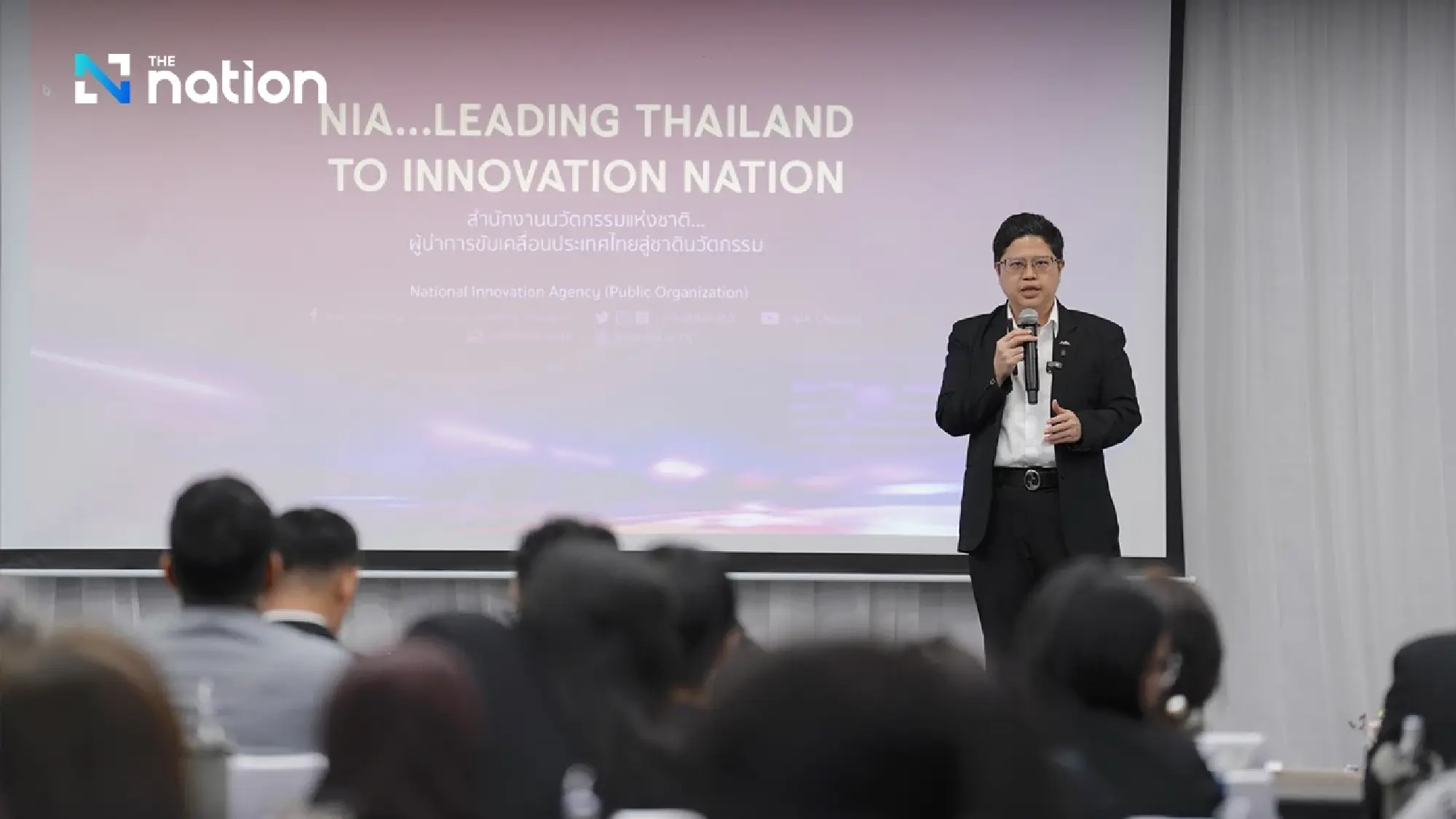
Both officials returned repeatedly to the same central argument: Thailand’s innate strength in hospitality is a genuine competitive asset that no amount of technology transfer can replicate in rivals.
But exploiting that asset at a premium international price point demands the scientific credibility that only laboratory analysis, clinical trials and peer-reviewed publication can supply.
Small entrepreneurs who secure that evidence, they said, need not compete directly with large corporations such as Chiva-Som or BDMS — they need only prove their innovation works and licence it upwards through the value chain.
“Others may have the technology,” Dr Yodchanan said. “But they do not have our hospitality. We have the talent. We just need the evidence.”