



Philippines Baby Food Market Overview
The Philippines baby food market is a rapidly growing segment of the country’s food and nutrition industry, involving specialized nutritional products designed for infants and toddlers, including infant formula, prepared baby meals, cereals, snacks, and organic baby food products.
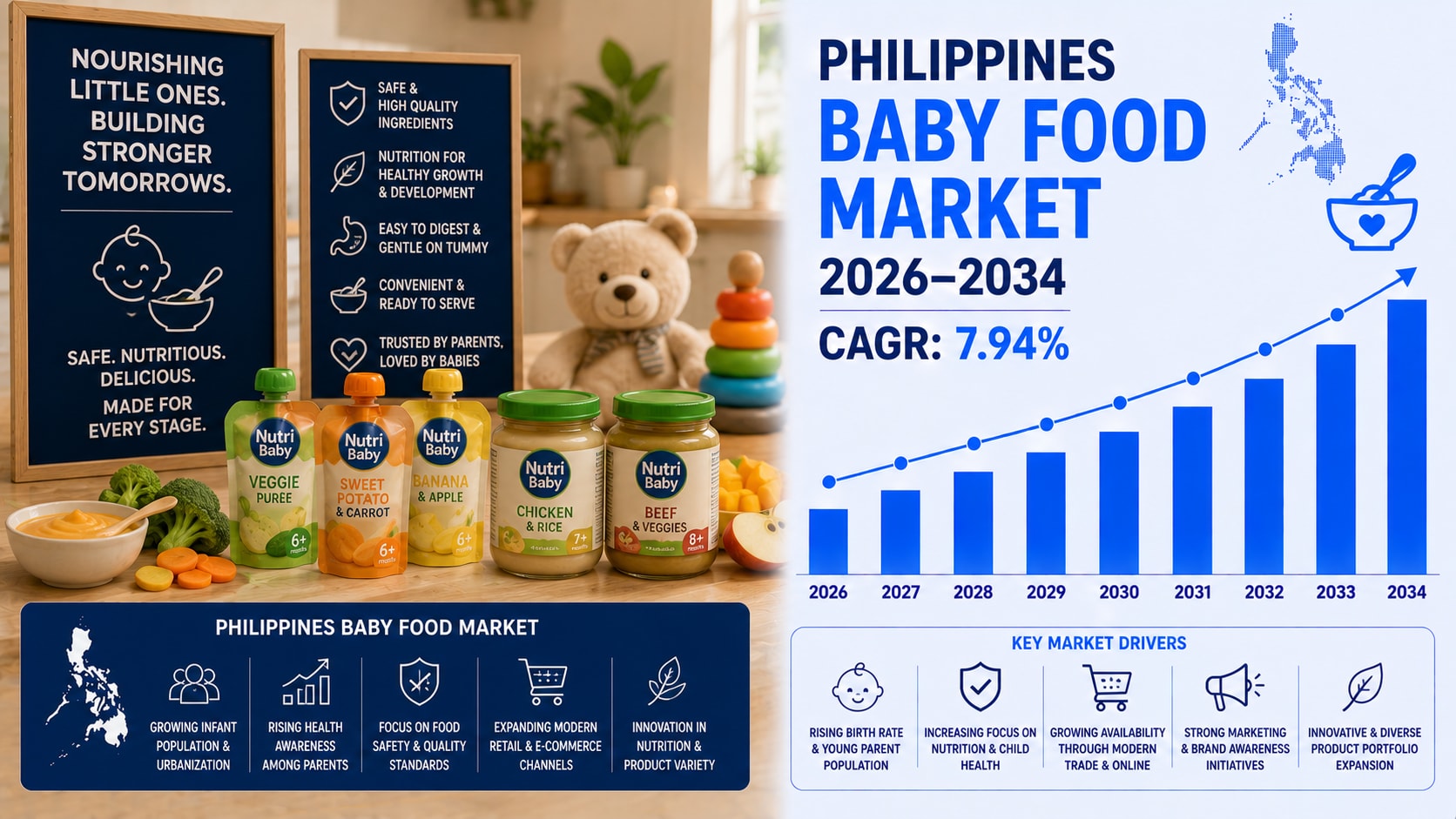
According to IMARC Group, the Philippines baby food market size reached USD 1.2 Billion in 2025 and is projected to reach USD 2.5 Billion by 2034, exhibiting a compound annual growth rate (CAGR) of 7.94% during 2026–2034.
The market is witnessing strong growth driven by increasing awareness regarding infant nutrition, rising disposable incomes, urbanization, expanding participation of working parents, and growing demand for convenient and premium baby food products.
Key Market Drivers
Rising Awareness of Infant Nutrition and Health
Parents are increasingly prioritizing balanced nutrition, immunity support, and healthy growth for infants, boosting demand for fortified and nutrient-rich baby food products.
Growing Working Parent Population
Busy urban lifestyles and increasing workforce participation among parents are driving demand for convenient ready-to-eat and easy-to-prepare baby food products.
Expansion of Premium and Organic Baby Food Products
Consumers are increasingly preferring organic, preservative-free, and clean-label baby food options that offer high nutritional value and product safety.
Increasing Urbanization and Disposable Income
Higher household income levels and urban living trends are encouraging spending on premium infant nutrition products and branded baby food items.
Growth of E-Commerce and Digital Retail Channels
Online retail platforms are improving product accessibility and offering wider product selections, discounts, and subscription-based purchasing options for parents.
Request a Sample Report with the Latest 2026 Data & Forecasts
What the Opportunities Are
Expansion of Organic and Natural Baby Food Products
The growing demand for chemical-free, non-GMO, and organic baby food products is creating opportunities for premium nutrition brands.
Growth of Functional and Fortified Nutrition Products
Manufacturers are developing baby food formulations enriched with probiotics, vitamins, DHA, iron, and immune-supporting ingredients.
Increasing Adoption of Sustainable Packaging Solutions
Eco-friendly and recyclable packaging formats are gaining popularity among environmentally conscious consumers.
Development of Personalized Infant Nutrition
AI-powered nutrition recommendations and customized feeding solutions are emerging as innovative growth opportunities.
Rising Demand for Plant-Based and Allergen-Free Products
Parents are increasingly seeking lactose-free, allergen-sensitive, and plant-based baby nutrition alternatives.
Recent News and Developments
May 2026: The Philippines baby food market is witnessing rising demand for organic, fortified, and locally sourced infant nutrition products as Filipino parents increasingly prioritize health, immunity, and early childhood development. Companies are expanding offerings that include clean-label baby cereals, fruit purees, and fortified milk formulas designed to address nutritional deficiencies and improve infant wellness.
April 2026: Digital and direct-to-consumer sales channels are becoming major growth drivers for the baby food industry in the Philippines. Brands are increasingly using e-commerce platforms, subscription-based delivery models, and social media marketing to reach urban parents seeking convenience and personalized nutrition solutions for infants and toddlers.
February 2026: The Philippines fast-moving consumer goods (FMCG) sector continued expanding despite broader economic pressure, supporting demand for packaged baby nutrition products. Industry data showed that the FMCG sector recorded approximately 5.2% growth during 2025, driven by resilient spending on essential food and household products, including infant nutrition categories.
January 2026: Health and nutrition awareness campaigns are increasingly influencing parental purchasing decisions across the country. UNICEF reported growing concern regarding ultra-processed foods and child nutrition, while health-focused parents continue shifting toward fortified, low-sugar, and nutrient-rich baby food alternatives.
December 2025: Sustainability and local agricultural sourcing are becoming important trends in the Philippine baby food sector. Baybay City in Leyte expanded initiatives using locally sourced sweet potatoes to produce baby food and infant milk products aimed at improving nutrition while supporting local farmers and reducing reliance on imported ingredients.
2025–2026 (market trend): The Philippines baby food market is being shaped by rising health consciousness, growing demand for organic and fortified nutrition products, rapid e-commerce expansion, and increasing adoption of convenient feeding solutions among working parents. Product innovation focused on immunity support, digestive health, and locally sourced ingredients continues accelerating across the industry. At the same time, inflationary pressure, changing birth rates, regulatory scrutiny on infant nutrition marketing, and rising raw material costs continue influencing consumer spending patterns and competitive dynamics across the sector.
Why You Should Know About the Philippines Baby Food Market?
The Philippines baby food market is becoming an increasingly important component of the country’s nutrition and consumer goods industry.
With projected growth from USD 1.2 Billion in 2025 to USD 2.5 Billion by 2034, the market demonstrates strong expansion potential driven by increasing health awareness, premiumization trends, digital retail growth, and evolving parenting preferences.
As consumers continue prioritizing infant nutrition, convenience, and product quality, baby food manufacturers are expected to focus heavily on innovation, sustainability, and advanced nutritional formulations to support long-term market growth across the Philippines.