




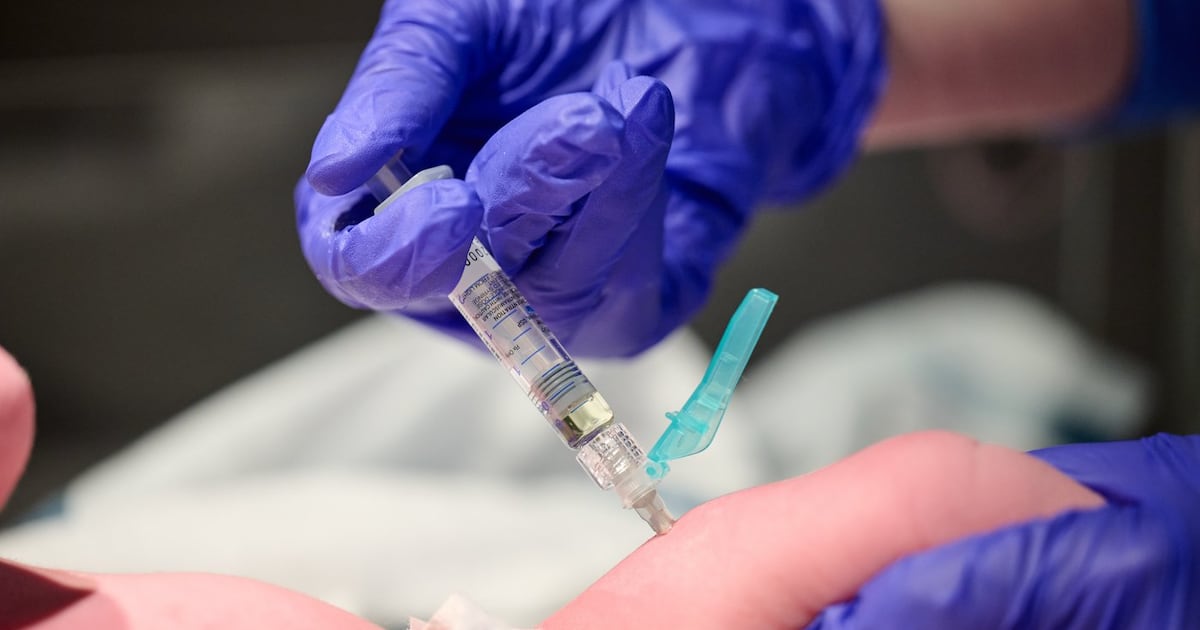
Dr. Eugene Ng says vitamin K has been given to babies for decades and it’s been shown to be safe.
As more Canadian health-care providers report seeing parents refuse vitamin K shots for newborns, experts are raising concern about the role misinformation and growing hesitancy toward preventive health interventions may be playing.
In January 2024, the Canadian Pediatric Society (CPS) reaffirmed that newborns should routinely receive a vitamin K shot shortly after birth to prevent a rare but potentially life-threatening condition known as vitamin K deficiency bleeding (VKDB).
According to the national guideline, newborns are naturally born with low stores of vitamin K — a nutrient essential for blood clotting — and breast milk alone does not provide enough to protect infants in the early weeks of life.
Without adequate vitamin K, babies can develop severe bleeding in the brain, intestines or other organs.
The guideline, jointly issued with the College of Family Physicians of Canada, recommends all newborns receive a single intramuscular dose — or simply, medication deep into muscle tissue — within the first six hours after birth.
Experts say the injection is the most effective method for preventing VKDB, particularly late-onset cases that can occur weeks after delivery and often involve brain bleed.
While oral vitamin K remains an alternative for parents who refuse the injection, the CPS says it is less effective and requires multiple follow-up doses.
“This is something essential for the baby’s health,” staff neonatologist Dr. Eugene Ng from Toronto’s Sunnybrook Health Sciences Centre said in a Zoom interview with CTVNews.ca Wednesday. “We’ve been doing it for decades, and it’s been shown to be safe, and the consequences of not getting it is far greater.”
“Fifty per cent of those babies may present with brain hemorrhages,” Ng said, referring to late-onset VKBD. “Brain hemorrhages carry far more devastating consequences because often it’s irreversible.”
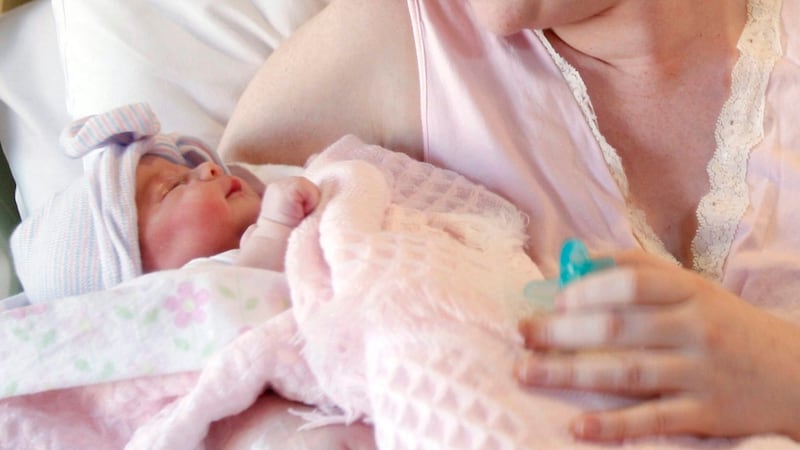 newborn, A mother holds her newborn baby at a hospital in Corpus Christi, Texas, Friday, Nov. 11, 2011. THE CANADIAN PRESS/AP-Corpus Christi Caller-Times, Michael Zamora,
According to the CPS guideline, classic VKBD occurs from two days to one week and late VKBD can occur from one week to six months after birth and is the form physicians are particularly focused on preventing.
Unlike early bleeding, which occurs in the first 24 hours of age and may be linked to specific maternal medications like anti-seizure medications or treatments for tuberculosis, late VKBD can occur unexpectedly and often without obvious warning signs.
While Canadian data on VKBD remains limited, surveillance conducted through the Canadian Pediatric Surveillance Program between 1997 and 2000 identified five confirmed cases of the condition.
According to the national guidelines, one infant had received no vitamin K prophylaxis, while two had received an oral alternative rather than the injection.
The findings translated to an estimated incidence of roughly one case for every 140,000 to 170,000 births.
Growing trend of more parents refusing vitamin K: doctor Dr. Eugene Ng comments on the growing trend of parents refusing to give their babies vitamin K.
Parental refusal and misinformation
Pilar Chapman, a hospitalist midwife at Hamilton Health Sciences’ West Lincoln Memorial Hospital, told CTVNews.ca in a Zoom interview Thursday that there has been an increase in parents declining vitamin K in clinical settings.
With more than two decades of experience, Chapman said there has been a shift in parental attitudes. In the early 2000s, she said one or two clients a year would decline vitamin K.
“Now … we would have several per month that are declining vitamin K,” she added.
Ng said physicians are also increasingly noticing the vitamin K decline, although Canadian national data remains limited.
“It seems to be a growing trend,” he said.
Research cited by Ng suggests similar patterns elsewhere. A recent U.S. study involving nearly five million newborns found rates of non-administration increased from approximately three per cent in 2017 to more than five per cent in 2024.
Ng clarified that when looking at the study year-over-year, it doesn’t specifically cite refusal as being behind the trend. However, it’s one of the reasons why newborns miss the shot.
Reasons behind refusal vary, he said, but often involve concerns over preservatives and ingredients like benzo alcohol, as well as fears around potential side effects, specifically concerns about the vitamin K injection and its association with childhood cancer, which Ng said has been debunked.
Chapman said many concerns raised by parents appear to be linked to information found online, including claims that vitamin K can cause jaundice or that babies naturally obtain enough vitamin K without intervention.
“The hard part sometimes is making sure that they understand the risks of what they’re declining,” Chapman said, explaining that these conversations happen during prenatal care.
“Parents who are declining vitamin K are coming in with strongly held beliefs into the labour process,” Chapman said.
Parents who refuse vitamin K have ‘strongly-held beliefs’: hospital midwife Hospital midwife Pilar Chapman says some parents who are declining Vitamin K for infants are coming in with ‘strongly-held beliefs’.
Vaccine hesitancy
Ng also noted that previous research found links between vitamin K refusal and later vaccine refusal, suggesting broader skepticism toward medical interventions may be influencing parents’ decisions.
“After COVID, there has been a little bit more sort of the so-called public skepticism of any of the preventative interventions, and so vitamin K as a preventive intervention can also be grabbed into that bag,” Ng said.
Ng stressed that vitamin K is not a vaccine and serves a different purpose entirely.
While previous research has found higher refusal rates among home births and birth centres, Chapman said the trend is not limited to lower-intervention birth settings.
“Working with the physician population, I’m seeing this trend regardless of that,” she said. “It’s a new trend. It’s something I haven’t seen in these numbers before and it’s going to have implications.”
Chapman said one of the most important parts of these conversations is ensuring parents understand what could happen if a baby developed VKDB.
“Even though something can sound rare, that’s someone’s baby,” she said. “Someone is always the one.”