




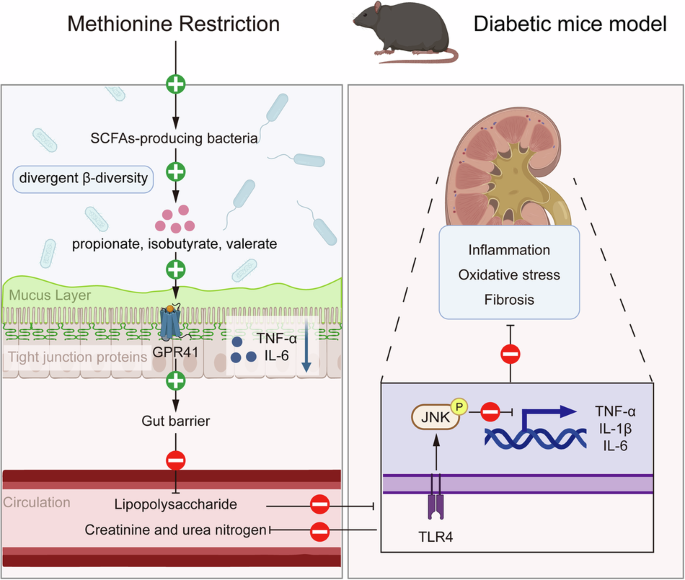
Diabetic kidney disease (DKD) is a major diabetes complication lacking effective dietary therapies. While amino-acid-targeted diets modulate metabolic health, their impact on renal outcomes via gut microbiota-derived metabolites remains unclear. Here, we investigated whether a 13-week methionine-restricted (MR) diet improves renal outcomes in db/db mice and alters gut-derived short-chain fatty acids (SCFAs) and their receptors. MR improved renal function and histopathology, restored colonic barrier markers (Claudin-1, ZO-1, MUC2), and reduced circulating endotoxin (LPS). 16S rRNA profiling revealed MR-induced gut microbiota remodeling, enriching SCFA-producing taxa like Clostridium spp. This coincided with increased fecal propionate and restored colonic propionate receptor GPR41 expression. Furthermore, fecal propionate and its associated taxa correlated positively with barrier integrity and negatively with systemic LPS, renal TLR4/JNK activation, inflammation, and oxidative stress. Collectively, MR confers renoprotection in db/db mice by modulating the gut–kidney axis via microbiota remodeling and enhanced propionate-GPR41 signaling, highlighting MR as a promising nutritional strategy for DKD management.
 The alternative text for this image may have been generated using AI.