





The North America baby food market is undergoing a major transformation as modern parents become increasingly focused on nutrition, ingredient quality, convenience, and child wellness. Baby food is no longer viewed as a simple feeding product. It has become part of a larger lifestyle movement centered around healthier eating habits, organic ingredients, and scientifically balanced nutrition for infants and toddlers.
Across the United States, Canada, and Mexico, parents are paying closer attention to what their children consume during the earliest stages of development. Concerns about artificial additives, preservatives, pesticides, allergens, and nutritional deficiencies are reshaping purchasing behavior throughout the region.
At the same time, changing lifestyles and the rise of working parents are increasing demand for convenient ready-to-eat products, online delivery services, and customized infant nutrition plans.
According to Renub Research, the North America Baby Food Market was valued at US$ 6.89 billion in 2024 and is projected to reach US$ 13.06 billion by 2033, growing at a CAGR of 7.37% between 2025 and 2033.
This strong growth highlights how consumer preferences are rapidly evolving in the infant nutrition industry.
Understanding the Baby Food Industry
Baby food refers to specially prepared soft and easily digestible foods designed for infants and toddlers, generally between the ages of four months and two years.
These products are formulated to provide essential nutrients, vitamins, minerals, proteins, and healthy fats necessary for early childhood growth and development.
The market includes several product categories such as:
Infant milk formula Dried baby food Prepared baby meals Organic baby snacks Fruit and vegetable purees Fortified cereals
Modern baby food products are designed not only for nutrition but also for convenience and safety.
Today’s parents increasingly seek products that are organic, preservative-free, allergen-safe, and minimally processed.
As awareness regarding infant health continues to rise, manufacturers are focusing heavily on ingredient transparency and nutritional innovation.
 Why Parents Are Choosing Organic and Clean-Label Baby Food
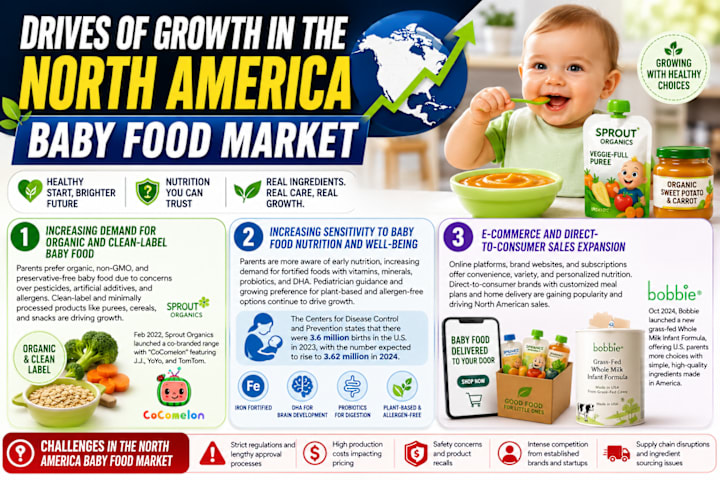
One of the biggest trends driving the North America baby food market is the growing demand for organic and clean-label products.
Modern parents are more informed than ever before.
They actively research food ingredients, nutritional benefits, and potential health risks before making purchasing decisions for their children.
Concerns regarding pesticides, synthetic chemicals, preservatives, and artificial flavors have significantly increased the popularity of organic baby food products.
As a result, many companies are introducing certified organic purees, cereals, fruit blends, and snacks made from natural ingredients.
Parents also prefer baby food products with clear and transparent labeling.
Terms such as:
Non-GMO Preservative-free No added sugar Artificial additive-free Gluten-free Dairy-free
have become major selling points across the market.
In February 2022, Sprout Organics expanded its product range through a co-branded collaboration with the popular children’s entertainment franchise “CoComelon.”
The company introduced vegetable-rich organic purees and healthy snack options designed specifically for young children.
This reflects how brands are increasingly combining nutrition, convenience, and child-friendly marketing to attract modern parents.
Infant Nutrition Awareness Is Increasing Rapidly
Another major growth driver is the rising awareness surrounding infant nutrition and early childhood development.
Parents now understand that nutrition during infancy plays a critical role in brain development, immunity, digestion, and long-term health outcomes.
This has created strong demand for fortified baby food products containing:
Iron DHA Omega-3 fatty acids Probiotics Vitamins and minerals
Iron-fortified cereals and DHA-enriched formulas have become especially popular among health-conscious families.
Pediatricians and healthcare professionals also encourage balanced nutrition and allergen-safe feeding practices, further influencing consumer preferences.
Plant-based and dairy-free baby food products are becoming increasingly common as more parents seek specialized dietary options for children with allergies or sensitivities.
According to the Centers for Disease Control and Prevention (CDC), there were approximately 3.6 million births in the United States in 2023, with numbers expected to increase slightly in 2024.
This growing infant population continues to create strong long-term demand for baby nutrition products.
E-Commerce Is Changing the Baby Food Industry
The rise of e-commerce has dramatically transformed how parents purchase baby food products.
Online shopping platforms now offer convenience, broader product selections, subscription services, and personalized nutrition plans.
Parents increasingly prefer buying baby food through:
Amazon Walmart online platforms Brand-owned websites Grocery delivery applications Subscription meal services
Online retail allows families to compare ingredients, read reviews, access expert recommendations, and discover niche organic brands more easily.
Direct-to-consumer baby food companies are also gaining popularity.
Many brands now offer customized meal plans tailored to a child’s age, dietary requirements, and nutritional needs.
Subscription-based delivery models ensure parents receive baby food regularly without frequent store visits.
In October 2024, pediatric nutrition company Bobbie introduced a new grass-fed Whole Milk Infant Formula made in the United States.
The launch highlighted the increasing demand for premium infant nutrition products made with simple, high-quality ingredients.
Digital platforms have made it easier for such specialized brands to connect directly with consumers.
The Growing Popularity of Baby Milk Formula
The baby milk formula segment remains one of the largest categories within the North America baby food market.
Many parents rely on infant formula as a supplement or alternative to breastfeeding, especially among working families and households requiring flexible feeding solutions.
Manufacturers are continuously introducing innovative formula products designed to meet diverse dietary needs.
These include:
Organic formulas Lactose-free formulas Hypoallergenic formulas Soy-based formulas Goat milk formulas DHA-enriched formulas
Parents increasingly prioritize formulas that support brain development, digestive health, and immune function.
Strict safety and quality regulations across North America also help maintain consumer confidence in infant formula products.
Companies continue investing heavily in research and product development to create formulas that closely replicate the nutritional composition of breast milk.
Dried Baby Food Products Continue to Grow
Dried baby food products are also experiencing strong demand throughout North America.
These products offer several advantages including:
Longer shelf life Easy storage Cost efficiency Convenience during travel
Many families prefer dried milk formulas and cereal-based products because they are practical and widely available.
The market has also expanded to include specialty dried products designed for infants with allergies or dietary sensitivities.
Manufacturers are increasingly fortifying dried baby food with probiotics, vitamins, minerals, and immune-supporting nutrients to enhance nutritional value.
As parents become more nutrition-conscious, premium dried baby food products continue gaining popularity.
Drugstores and Pharmacies Remain Important Sales Channels
Drugstores and pharmacies continue to play a major role in the North America baby food industry.
Parents often trust pharmacies for infant nutrition products because these locations are associated with healthcare reliability and professional guidance.
Pharmacies frequently stock:
Infant formulas Organic baby food Allergy-friendly products Nutritional supplements Specialized dietary products
Many pharmacy chains are also expanding subscription-based formula replenishment services.
This improves convenience for parents while strengthening long-term customer relationships.
Because infant nutrition is closely tied to health and safety concerns, pharmacies remain highly trusted retail channels within the market.
Online Baby Food Stores Are Expanding Quickly
Online baby food sales have grown rapidly in recent years.
Parents appreciate the convenience of ordering products directly to their homes while accessing a broader range of choices than traditional retail stores.
Online retailers also provide detailed product descriptions, ingredient transparency, customer reviews, and nutritional comparisons.
This helps parents make more informed decisions.
E-commerce has become particularly important for premium and niche baby food brands that may not have strong physical retail presence.
Subscription-based organic baby meal plans and home-delivered fresh baby food products are also becoming increasingly common.
As digital shopping habits continue expanding across North America, online sales channels are expected to remain one of the fastest-growing areas of the market.
The United States Continues Leading the Market
The United States dominates the North America baby food market due to its large population, high disposable incomes, advanced retail infrastructure, and strong consumer awareness regarding infant nutrition.
American parents increasingly demand:
Organic baby food Non-GMO products Functional nutrition Plant-based baby food Probiotic-enriched formulas
Health-conscious consumer behavior continues encouraging brands to introduce innovative products with improved nutritional profiles.
Government regulations surrounding food safety and labeling also help maintain strong consumer trust.
The U.S. market remains highly competitive, with both established global companies and emerging organic brands competing for market share.
Canada’s Market Is Driven by Health-Conscious Consumers
Canada’s baby food market is growing steadily due to rising demand for preservative-free and allergen-safe products.
Canadian parents increasingly prefer organic and clean-label baby foods made with minimal processing and natural ingredients.
The country’s growing health-conscious culture strongly influences infant nutrition purchasing decisions.
Retail expansion and e-commerce growth have also improved access to premium baby food brands throughout Canada.
Government support for infant nutrition awareness and breastfeeding education further shapes consumer preferences.
As a result, fortified and plant-based baby food products continue gaining popularity among Canadian families.
Mexico’s Baby Food Market Is Expanding Rapidly
Mexico is emerging as an important growth market within the North America baby food industry.
Urbanization, rising disposable incomes, and increasing awareness regarding child nutrition are contributing to market expansion.
Although homemade baby food remains common in many households, demand for packaged baby food is increasing steadily among working parents seeking convenience.
Products such as:
Iron-fortified cereals
Organic fruit purees
Probiotic infant formulas
Ready-to-eat snacks
are becoming increasingly popular.
Supermarkets and online retailers are also improving product availability throughout the country.
As health-conscious trends continue spreading across Mexico, organic and clean-label baby food products are expected to gain even more momentum.
Major Challenges Still Exist
Despite strong growth opportunities, the North America baby food market faces several challenges.
Intense Competition
The market is highly competitive, with global brands, private labels, and emerging organic companies all competing for consumer attention.
This creates pricing pressure and reduces profit margins for many manufacturers.
Homemade baby food also remains a popular alternative among parents seeking fresher and more affordable feeding options.
To remain competitive, brands must continuously innovate while maintaining high product quality.
Strict Safety and Regulatory Standards
Baby food manufacturers must comply with strict regulations imposed by organizations such as the FDA and USDA.
Recent concerns regarding heavy metals and ingredient safety have increased regulatory scrutiny across the industry.
Companies are now required to invest more heavily in testing, quality assurance, and transparent sourcing practices.
While these regulations help protect consumers, they also increase operational costs for manufacturers.
Smaller brands often struggle to meet these demanding compliance requirements.
Final Thoughts
The North America baby food market is evolving rapidly as parents place greater emphasis on nutrition, ingredient quality, convenience, and child wellness.
Organic products, fortified formulas, allergen-safe foods, and digital shopping platforms are reshaping how infant nutrition products are developed and sold.
At the same time, advancements in food science and growing awareness regarding early childhood health are encouraging manufacturers to create more innovative and specialized baby food solutions.
Although challenges related to regulation and competition remain, the industry’s long-term growth outlook appears highly positive.
With the market projected to reach US$ 13.06 billion by 2033, baby food companies across North America are entering a new era focused on healthier, smarter, and more personalized infant nutrition.