





Most of us adhere to a “go harder to get fitter” mantra at the gym. Progress is judged in sweat or by fitness-tracker metrics and the number of reps we manage to clock up in an hour. But what’s the hurry? Taking your foot off the gas, it turns out, may lead to better results.
“There’s long been this notion that ‘go hard or go home’ is how we should approach training,” Mark Attewell, a personal trainer for David Lloyd clubs, says. “This approach has its benefits — but so does moving slowly.”
Ken Nosaka, professor of exercise and sports science at Edith Cowan University in Australia, agrees. “There is a misconception that all exercise must be exhausting or painful,” he says. “It is holding people back as they think it’s pointless unless you are going full throttle.”
When it comes to resistance training, he says, lowering weights slowly, rather than lifting them with ferocious speed, is actually more beneficial. “Muscles don’t fatigue as quickly when you focus on prolonging the lowering part of a weights exercise. This means that ultimately you can perform more repetitions than if you put all your efforts into the lifting phase.”
Slower aerobic exercise — such as swimming, cycling and running — is equally crucial for a strong cardiovascular system, according to Dan Gordon, professor in cardiorespiratory exercise physiology at Anglia Ruskin University.
“For years there has been an approach within the fitness industry that the more high-intensity exercise you do, the better,” he says. “It sells the idea that you only need to do a few minutes of full-effort exercise, such as sprint interval training, to get physically fit, but the science doesn’t stack up as you need lower-intensity workouts too.”
The message is seeping through. A report by the David Lloyd group reveals how health clubs are increasingly pivoting from “getting shredded” to unhurried, restorative movement in 2026 as “people seek quieter, gentler paced and tech-free” workouts. “Slower-paced workouts enhance proprioceptive feedback, allowing us to develop a greater awareness of how things feel,” Attewell says. “This has been linked with reducing injury risk while also providing the opportunity to improve technique, especially for beginners or those rehabilitating from injury.”
Some high-intensity exercise is still important, Gordon says. “It needs to be progressive to continue improving health and fitness, but we should never completely neglect the slow stuff.”
But how and when should we ease up on the tempo? We asked the experts for the new rules of slow exercise.
1. Lower weights for a count of five for stronger muscles
 Getty images
Controlled weight training extends the amount of time our muscles are held under tension, an approach Attewell says supports muscle growth. When Nosaka looked at the effects of a dumbbell biceps curl when the weight was lifted and lowered in different ways, he found that slowing down brought improvements. One group lowered the weight down from the shoulder for a count of five (which equates to three seconds), another group lifted the weight upwards at the same pace, and a third held the weight in place with the elbows at right angles for the same duration.
The subsequent study, published in the Scandinavian Journal of Medicine and Science in Sports, found that while all participants built stronger biceps over four weeks, those lowering the weight slowly recorded the biggest gains. Their upper-arm muscles were, on average, 11.5 per cent stronger compared with a 6-7 per cent improvement among other participants. “If you lower a weight slower than a count of five, or three seconds, that is too slow for benefits,” Nosaka says. “You need to slow down that phase, but not by too much.”
2. Squat in slow motion to build leg strength
The downward motion of a squat is the most important phase for building leg strength, Nosaka says. You can start by sitting down in slow motion. Stand in front of a chair or sofa and lower your body to a seated position for a count of five, taking longer than normal to sit down. Try this on one leg as you get stronger. Perform ten repetitions on each leg. “As you sit slowly, you are resisting the force of gravity,” Nosaka says. “It gets harder as you get nearer to the chair because your leg muscles are having to work hard.” Once your bottom hits the chair, you can power back up to the start position and repeat ten times. “Several sets of ten repetitions is the best approach to add volume,” he says.
3. Descend stairs gradually to improve your blood pressure
 Getty images
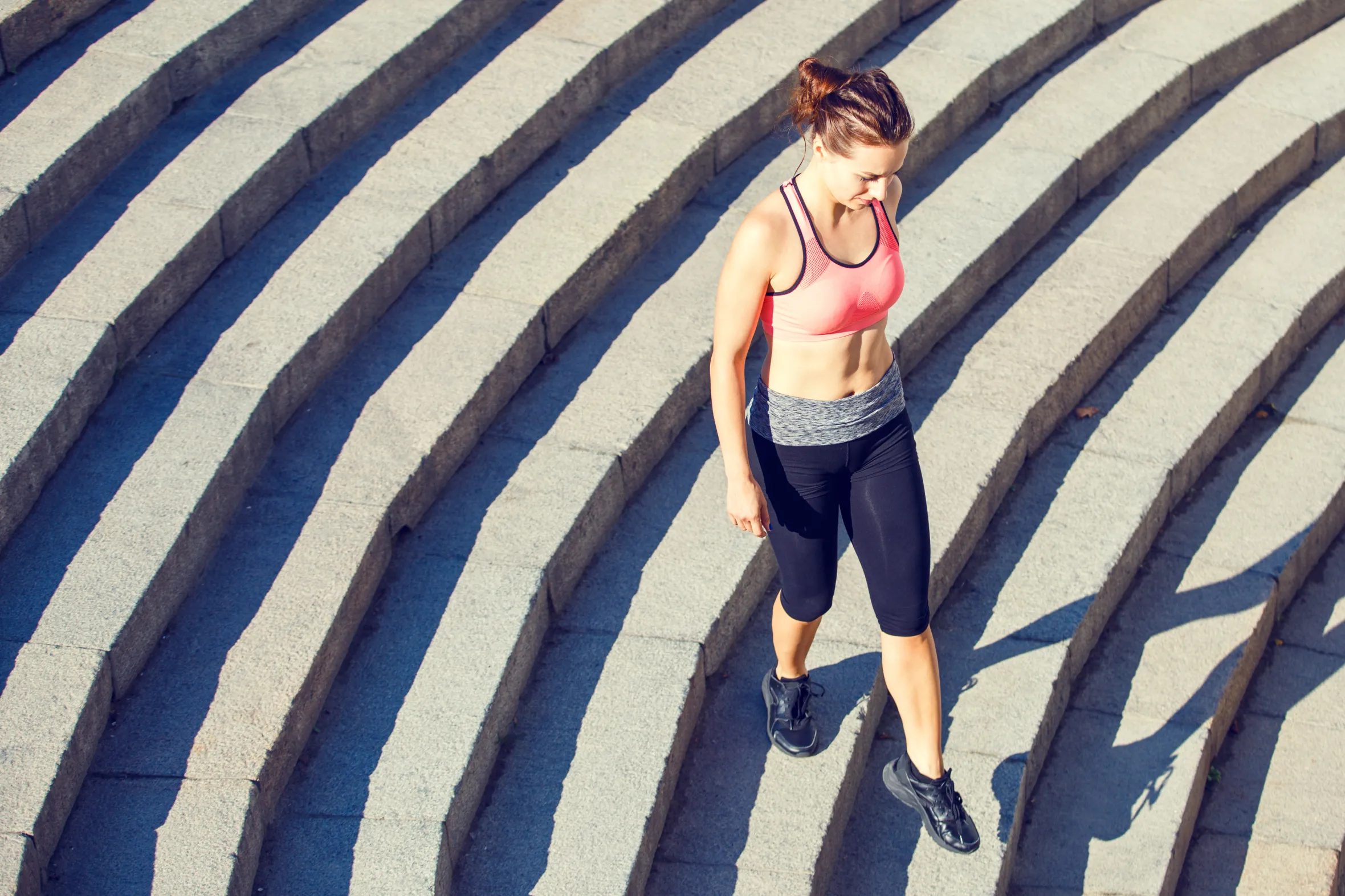
Powering up a flight of stairs will get your cardiovascular system pumping and will engage the large muscles in your legs and buttocks. But controlling the descent is just as beneficial. Nosaka and his team asked a study group of overweight women to walk up or down six flights of stairs twice a week for 12 weeks. “They were instructed to go down each stair slowly, at a rate of no faster than one step per second,” Nosaka says. Results showed it was the downstairs walking that best improved measures of health and functional movement, including improved balance. “Only people walking downstairs saw improvements in their blood pressure,” he says. “We also saw a greater reduction in resting heart rate and blood cholesterol levels in the descending-stairs group compared to the stair climbers.”
4. Swim leisurely outdoors to beat stress
 Getty images
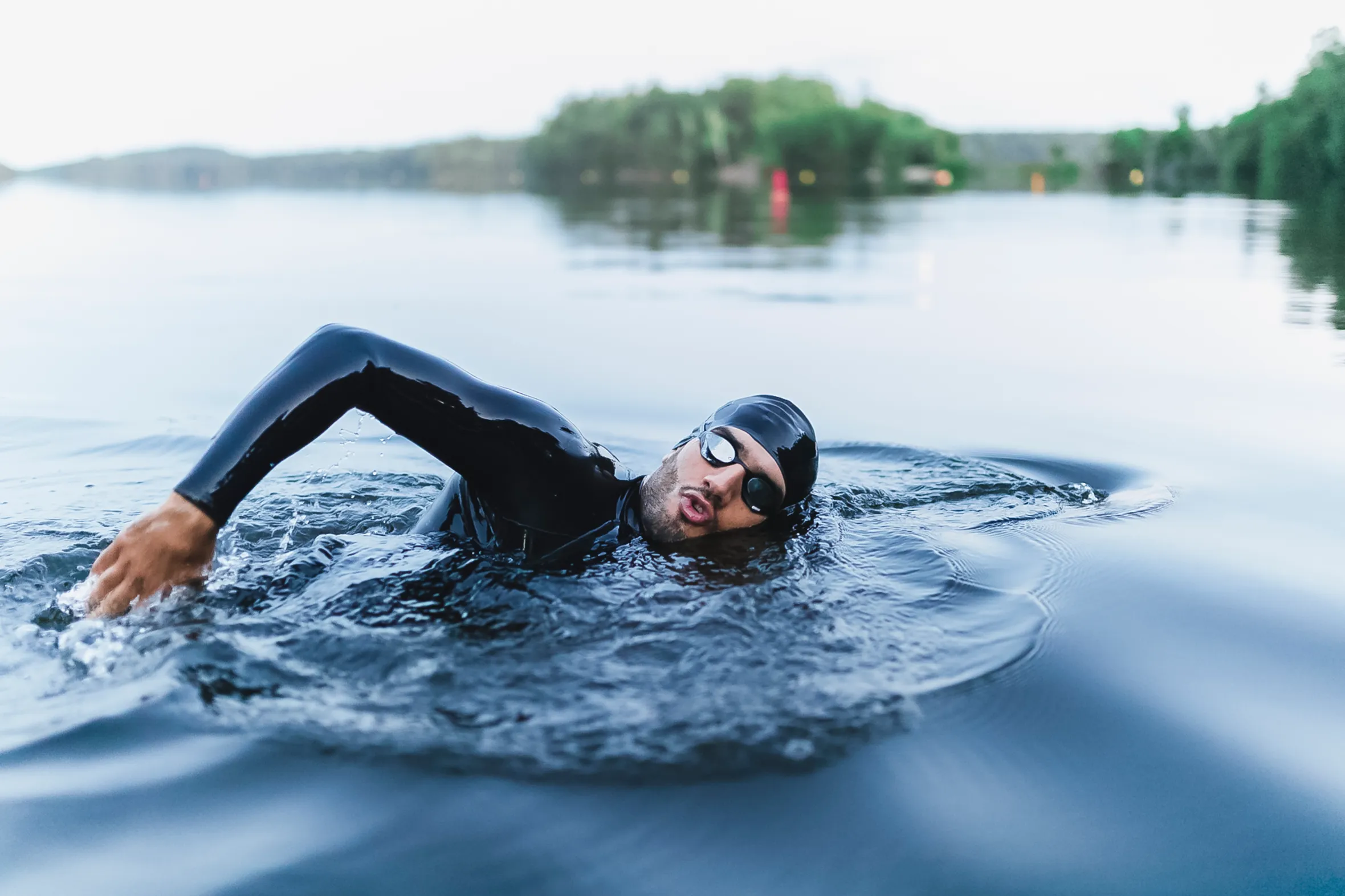
Swimming is renowned for being among the best whole-body workouts, but you don’t have to hammer out lengths of a pool to reap all the benefits. Last year a study showed that gentle outdoor swimming in cold water induces what Tatsiana Padhaiskaya, a researcher at Aalto University in Espoo, Finland, describes as “a temporal slow-down effect” that reduces stress and boosts mental clarity — effects that linger long after people get out of the water.
Participants in the study were found to use techniques such as controlled breathing and unhurried movements in the water “to handle the extreme nature of the experience”, she says. And regular cold-water swimmers said they were able to recreate the same feelings of calm and focus in everyday stressful situations. “Even a very short dip — from as little as a couple of minutes — reportedly offered participants comparable mental health benefits to, say, two hours walking in the forest.”
5. Build a fitness base with low-intensity running and cycling
When it comes to cardiovascular fitness, neglecting the slow stuff is like trying to build a house without any foundations, Gordon says. “Our biological adaptation to exercise is built on a pyramid structure. At the broad base you need lots of activity at a low intensity which makes the heart strong enough to deliver more oxygen so that muscle tissues can extract it for use when needed.”
High-intensity workouts — such as intervals, bootcamps and HIIT classes — sit at the peak of the workout pyramid. “They are impressive and look great but cannot be sustained for long periods of time and should be added only when you have a solid aerobic fitness base,” Gordon says. “Without that, things inevitably start to crumble.”
If you keep pushing hard all the time, overuse injuries, fatigue and a lack of motivation become inevitable. Even top runners and cyclists do most of their training at a gentler pace. “There’s a vast amount of data showing that elite athletes do 85-90 per cent of training in zone one or two, or the lower intensities,” Gordon says. “They need that in order to build in the harder sessions.”
In beginners, slower running can also protect against injuries. “Running slower reduces the likelihood of us over-striding or taking too large a stride in a misguided attempt to get faster,” Attewell says. “Overstriding causes the foot to land too far forwards from the hips, increasing the impact through the heel and increasing the risk of runner’s knee, shin splints, IT band syndrome and calf strains.”
6. Make sure your exercise passes the ‘chat’ test
Measuring your heart rate with a fitness tracker can be a useful guide — lower intensity exercise is at 50-70 per cent of your maximum heart rate — but it is prone to inconsistencies. What you have eaten or drunk beforehand can affect heart rate, as can a lack of sleep.
“It has a place, but heart rate drifts,” Gordon says. “It rises for all sorts of reasons, including a greater generation of heat by the body as a run or cycle continues.”
Elite athletes will measure heart rate in combination with blood lactate measurements, which give an added dimension of telling you how hard your muscles are working. Gordon suggests most of us should carry out self-measurements, such as judging whether we could talk as we go.
“You should be at a speed where you’re able to sing happy birthday or hold a conversation,” he says. “If you feel you couldn’t quite hold that, you have gone just too far above steady pace aerobic activity.”
7. Super-slow heel drops can help to improve posture
“Slow heel drops are an excellent way to improve calf-muscle function and strong calf muscles are essential for posture and walking,” Nosaka says. Stand with your heels off the edge of a step or platform, holding on to a wall or banister for support. Lower your heels below the level of the step for a count of five. “Aim to drop them as low as is comfortable,” he says. Push back to the start position and repeat.
To go further, you can perform one-legged heel drops in the same way. As you get stronger do the same movement holding a dumbbell in the right hand as the left heel lowers (and vice versa).
8. Choose a gentler gym class to reduce stress and tension
Mindful movement, breathwork, dance meditation and restorative yoga are increasingly popular classes at gyms. A recent study in the journal of the American College of Cardiology showed that a super-slow ancient Chinese regimen called baduanjin can be as effective at lowering blood pressure as a brisk daily walk — and almost as good as medication. Similar to t’ai chi, baduanjin requires no equipment and involves a series of measured, structured movements that take about 15 minutes to complete.
Somatics, a term derived from the Latin “soma”, which refers to how well you tune into your body from within, is also creeping on to timetables. Somatic practices range from sound therapy to exercises involving tiny muscle clenches and releases that help to ease the embedded tension that leads to pain and reduced flexibility.
The minuscule movements are becoming increasingly fused into yoga classes and form the basis of the Human Method, devised by Nahid de Belgeonne, who says her online 12-week “somatic repatterning” programme, Soothe, is ideal for “high functioning, capable but quietly exhausted” people. It’s something that can be done at any age. A 2025 study of older people showed that two 60-minute classes of somatic movement therapy a week significantly boosted spinal mobility and postural awareness after ten weeks.