





While many in the beauty industry have pushed back against clean beauty and the removal of long-used ingredients like parabens and phthalates, Skin at Peace is moving in the opposite direction with a hyper-clean philosophy centered on freshly made skincare products with short shelf lives.
Founded in the early 2020s by Rod Garcia, a physician with a microbiology background, and his wife, aesthetician Lindsey, after she struggled to find skincare products that wouldn’t aggravate her rosacea, the brand manufactures products in-house at a West Palm Beach, Fla., facility and ships them to customers with expiration dates 60 days from production. Its preservative-free positioning speaks to consumers increasingly vetting products with ingredient-scanning apps like Yuka and mounting concern about potential endocrine disruptors in beauty products.
“There is a much broader conversation happening in consumer goods around ingredients and preservatives,” says Elias Janeti, CEO and majority owner of Skin at Peace. “That’s bottom-up demand from consumers expressing concerns. There is a movement out there, and we are just trying to make a cleaner alternative and the cleanest possible product we believe we can make without any fluff.”
 Skin at Peace sells a $165 four-product skincare system centered on freshly made formulas and short shelf lives.
Janeti, whose background spans healthcare technology, venture investing and consumer health companies, believes the time is right to broaden Skin at Peace’s audience beyond its original rosacea- and pregnancy-focused customer base as ingredient scrutiny becomes more mainstream. He argues Skin at Peace occupies a middle ground between dermatologist-backed skincare brands that can score poorly on ingredient-scanning apps and holistic, clean brands that lean heavily on natural ingredients and marketing narratives.
“We look at ourselves as being hyper-clean, but also rigorously scientific,” says Janeti. “Every ingredient we use has clinical data.”
Although he declined to disclose the brand’s investors beyond himself—the Garcias remain part owners—he says he raised a “couple million” to build the business and hired Bullish to overhaul the brand’s packaging and messaging as it expands its reach.
“We look at ourselves as being hyper-clean, but also rigorously scientific.”
Skin at Peace’s updated look features a logo with “Peace” written upside down alongside dark blue bottles designed to protect formulas from ultraviolet exposure topped with white caps. Slogans such as “Made today. On its way tomorrow,” “We prioritize your life over shelf life,” and “The future is preservative-free” emphasize freshness and short product shelf lives as differentiators.
In a statement, Brent Vartan, co-founder and managing partner at Bullish, says “We saw an opportunity for Skin at Peace to redefine skincare norms and transform the brand into a category disruptor that could scale commercially and culturally.”
Freshness isn’t a new concept in skincare. May Lindstrom, Exponent, Fresh Chemistry and Shimmer Chef, which instructs customers to refrigerate its products to maintain potency, are among several brands that have embraced it. Brands promoting freshness often point out it reduces ingredient degradation and allows them to avoid certain preservatives. However, cosmetic chemists and dermatologists generally contend that preservatives like parabens are safe at the low concentrations permitted in cosmetics.
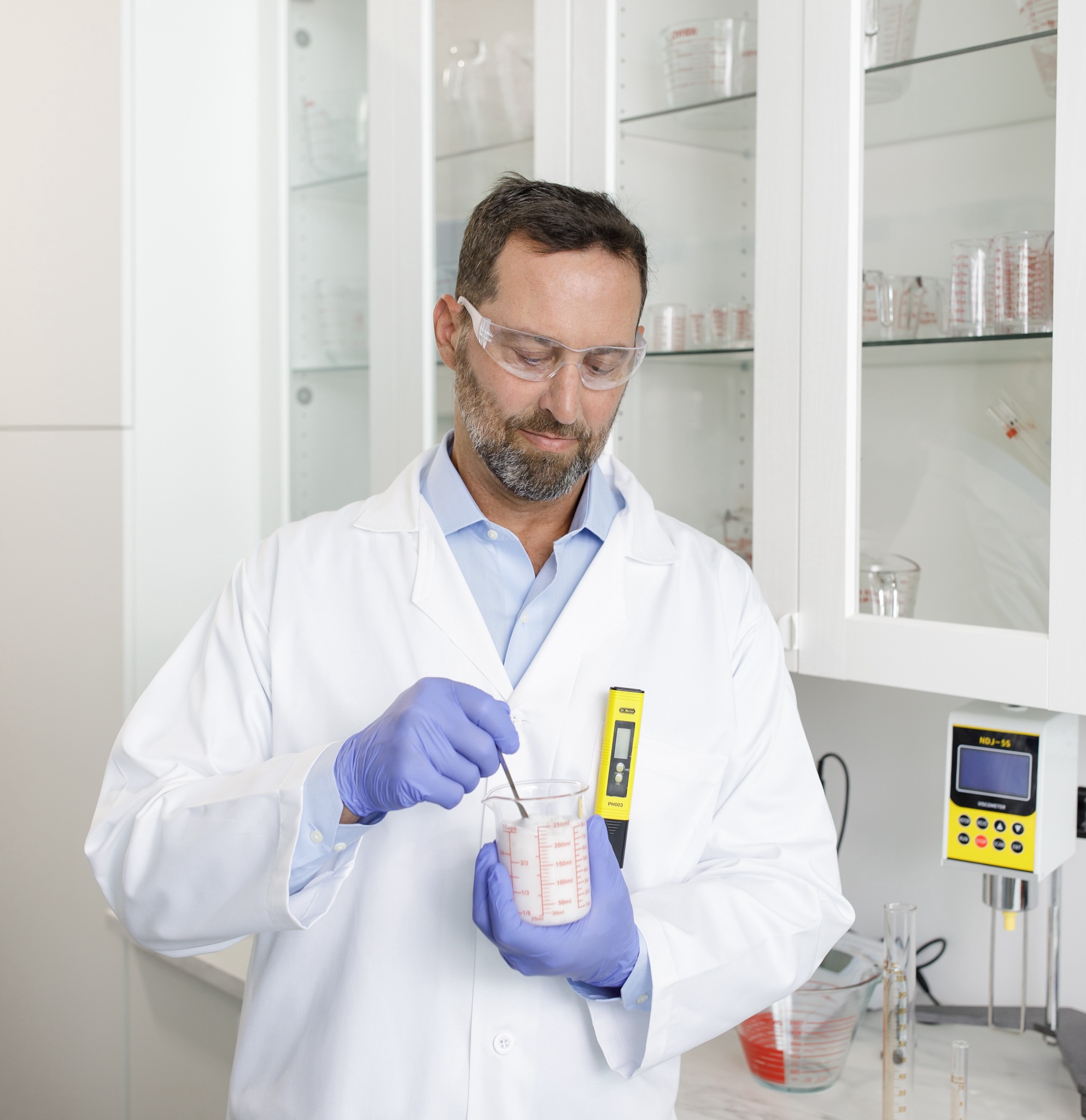 Skin at Peace co-founder and doctor Rod Garcia
Janeti acknowledges Skin at Peace’s preservative-free stance could make it controversial in parts of the beauty industry. He compares the brand’s short shelf lives to fresh produce, highlighting that consumers readily accept perishability in foods perceived as less processed.
“We know we might be a lightning rod,” he says. “The industry may debate it, but there are a lot of consumers out there that have already made up their minds that this stuff is bad for them.”
Without preservatives, cosmetics can run into issues such as mold and microbes. Janeti stresses Skin at Peace carefully samples every batch for contamination and formulates its products to resist mold development for roughly 100 days, well beyond the brand’s 60-day expiration window. He adds that ingredients like orange essential oil function as antimicrobials and help extend freshness.
“We know we might be a lightning rod.”
Priced from $30 to $55 individually, Skin at Peace sells four core products: cleanser Clean, toner Tone, vitamin C and hyaluronic acid moisturizer Day, and bakuchiol serum Night. For $165, the brand bundles them together in what it calls The Full System. The pricing places Skin at Peace within prestige skincare, though below the category’s upper tier.
“It’s a very simple routine that takes two minutes in the morning and two minutes at night,” says Janeti. “Our system can take a lot of products off the shelf for people who don’t adhere to having to do 10 things at night.”
Skin at Peace initially gained traction at pregnancy expos, where it resonated with women in their 30s and 40s paying closer attention to hormone disruptors and ingredient safety during fertility and pregnancy journeys. Today, the brand primarily operates through a direct-to-consumer subscription model that supports its small-batch, fresh-made manufacturing approach.
 Skin at Peace manufactures its products in small batches at an in-house West Palm Beach, Fla., facility and ships them with 60-day expiration windows.
Traditional retail can be challenging for skincare brands promoting freshness. Janeti notes skincare products are engineered more for shelf stability than freshness, frequently sitting on retail shelves for four months or longer before purchase while consumers expect them to remain stable for roughly a year afterward. Because of those dynamics, Skin at Peace is relying instead on direct-to-consumer and professional channels.
Janeti says, “A lot of the incumbent brands don’t have to worry about me because I’m not trying to get shelf space at a big-box store near you.”
Skin at Peace reports more than 100 aestheticians signed up last year to carry and recommend its products. Through its aesthetician partnerships, the brand employs a drop-ship model that ships products directly to consumers rather than stocking them in treatment rooms or on retail shelves.
This year, Janeti’s goal is for Skin at Peace to become self-sustaining. “We are scaling the business from a localized business to a national one,” he says. “I’m focused on getting my messaging, customer acquisition costs and unit economics dialed in and supporting aestheticians and spa owners interested in offering Skin at Peace.”