



The number of measles cases reported in Australia this year has increased when compared to the same period in 2025, as a health expert urged the public to be “alert” but not “alarmed”.
Data from the Australian Centre for Disease Control (CDC) showed 102 cases had been reported up to May 24 this year, while 78 cases were reported in the same time frame last year.
Many of the cases were travellers returning from South and South-East Asia, where several countries are battling outbreaks of the preventable disease.
In Bangladesh, young unvaccinated children and babies are dying from measles.
Are you up to date with your vaccines?
A CDC spokesperson said the authority was monitoring national and international outbreaks closely.
“Internationally, there has been a resurgence in measles in a number of countries, including parts of South-East Asia and other regions with frequent travel connections to Australia,” a CDC spokesperson said.
“This increases the risk of imported cases and reinforces the importance of maintaining high vaccination coverage, and ensuring people are protected before travelling.”
Most cases and outbreaks so far in Australia this year have been from under-vaccinated people that acquired their infection overseas, followed by limited local transmission to their under-vaccinated contacts, the spokesperson explained.
Rebekah Hoffman, The Royal Australian College of General Practitioners NSW and ACT branch chair, said she did not want people “to be too alarmed”.
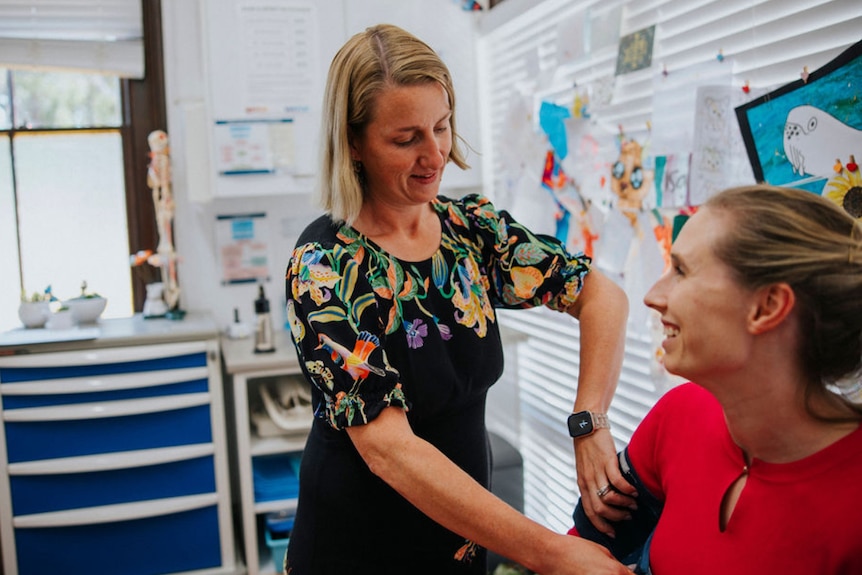
Rebekah Hoffman urged people to book an appointment at least six to eight weeks before travelling if unsure about their measles vaccination status. (Supplied: Rebekah Hoffman)
“But it is a really awful disease that spreads really quickly,” said Dr Hoffman.
“You do need to be really alert.”
There were 181 cases of measles across Australia in 2025, according to the CDC’s national disease surveillance system.
In 2024, there were just 57.
Measles, which can cause a fever, sore eyes, runny nose, and cough followed by a red, blotchy rash, is a potentially fatal but vaccine-preventable disease.
Severe complications can include lung infection, ear infections, and brain inflammation, according to the CDC.
People who are not immune, have weakened immune systems and children under five years old are among groups more at risk of severe illness.
Dr Hoffman said getting vaccinated was the best protection, adding it was important Australia maintained “herd immunity” via vaccination rates of 92 to 95 per cent.
NSW records most cases
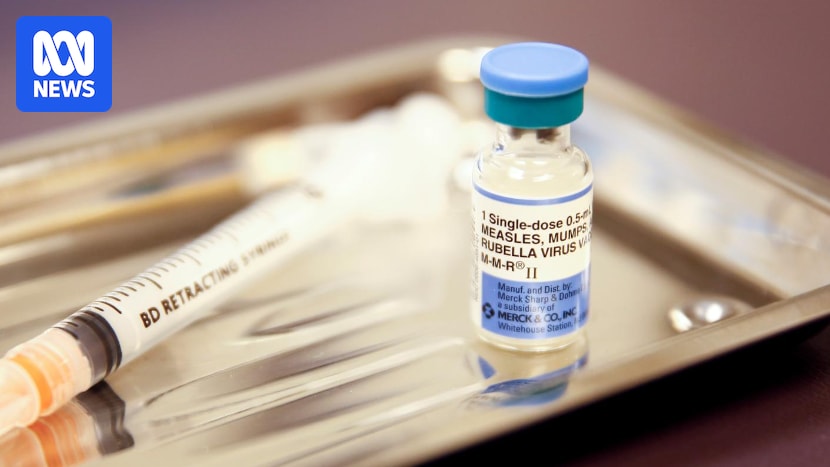
Measles can be prevented via the measles-mumps-rubella (MMR) vaccine. (Reuters: Lindsey Wasson/File Photo)
In Australia, New South Wales has recorded the highest number of measles cases this year.
Forty-eight cases have been reported since January 1, 2026, a NSW Health Department spokesperson said.
This figure is already higher than the number of cases, 37, reported during the full 2025 year, CDC data showed.
Of the 48 NSW measles cases, 20 were acquired overseas, with 15 of those having travelled to South-East Asia, and the remaining five overseas cases having travelled to other parts of Asia, a NSW Health spokesperson explained.
“Cases reported travel to various parts of Asia, including Bangladesh, Indonesia, Japan and the Philippines, where there are ongoing outbreaks of measles,” the spokesperson said.
Signs point to measles cases spreading undetected in NSW
Twenty-nine measles cases have been reported in Victoria, 16 in Queensland and five in Western Australia this year, according to the CDC.
The majority of measles cases notified in Victoria this year have been linked to travel to Indonesia, India, Malaysia, Vietnam, Pakistan, Sri Lanka and Thailand.
“Measles can be easily avoided through vaccination so it’s important we take steps to stop the spread of this highly contagious disease,” said Victoria’s Deputy Chief Health Officer, Christian McGrath.
“It’s tragic to see children dying in Bangladesh and around the world from a preventable disease like measles.”
Hundreds die in Bangladesh
A child receives treatment at the DNCC Hospital in Dhaka, Bangladesh. (Reuters: Mohammad Ponir Hossain)
In South Asia, Bangladesh is battling one of the worst measles outbreaks the country has experienced in decades.
More than 500 children have died from both confirmed and suspected cases of the disease this year, local health officials said on Saturday.
At least 86 children have died from confirmed measles infections and another 426 children, with symptoms consistent with the disease, have also died, according to Bangladesh’s Directorate General of Health Services.
Bangladesh has rolled out a mass vaccination drive to combat the outbreak there, and UNICEF country chief Rana Flowers recently said that the campaign has now reached 18 million children.
But the health department said the full impact of the vaccinations would take months to be felt.
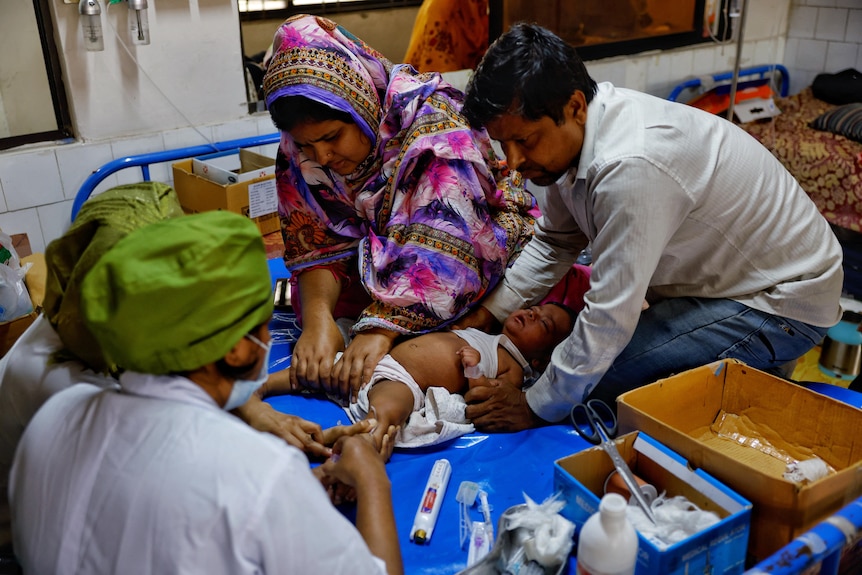
More than 500 children have died from both confirmed and suspected cases of measles in Bangladesh this year. (Reuters: Mohammad Ponir Hossain)
Most cases recorded in Bangladesh during the current outbreak have been among children aged between six months and five years, and doctors said many of the children arriving at hospitals are already critically ill.
“Though measles is highly contagious, a healthy baby with no complications can survive with minimal medication,” Ainul Islam Khan, a paediatrician at Dhaka’s Shaheed Suhrawardy Medical College and Hospital, told AFP.
“Here, most children came to the hospital with respiratory distress and infections in the eyes, throat and lungs.”
World Health Organization data also showed increases in measles cases in India, while Phoebe Williams, a paediatrician, infectious diseases physician and associate professor from the University of Sydney, pointed to a rise in cases in Indonesia.
What should you know about measles? Measles is spread via coughing, sneezing, or close contact with an infected person Symptoms include a prominent rash, a cough, runny nose, white spots inside the cheeks and red or watery eyesThere is no specific treatment for measles — care focuses on relieving symptoms and preventing complications Complications include blindness, diarrhoea, breathing problems and ear infectionsSevere measles can also cause encephalitis — an infection that causes brain swelling and potential brain damage
Dr Williams, an associate professor from the University of Sydney, noted the majority of Australian measles alerts were linked to returned travellers from South-East Asia, particularly Indonesia, Vietnam, Thailand and the Philippines.
But she said month-to-month fluctuations in measles case numbers were “less important than the general trend that measles cases are high, and rising, across most countries in South-East and South Asia”.
“Again, it’s less about tracking exact numbers in a country or city, but more about realising the high overall numbers across the region,” Dr Williams said.
“Even one person on a plane that may be transiting with you and has come from one of these regions can infect the vast majority of those who are not immunised on the flight.”
Dr Hoffman echoed this sentiment.
“It’s not one individual country — you’re not safe as soon as you cross the country border into the next country.”
She urged people to make sure they were vaccinated and if checking with a doctor, book an appointment at least six to eight weeks before travelling.
Under Australia’s National Immunisation Program, two doses of a measles-mumps-rubella vaccine is given at 12-months, and another one is given at 18 months of age.
There were 181 cases of measles in Australia in 2025. (ABC News)
But if travelling with an infant to high-risk areas you can choose to get an extra vaccine before they turn one, Dr Hoffman said.
NSW Health encouraged the community to help prevent the spread of measles by getting vaccinated and to monitor for signs and symptoms of measles, particularly if they have recently returned from overseas.
Two doses of measles vaccine, received at least four weeks apart, provides long term protection in 99 per cent of vaccinated people, a NSW Health spokesperson said.
If people are not sure if they’ve had two doses, it is safe to get another one, they added.
“If you haven’t had two doses of measles vaccine – or don’t know whether you have – speak with your healthcare professional about your vaccine eligibility,” the CDC said.
ABC/Wires