




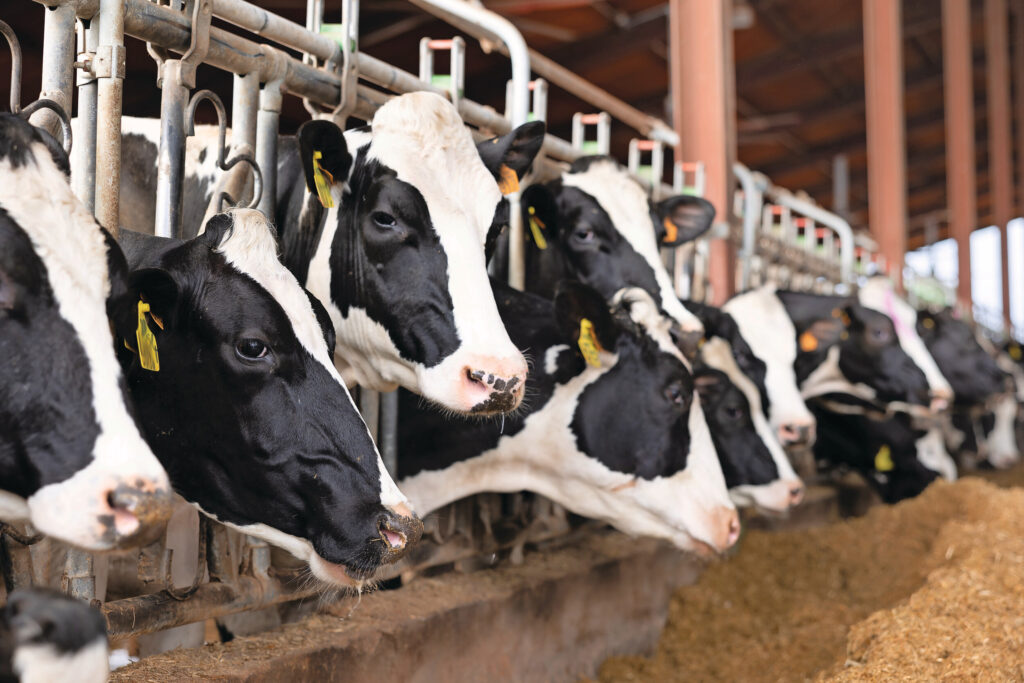
 A field trial demonstrated that supplementing high-producing Holstein cows with essential oils and spices significantly improves feed efficiency, milk production and composition, antioxidant status, and apparent digestibility of all major nutrients. Photo: Phodé
The intensification of dairy production worldwide has placed increasing pressure on the nutritional management of high-yielding dairy cows, for which feed efficiency represents a key economic and environmental lever. In this context, plant-derived bioactive compounds – in particular, secondary metabolites such as phenolic monoterpenes – have attracted growing scientific interest as alternatives to or complements of conventional feed additives. Among these, essential oils and spice extracts have demonstrated promising effects on rumen fermentation, nutrient digestibility, and oxidative status.
Plant secondary metabolites and ruminant nutrition: scientific background
Carvacrol (5-isopropyl-2-methylphenol), the main phenolic monoterpene of oregano essential oil (Origanum vulgare), has been extensively studied for its antimicrobial and antioxidant properties. In ruminant nutrition, its primary mode of action involves selective inhibition of specific ruminal microorganisms, particularly hyper-ammonia-producing bacteria, and methanogenic archaea, resulting in a shift in fermentation patterns toward increased propionate production and reduced proteolysis.
Calsamiglia et al. (2007) demonstrated in an in vitro study that carvacrol and thymol significantly decreased ammonia-N production and shifted volatile fatty acids (VFA) profiles toward greater propionate proportions, which is consistent with improved energetic efficiency. Furthermore, the essential oil of oregano supplementation in lactating dairy cows modified rumen fermentation parameters without negatively affecting dry matter intake, while the antimicrobial selectivity of carvacrol on ruminal bacteria in continuous culture systems was confirmed.
Regarding antioxidant properties, carvacrol displays potent free radical scavenging activity mediated through its phenolic hydroxyl group, capable of inhibiting lipid peroxidation and activating endogenous antioxidant enzyme systems such as superoxide dismutase (SOD) and glutathione (GSH). In dairy cows, oxidative stress is a recognised challenge, particularly in high-producing animals and during periparturient transition, and is associated with impaired immunity, reduced reproductive performance, and lower milk yield. Dietary supplementation with antioxidant compounds is therefore expected to improve both health status and productive performance.
At the level of nutrient digestion, plant phenolics including carvacrol have been shown to influence the fibrolytic activity of ruminal microorganisms. Rochfort et al. (2008) reviewed the interactions between plant secondary metabolites and fiber-degrading bacteria suggest dose-dependent modulation of cellulolytic and hemicellulolytic activities. These effects may translate into improved apparent digestibility of structural carbohydrates in vivo.
Case study: the observed performance improvements in light of peer-reviewed scientific literature
Thirty high-producing Holstein dairy cows were enrolled in a study for 3 months. The cows had ad libitum access to a total mixed ration (basal diet) based on corn silage, steam-flaked corn, extruded soybean, and energy-dense co-products. The animals were assigned to a control group (basal diet) or an essential oils and spices (EOS) group receiving 0.01% EOS. EOS is a performance-enhancing feed additive formulated from a blend of essential oil of oregano and selected spice extracts.
Production performance
Cows receiving EOS produced 5% more milk than controls. The compositional gains in both protein and fat resulted in a significant increase in energy-corrected milk (ECM: +6.04 kg/d; 47.66 vs. 41.62 kg; p<0.05) while dry matter intake was similar between groups. Feed efficiency was thereby improved by 14%.
Rumen fermentation and microbial protein
Analysis of rumen fluid revealed significant improvements in fermentation activity in EOS-supplemented cows. Total VFA concentration increased by 38%, alongside a shift in the acetate: propionate ratio from 2.4 to 2.1, consistent with a more glucogenic fermentation profile. Microbial protein concentration also increased significantly by 31%, suggesting a larger pool of metabolizable protein available for absorption. These observations are in line with the mechanism proposed by Calsamiglia et al. for carvacrol-type compounds, involving selective reduction of deamination activity and optimisation of microbial nitrogen utilisation.
Antioxidant status
Blood analysis demonstrated a significant improvement in antioxidant capacity in EOS cows. Total antioxidant capacity, superoxide dismutase, and reduced glutathione were all significantly higher in EOS cows, while malondialdehyde (MDA), a marker of lipid peroxidation, was reduced (p<0.05). These results are consistent with the free radical scavenging activity attributed to carvacrol by Burt and support the hypothesis that a reduction in systemic oxidative stress may contribute to the improved productive performance observed by Bernabucci et al.
Apparent nutrient digestibility
EOS supplementation improved apparent digestibility of all major nutrients (p<0.05). The pronounced improvement in fibre digestibility is particularly noteworthy given similar dry matter intake (DMI) between groups, suggesting a direct positive effect of EOS bioactive compounds on fibrolytic microbial populations, consistent with the dose-dependent modulation of fibre-degrading bacteria.
Methane emissions
Although total daily methane emissions were not significantly different between groups (401.2 vs. 404.9 g/d), methane intensity – expressed per kg of ECM – tended to decrease in EOS cows (8.4 vs. 9.7 g/kg ECM; p<0.10), reflecting the improved feed efficiency. The 13% reduction in methane intensity was consistent with the shift toward propionate fermentation observed in rumen fluid, as the hydrogen sink of methanogenesis is partially redirected toward propionigenesis.
Conclusion
This field trial demonstrates that supplementing high-producing Holstein cows with EOS significantly improves feed efficiency, milk production and composition, antioxidant status, and apparent digestibility of all major nutrients. The consistency between the observed physiological responses and the peer-reviewed literature on carvacrol and plant secondary metabolites supports a mechanistic framework linking improved rumen fermentation efficiency, reduced oxidative stress, and enhanced nutrient digestibility as the main drivers of productive performance gain. EOS represents a scientifically grounded, natural-origin tool for optimizing dairy cow nutrition in high-yielding herds.
References are available on request.
Phodé Animal Care Partner Profile
Phodé was born from the conviction that the sense of smell is our primary sense, and one of the driving forces behind the behaviour and “Better-being” of living beings. Its mission is to capitalise on its expertise of olfaction and nutrition to improve the well-being and health of humans and animals, both through their food and their environment. “Better-Being”? is Phodé key concept, applying to all living beings and describing an overall improvement of their global status, for better performance and health. More about Phodé Animal Care / More about Phodé Group