




The smartest conversation in women’s health right now is not about squeezing into a dress from 2009; it is about nutrition, movement and the deeply satisfying business of feeling physically useful in your own body. Strong enough to lift, walk, bend, recover, sleep properly and get through the day without feeling as if someone has quietly removed your batteries.
For too long, women’s fitness has been sold through a cracked mirror. Lose weight. Tone up. Look younger. Shrink here. Tighten there. Smile while doing it, ideally in leggings that cost more than a week’s food shop.
Mercifully, a better idea is muscling its way into the room.
More women in their forties, fifties, sixties and beyond are shifting the focus from appearance to performance. Not performance in the Olympic-final sense. More splendid everyday kind: stronger legs, steadier joints, better posture, fewer energy crashes, and the pleasing ability to carry a suitcase upstairs without making the noise of an elderly accordion.
The Fitness Goal Is No Longer Smaller
There is a quiet revolution happening among women who have decided that feeling strong, energised and physically capable is not a prize reserved for their twenties.
It is not about chasing youth. It is about building capacity.
That distinction matters. A body in midlife and beyond does not need punishment dressed up as discipline. It needs intelligent movement, enough fuel, proper recovery and a little respect. Preferably before it sends a formal complaint via your knees.
The old model was brutally simple: burn more, eat less, repeat until miserable. The better model is more grown-up. Build muscle. Support bones. Eat well. Sleep. Recover. Keep going.
Less theatrical, perhaps. Much more useful.
Why Strength Training Deserves Top Billing
The most effective exercise routine is not the one that looks heroic on social media. It is the one you actually do.
For many women, particularly from their forties onwards, that often means moving away from endless punishing cardio and towards training that supports real life: strength work, Pilates, yoga, mobility, walking and low-impact movement that builds functional fitness rather than simply flattens you.
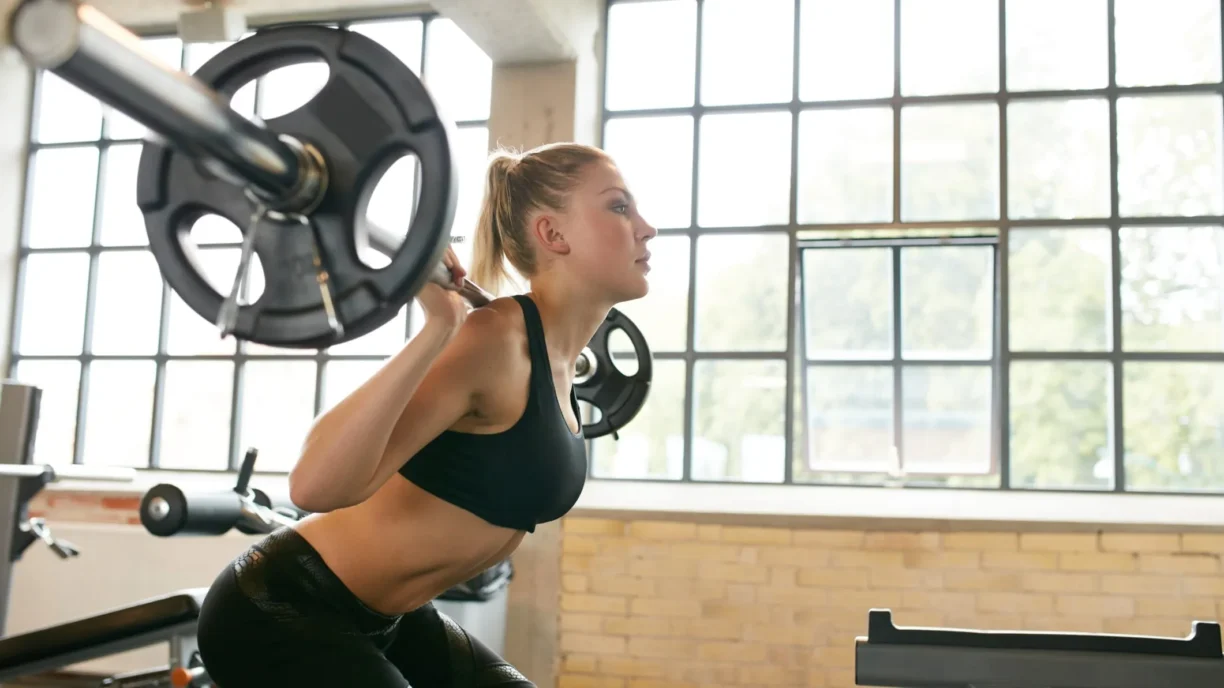
Strength training deserves far more attention than it usually gets. As women age, maintaining muscle mass becomes increasingly important. It can support bone density, posture, joint stability and metabolism, while also helping everyday movement feel easier.
That does not mean training like a professional athlete unless that is genuinely your idea of a good time. Most people do not need to be shouted at by a man with a stopwatch in order to achieve wellness.
The aim is consistency. Gentle progression. A bit of challenge. Enough patience not to treat every workout like a personal reckoning.
Even three 30-minute sessions a week can make a meaningful difference to strength, mood and energy when done regularly. That is the unglamorous truth of fitness: the magic is usually hiding in the repeat button.
Nutrition Is The Other Half Of The Equation
Movement matters, but exercise alone is only half the picture. You cannot strength-train your way out of poor fuelling any more than you can polish a car with no petrol in it and expect a grand tour of the Highlands.
Good nutrition gives the body the raw materials it needs to repair, rebuild and perform. For women, especially as they age, protein is often one of the biggest gaps.
Protein supports muscle maintenance and recovery, and it becomes increasingly important when strength, bone health and energy are the goals. That does not require a joyless diet built entirely from chicken breast and regret. It means making protein a regular presence at meals, alongside healthy fats, fibre-rich carbohydrates and whole foods.
The basics still matter. Proper meals. Sensible portions. Enough hydration. Less grazing through the day as if your desk drawer were a vending machine with emotional intelligence.
The Micronutrients Women Often Overlook
Beyond protein, micronutrients deserve a place in the conversation. Vitamin D plays a role in bone health and immune function. Magnesium is linked with muscle function, recovery and sleep quality. Iron levels can influence energy and mental clarity, particularly for women navigating perimenopause, menopause or heavy periods.
This is where nutrition becomes less about diet culture and more about body maintenance. Not glamorous, perhaps, but neither is a flat tyre. You still deal with it.
A balanced diet should always be the foundation, but even a good diet can leave gaps. For women who struggle to cover everything through food alone, a carefully chosen supplement range may be useful. Vitabright, for example, offers a curated selection of vitamins and supplements designed to support women’s health at different life stages.
The key word there is support. Supplements are not magic beans. They do not replace meals, movement, sleep or medical advice. But used sensibly, they can be part of a wider strategy for women trying to feel stronger, clearer and more resilient.
Recovery Is Not Laziness In A Better Outfit
One of the great mistakes in fitness is treating rest as the enemy. It is not. Rest is where adaptation happens.
Physical health is not built in one heroic session or a frenzied Monday-to-Friday fitness burst that collapses into a weekend of sofa-based surrender. It is built through repeatable habits: enough sleep, proper recovery, stress management and movement that your body can actually absorb.
Women who feel strong at 50, 60 and beyond are not necessarily the ones who trained hardest in their younger years. They are often the ones who learned to train smarter, eat with intention and stop treating exhaustion as proof of effort.
Recovery is not weakness. It is strategy.
The Long Game Is The Only Game Worth Playing
The most powerful shift in women’s fitness is not a new class, app or supplement. It is a change in attitude.
Physical health is no longer being framed purely as a short-term project with a before-and-after photo at the end. The better version is lifelong. It bends with age, hormones, work, family, stress, injury and ambition. Some weeks are strong. Some weeks are survival with a side order of stretching. Both count.
That is the point.
The goal is not to look like someone else at 25. It is to feel more capable in the body you actually have now.
Eat to support it. Move to strengthen it. Rest to repair it. Repeat with patience.
Strength, as it turns out, does not belong to youth. It belongs to the women who keep showing up.