




image:
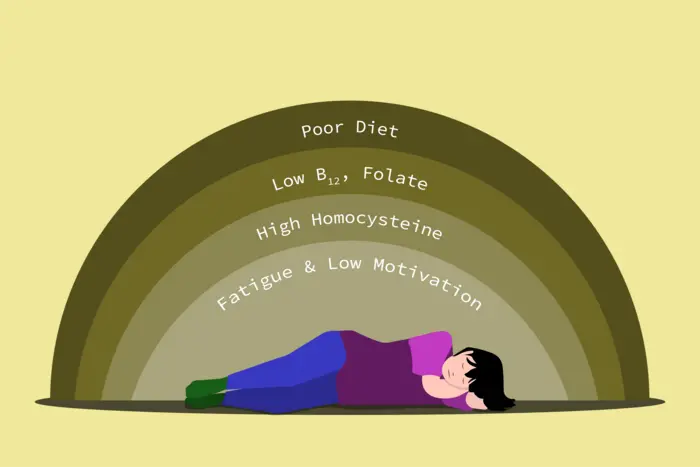
Dietary imbalance, low B12, and folate may correlate with high homocysteine levels and indicate fatigue and low motivation in participants.
Credit: Osaka Metropolitan University
With less time and more work, chronic fatigue has become a moniker of modern society. However, this not only reduces the quality of life but also constitutes as a social issue that affects work efficiency and leads to accidents. On the surface, the cause of fatigue is often attributed to not getting enough rest, but there may be another underlying issue—the lack of proper nutrition.
Taking this into account, a research group led by Professor Hiroaki Kanouchi at Osaka Metropolitan University’s Graduate School of Human Life and Ecology focused on nutritional status and water-soluble vitamin deficiencies found in unbalanced diets. The team hypothesized that a lack of folate (B9) and vitamin B12 may be related to fatigue, and centered their research around homocysteine (Hcy), a biomarker known to increase when these deficiencies are present. Blood concentrations of Hcy, folate, and vitamin B12 in approximately 600 healthy Japanese participants were measured. Participants’ fatigue and motivation were assessed using the Chalder Fatigue Scale questionnaire and Visual Analog Scale. The initial results showed that individuals with higher blood Hcy levels had lower levels of vitamin B12 and folate, regardless of sex.
The researchers then examined the relationship between homocysteine levels and fatigue separately for men and women. In their analysis, factors that may influence fatigue, such as age, sleep duration, workload, and dietary habits, were simultaneously accounted for. The results revealed higher Hcy levels were associated with greater physical fatigue in men and higher levels were associated with decreased motivation in women.
“This suggested relationship between vitamin B12, folate, and fatigue in healthy individuals may represent the first report of its kind,” said Professor Kanouchi. “Blood homocysteine levels have traditionally raised concerns in relation to cardiovascular disease, dementia, and fractures. However, our findings suggest that attention should also be paid to fatigue and motivation in the future. To prevent an increase in homocysteine levels, it is important to avoid deficiencies in vitamin B12 and folate. Maintaining a well-balanced diet on a daily basis is essential.”
The findings were published in Nutrients.
###
About OMU
Established in Osaka as one of the largest public universities in Japan, Osaka Metropolitan University is committed to shaping the future of society through the “Convergence of Knowledge” and the promotion of world-class research. For more research news, visit https://www.omu.ac.jp/en/ and follow us on social media: X, Instagram, LinkedIn.
Method of Research
Observational study
Subject of Research
People
Article Title
Associations of Plasma Homocysteine Reflecting Vitamin B12 and Folate Status with Fatigue-Related Outcomes in Healthy Adults
Article Publication Date
17-Mar-2026
COI Statement
E.N., Y.N. and T.N are employees of Alinamin Pharmaceutical Co., Ltd. The remaining authors declare that the research was conducted in the absence of any commercial or financial relationships that could be construed as a potential conflict of interest.
Disclaimer: AAAS and EurekAlert! are not responsible for the accuracy of news releases posted to EurekAlert! by contributing institutions or for the use of any information through the EurekAlert system.