 7 min read
This story is part of our new series, Reality Check, in which GH experts uncover the truth behind common misconceptions about health, safety, and everyday living.
MIKE GARTEN
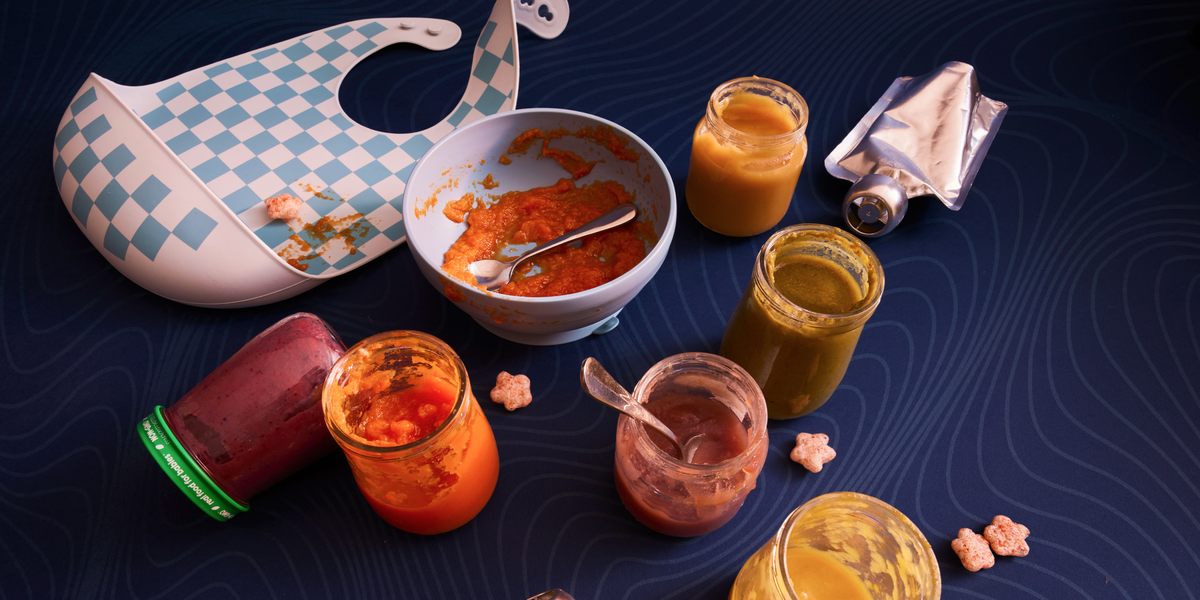
Chances are, there’s already a lot on your mind when you’re shopping for baby food. You’re likely eyeing the nutrition label, scanning the ingredients list for possible allergens, and weighing what your little one will actually eat. If only they could live off berries and rice puffs, right?
Unfortunately, as careful as you may be, what’s printed on food labels doesn’t tell the full story of what’s in our food, baby food included. For example, a congressional report released in 2021 and a 2019 study conducted by the nonprofit Healthy Babies Bright Futures found that most store-bought baby food contains trace amounts of heavy metals. This concerning news prompted questions about how food safety standards are set and enforced by the Food and Drug Administration, as well as what risks the food poses for babies who eat it.
To set the record straight, we spoke to several experts familiar with the reports about what parents need to know when it comes to the safety of store-bought baby food.
The Big PictureHeavy metals are a real—and widespread—part of our food system, which is why their presence in baby food has raised concerns.
Mark Corkins, M.D., a pediatric gastroenterologist and chair of the American Academy of Pediatrics’ Committee on Nutrition, explains that heavy metals are found in nearly all of the food we eat, including organic produce, dark chocolate, protein powder, and, yes, baby food. Sometimes metals enter the food system naturally as crops absorb them from air, soil, and water. Other times, they’re caused by pollution or through farming methods or food processing or distribution. Some metals like iron, magnesium, and zinc are crucial for human health, but others, like lead, are dangerous, Dr. Corkins says.
When it comes to the common heavy metals found in baby food, lead has been found to be the most dangerous in terms of risks to the developing brain. There is no known safe level of exposure to lead—any amount can pose risks to development. Mercury, arsenic, and cadmium are also concerning, and Dr. Corkins says that exposure in high amounts can negatively impact an infant’s development. “Arsenic and cadmium are associated with increased cancer risk with long-term exposure. Mercury can impact brain development, and if you are exposed to too much too quickly, it can lead to poisoning,” he says. In fact, a 2025 study published in Environmental Research found that mercury exposure during childhood was linked to a higher risk of ADHD and adverse neurodevelopment.
These potential outcomes are why experts focus on minimizing cumulative exposure. “In 2019, we found that 95% of baby foods were contaminated with one or more heavy metals and a quarter of baby foods tested had four [dangerous] heavy metals,” says Jane Houlihan, MSCE, the research director at Healthy Babies Bright Futures. “It’s important to note that we didn’t find any evidence that homemade baby food contains lower levels of heavy metals than commercial baby foods,” she says. “It’s a common assumption that making foods at home would mean less heavy metals, but our study found heavy metals in both the commercial and the homemade foods we tested.”
What the Experts SayThe amounts found in baby food are quite low and nearly unavoidable.
While the majority of baby foods tested contained dangerous heavy metals, Houlihan emphasizes that the levels were quite low. “Heavy metals are pervasive in our food supply, but it’s not a cause for panic,” she says.
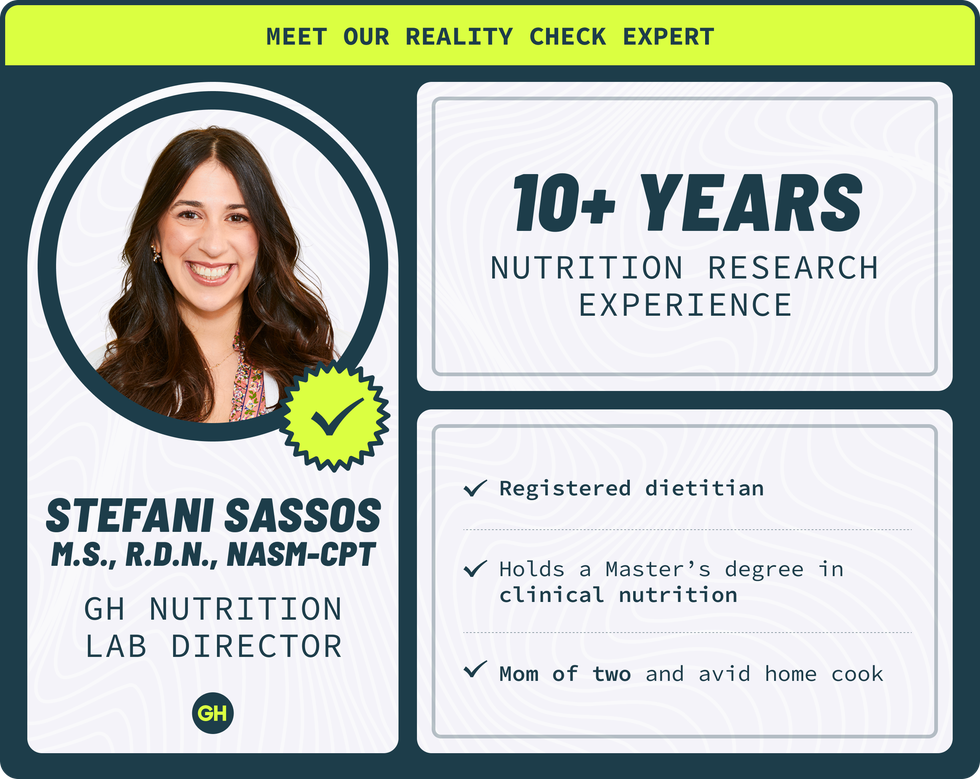
Pediatric registered dietitian Malina Malkani, R.D.N., C.D.N., agrees. “Heavy metals exist in tiny amounts in the soil and water,” she says, explaining that because of this, they end up in both conventional and organic foods. “Even organic foods can absorb these metals from the soil,” she says. “I’m a dietitian and mother of two little ones, so I was naturally alarmed when these studies first came out,” says Stefani Sassos, R.D.N., NASM-CPT, a registered dietitian and the director of the Good Housekeeping Institute Nutrition & Fitness Lab. “Babies are more sensitive because of their size and metabolism,” she says. “But ultimately, this issue is part of a broader conversation about our planet, our soil, and our food supply.”
All of the experts we talked to said that the level of heavy metals in most store-bought baby food (as well as food in general) is so low that it isn’t a reason to panic. That said, some types of foods have been found to be higher in heavy metals than others. “Carrots and rice have comparatively higher levels of heavy metals because of the way they’re grown,” Malkani says. “It doesn’t mean these foods are ‘bad,’ or should be avoided. It just means that when we’re thinking of the context of a balanced diet, it’s smart to feed your child a wide variety of foods, rather than serving the same ones every day.”
It’s also important to know that efforts are being made to reduce the heavy metals in baby food. “The good news is that the FDA is now taking steps to reduce exposure, and brands are becoming more transparent, especially since California passed legislation requiring monthly testing and public disclosure of heavy metal levels,” Sassos says. Houlihan adds that California, Virginia, Maryland, and Illinois have passed laws that require baby food companies to test every lot of commercial baby food for heavy metals and make the results available to the public.
Other Baby Food Safety Concerns
While the presence of heavy metals is a concern when it comes to store-bought baby food, there are others, including baby food’s sugar content and the proliferation of pouches.
Dr. Corkins says that parents should keep an eye on the sugar content in store-bought baby foods—even if the sugar comes from natural sources, like fruit. He says it’s important to avoid feeding infants an abundance of sweet foods because sugar can shape a baby’s taste preferences and crowd out other nutrient-dense foods.
“The AAP has long recommended limiting intake of all sweet beverages, including juice, to reduce the risk of obesity and dental caries in children,” Sassos says.
Dr. Corkins also cautions against pouches. “Pouches can be easier and quicker when kids need to eat on the go, but they don’t promote normal chewing and swallowing,” he says, emphasizing that these are important skills to learn. If you are feeding from a pouch, Sassos advises squeezing the food onto a spoon and feeding from there since that is the way pouches were originally designed to be used. “This helps support the essential mouth and jaw skills children develop through traditional feeding,” Sassos explains.
Also, be thoughtful about food preparation. “Glass bowls are perfect for heating baby food,” Houlihan says. “It’s important to avoid heating it up in plastic because of the many types of additives that can leach from plastic during heating, and the increased release of microplastics with heat.”
The Bottom LineThere’s no need to ditch store-bought baby food. To avoid excessive heavy metals, focus on balance, rotate foods, and know that oversight and transparency are improving.
All four experts are in agreement that the best way to make sure your baby meets their nutritional needs and avoids concerning levels of heavy metal exposure is to feed them a nutritious diet that consists of a wide range of foods.
“Ultimately, the key is balance and variety. Offering a wide range of fruits, vegetables, proteins, and grains supports good nutrition while keeping exposure from any one source low. Limiting rice-based products, rotating grains, and avoiding daily juice can also make a real difference,” Sassos says.
If you have questions about a specific food’s heavy metal content, Malkani says that the Clean Label Project is a great resource. This nonprofit tests consumer products, including baby food, for toxins, including heavy metals. Products that pass its strict guidelines are awarded a certification.
In terms of making sure a food is nutritionally beneficial, Malkani says to read the ingredients list. “The first two or three items listed are going to be what the food is mostly made from. You want to ask yourself, ‘Are these ingredients recognizable? Are they simple ingredients or are they refined ingredients, like rice flour or fruit concentrate?’” she says, adding that simple ingredients are the most nutrient-rich.
With all this in mind, you can rest assured that you are feeding your little ones to the best of your abilities. If you do have any questions about how to safely feed your baby, reach out to your pediatrician. They can serve as a sounding board and offer additional advice tailored to your individual child.
Why trust Good Housekeeping?
Emily Laurence is a freelance writer and certified health coach who specializes in writing about mental health, fitness, healthy food, and social justice issues. Emily spent six years as an editor and writer at Well+Good, covering everything from food trends to serious issues like the opioid crisis in America and gun violence. She has also worked at Seventeen, Elle, and Twist magazines.
Stefani Sassos, R.D.N., NASM-CPT, is a registered dietitian, a NASM-certified personal trainer, and the director of the Good Housekeeping Institute Nutrition & Fitness Lab, where she oversees all nutrition- and fitness-related content, testing, and evaluation. She holds a master’s degree in clinical nutrition from New York University, as well as advanced certifications as a Women’s Fitness Specialist and a Behavior Change Specialist.
Mark Corkins, M.D., is the division chief of pediatric gastroenterology at Le Bonheur Children’s Hospital. He is also a professor and the division chief at the University of Tennessee Health Science Center. Dr. Corkins serves as the chair of the American Academy of Pediatrics’ Committee on Nutrition.
Malina Malkani, R.D.N., C.D.N., is a pediatric registered dietitian nutritionist specializing in baby-led weaning and picky eating.
Jane Houlihan, MSCE, is the research director at Healthy Babies Bright Futures, a nonprofit helping families protect their babies from harmful chemicals. Houlihan is an environmental engineer, leading research on biomonitoring, drinking water, and healthy food.

Rachel Lustgarten (she/her), M.S., R.D., C.D.N., is a registered dietitian in clinical practice in New York City. Her primary area of focus is medical nutrition therapy and weight control. Rachel’s passion is sharing her knowledge and expertise of food and nutrition’s role in overall health and wellness. She co-hosts the weekly “Primary Care Medicine” show on SiriusXM Doctor Radio, interviewing expert guests and fielding listener calls and questions about hot topics in health and nutrition. She served as a clinical dietitian at the Comprehensive Weight Control Center at Weill Cornell Medicine and served as an Advisor to the Weill Cornell’s Women’s Nutrition Connection monthly newsletter for 10 years. Rachel received a Master’s degree in Clinical Nutrition from New York University, graduating with honors.