



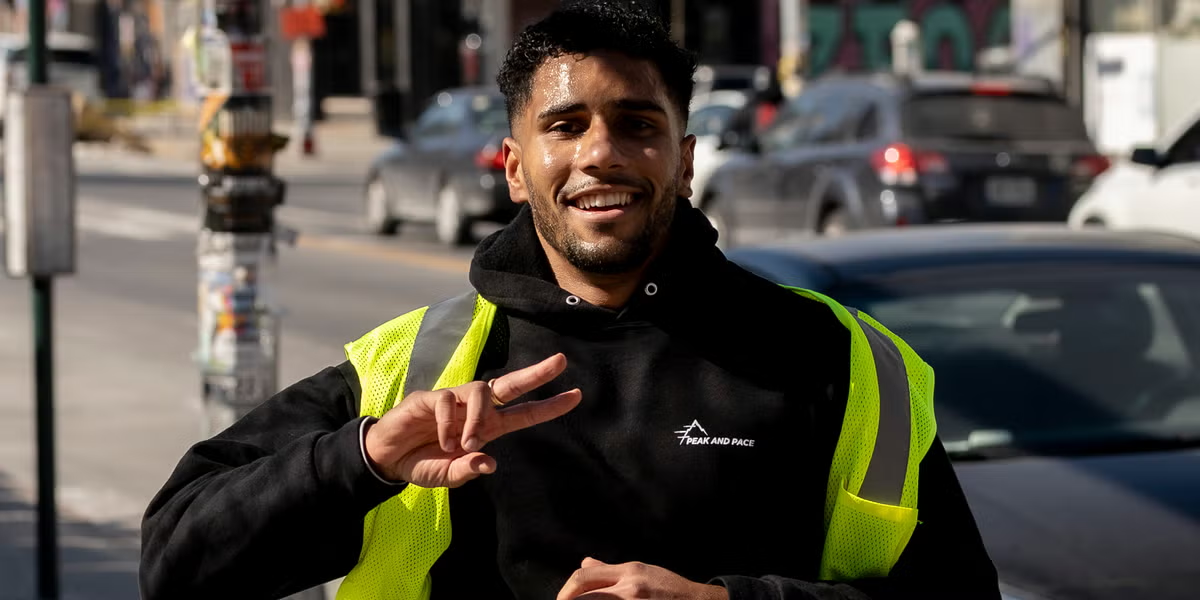
I was under constant stress as a student studying international business at the University of Leeds in England in 2019. Most days, I woke up around noon and stayed up all night because I was studying for exams, rarely going to bed before 5 a.m. I also made a habit of eating out every day because it was more convenient than making a home-cooked meal.
At first, I didn’t think much of how my eating and sleeping habits were affecting my physical and mental health. But during a routine checkup, my doctor told me I was obese. In just four months, I gained 60 pounds, reaching 264 pounds, the heaviest I’d ever been. I was shocked.
In that moment, I realized if I didn’t make a change, I was putting my health—and potentially my life—at risk. As a 20-year-old, reaching that realization scared me because I wanted to live a long and healthy life. It was all the motivation I needed to tweak my eating, sleeping, and exercise habits.
I had plans to move to Madrid that summer for a long-term sales and marketing internship at a global investment bank, so I told my friends that’s when I’d make the change.
Keeping the Promise I Made to Myself
I remember getting home to my new apartment around 11 p.m. and, despite going to bed late, I kept my promise to myself and my friends. The next morning, I woke up at 5 a.m. and went for a run. It was the first time I had run since I was a kid growing up in Tenerife, a small Canary Island where I lived until 2011. Back then, running was all about speed because I wanted to run faster than the other kids on the playground.
As an adult, I saw running more as a way to lose weight quickly… or so I thought. That morning I ran by myself and it took me 38 minutes to complete a 5K. I used the Nike Run Club app to track my progress. Every time I tried to speed up during that run, it felt like I was fighting for my life. I didn’t know how to pace myself or how to conserve my energy properly. I ran, then I stopped to take a walk break, and I repeated that pattern until I finally finished the workout.
Completing a 5K for the first time motivated me to get faster and run farther. I started running five times a week, for at least a half hour each session, paying close attention to how fast and far I could run each time. After about three weeks of running consistently, I noticed a change in my breathing; it wasn’t as labored as it was during my first workout. By focusing on my breathing, keeping it relaxed and controlled, I was able to run longer and it felt easier.
Because running is an individual sport, it’s no surprise that I felt kind of lonely out there while racking up miles. It’s also very repetitive, so it’s easy to burn out, especially if you do too much too soon. As a way to break up my routine, I started boxing because I’d learned it as a teenager and always enjoyed it. Eventually, I made friends with some of the other boxers at my local gym, and we started running together.
On the days when I was less motivated to run, boxing kept me moving.
When it comes to weight loss, consistency is key, and running isn’t enough. To see real results, I also had to tweak my sleep schedule and my diet. Even then, it took a full year of exercising regularly, sleeping better, and eating well before I noticed a meaningful change.
Meal prepping was a key part of my weight-loss journey. Each week, I prepared simple meals, usually chicken over rice with avocado. To keep things interesting so I wouldn’t get tired of eating the same food, I changed the seasonings I used. My favorites include habanero, lemon pepper, and garlic parmesan.
After graduating from the University of Leeds in 2021, I moved to London to work in finance. While I was there, a managing partner from the New York office visited, and I asked for 15 minutes of her time to pitch myself. That conversation led to the opportunity to fulfill my longtime dream of living in New York.
When I moved to NYC in 2023, I didn’t give up on my running routine, and by 2025, I had lost a total of 92 pounds, hitting 168 pounds—the lowest weight of my life.
How I Used My Own Experience to Help Others Start Running
Life in the Big Apple wasn’t what I expected. I was never a fan of going out for drinks, so making new friends was hard. In a city like New York, you can meet someone one day, make what feels like a meaningful connection, and perhaps even make plans to meet up again another time—but rarely do people follow up. That’s why I considered moving out of the city in 2024, nearly a year after moving there, even though I dreamed of living there my whole life.
Finding a sense of belonging and community was important to me, so it brought me down when I couldn’t find it. But I still found joy in running and exercising. I’d often jog through Central Park and along the West Side Highway.
One day while I was at the gym and scrolling on TikTok, I came across a reel that inspired me to visit Fount Church in Brooklyn. At the very first service I attended, I met a man named Ademi, who eventually became my best friend. The church finally offered me the community I was looking for in New York.
Through the church community and making friends with other runners there, I came up with the idea for a run club, which we called Peak and Pace, because I wanted to share that feeling of belonging with others.
To spread the word about the run club, I remember Ademi and I went around to different events and asked people if they would join us for a run. Many people declined our invite because they didn’t run, so we added a walking component. I also posted about the run club on my Instagram. Twelve people—many of whom were members of my church—showed up to the first run in July 2024.
We ran a 5K and everyone finished at a different time, but it was great to witness everyone trying to achieve a common goal. Afterward, we went to a Thai restaurant for brunch. My favorite part about that day was completing the workout because everyone pushed themselves. When you see other runners trying their hardest, and you’re all working toward a goal individually, but also collectively, it makes you want to try harder.
The main objective of Peak and Pace is to build a community through movement. At first, I thought that meant arranging ski trips and runs (hence the name, Peak and Pace), but that has changed over the past two years.
As we grew in membership, people started to request more events, so now we’re much more than a run club. We’re a social club. We’ve hosted dance classes, hikes, yoga, Pilates, ski trips, and even a Love Island watch party.
Our Saturday runs, which are usually tied to a theme like Single versus Taken, are held in Prospect Park, except for the third Saturday of every month, which takes place in Central Park. Despite having hundreds of people show up to our events and more than 70,000 followers on Instagram, Peak and Pace is still about inclusivity. I know firsthand how tough it is to start and stick with a running routine, and I want to make it easier for others.
How I Became More Consistent With RunningDoing Early-Morning Workouts
It takes perseverance to change your routine from going to bed at 5 a.m. to waking up around that time. Nowadays, it’s not as hard because I’ve become accustomed to it, but when I first started, it was really difficult, especially on cold or rainy days. But I stuck with it, remembering that promise I made to get healthier.
Whenever I moved to a new place, I made a habit of finding a gym that was far enough from my house that I could easily run there and back. This helped make running more a part of my everyday routine.
Having a Run Buddy
Having someone to run with you makes a world of difference. Back when I first started running in 2019 when I lived in Madrid, and long before I had thousands of run buddies, once a week I ran with a few guys from my boxing gym. They were my accountability partners. We ran together and kept each other motivated. When I struggled to stick with a workout, I was glad they were there to help talk me through it.
Switching Up My Routine
It’s also very important to find ways to switch up your routine throughout the week so you’re motivated to maintain that consistency. Strength training, walking, or another form of cross-training can help you avoid overtraining, injury, and burnout. Though boxing isn’t typically a cross-training activity for many runners, the endurance sport is very beneficial physically and mentally, which is why I added it to my routine. I found it especially helpful on days when I didn’t want to run because I was moving my body in a different way than what I was used to doing.

Monique LeBrun is a health and fitness editor who is based in Easton, Pennsylvania. She covers a wide range of health and wellness topics, with a primary focus on running performance and nutrition. Monique is passionate about creating content that empowers runners to become the best versions of themselves. As an avid runner and parent, she loves spending time outdoors with her daughter, who often accompanies her on weekend runs as her personal mini run coach.