




Phibro Aqua highlights how optimization of gut health and immune systems drives superior performance, growth, and disease resistance in modern aquaculture operations.
Sponsored by Phibro Animal Health
In today’s aquaculture industry, performance and resilience go hand in hand. Producers must balance growth efficiency with animal health while facing disease pressures and rising feed costs. Natural, science-backed solutions are now essential for driving sustainable success.
One innovative solution is our nutritional specialty product, PAQ-Protex™, a natural functional feed ingredient designed specifically for aquaculture. Built on a proprietary blend of saponins and polyphenols derived from Yucca schidigera and Quillaja saponaria, PAQ-Protex represents a targeted approach to help support gut health and immunity in fish.
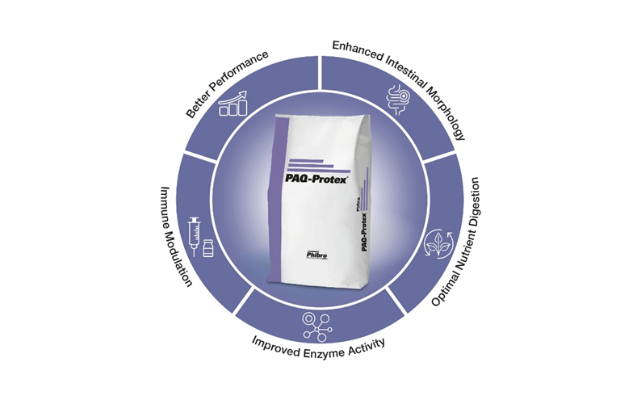
At its core, PAQ-Protex works by supporting intestinal integrity, an often overlooked but critical factor in overall fish performance. A healthy gut supports efficient digestion, nutrient absorption, immune responses, and optimized growth and yields.
Not all saponins are the same
What sets PAQ-Protex apart lies in its carefully selected ingredients. While saponins are widely recognized in animal nutrition, their effectiveness depends heavily on their source and structure.
Saponins derived from the Quillaja plant have demonstrated unique biological activity. Unlike others, they can pass through bi-layer cell membranes, allowing them to activate immunity and promote intestinal health more directly.
Performance trials
Controlled trials have reinforced the immunity and intestinal health benefits of PAQ-Protex. In a study conducted at Phibro’s aquaculture research facility, gilt-head bream (Sparus aurata) fed 1kg/MT PAQ-Protex feed for a total of 85 days, were challenged with the parasitic dinoflagellate, Amyloodimium ocellatum after 78 days, and showed a significant reduction in A. ocellatum levels per gill segment 12 days after the challenge compared to the control group (Figure 1).
In addition, the PAQ-Protex fed groups had a positive trend in total biomass versus the control groups (Figure 2) (Phibro internal data, 2025).

Beyond immune support, PAQ-Protex has also demonstrated its value in fish under nutritional stress.
In another study, fish were initially fed a high-quality diet (50% protein fish meal source, 18% fat, 9% ash and 9.5% moisture) for 55 days, then switched to a lower-nutritional feed (35.0% protein not fish meal source, 7% fat, 11.0% ash and 9.5% moisture) for 22 days, simulating real-world conditions where feed quality may vary. After 22 days of feeding the low-nutrient diet, fish receiving PAQ-Protex gained more biomass after the change to the low-nutrient feed diet than the control group (Figure 3) and achieved a significantly improved feed conversion ratio (Figure 4) compared to the control group not fed PAQ-Protex.
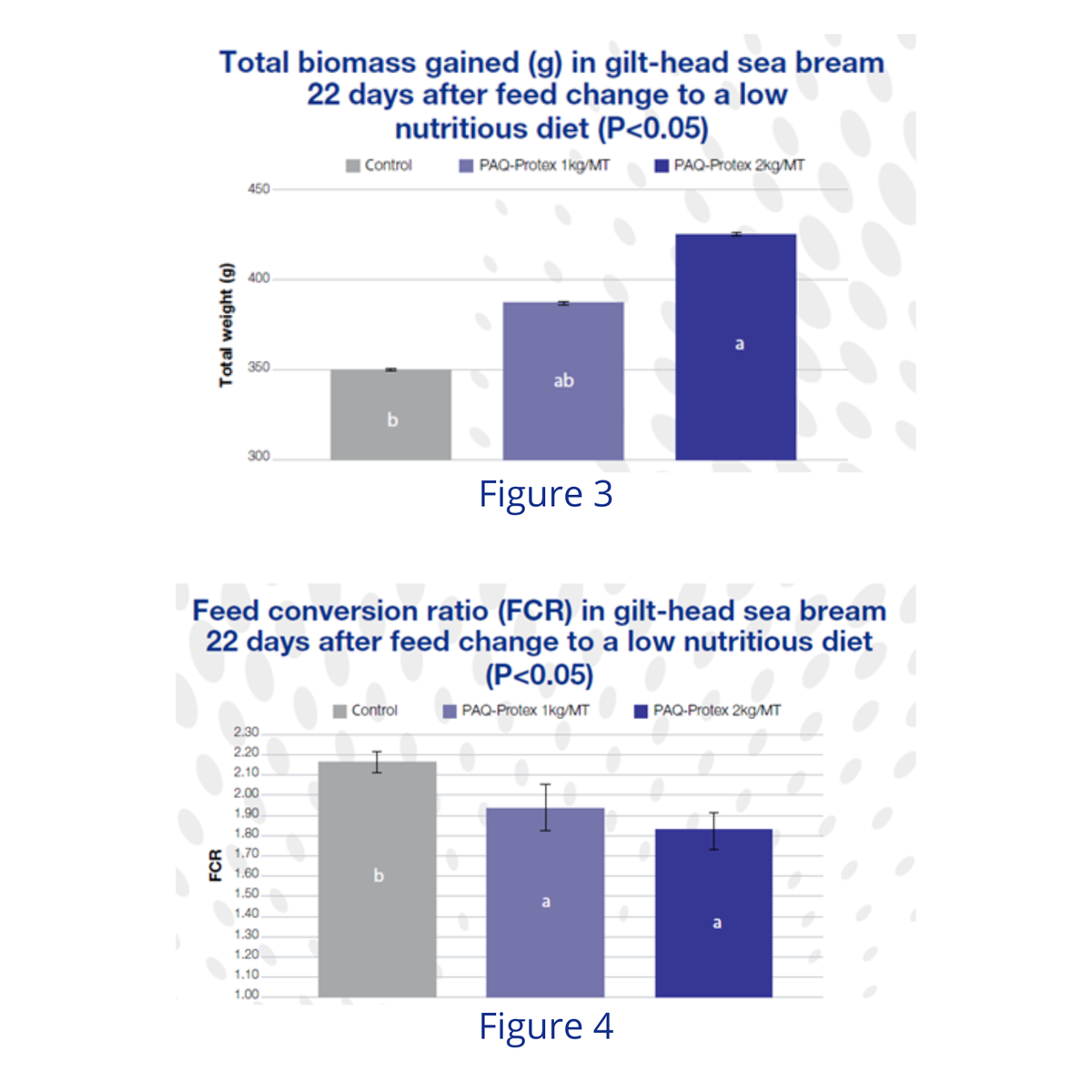
This study confirms the benefit of feeding PAQ-Protex to support nutrient digestion in fish.
PAQ-Protex can be considered a natural nutritional support solution for today’s aquaculture, adding value by supporting gut health and immunity to enhance production performance.