



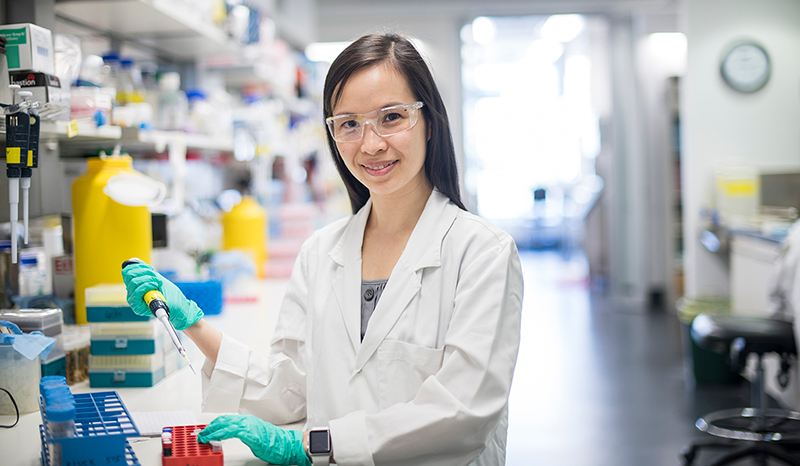
Climate change is one of the greatest challenges of the 21st century as rising temperatures and declining air quality not only reshape our planet but also affect human health.
Dr Teh’s project will investigate how heat and environmental stress re-wire our immune cells, disrupting how they function and influencing the body’s ability to fight infections, autoimmune disease, and cancer.
By revealing these effects, her research aims to guide new ways to protect human health in a rapidly warming, more polluted world.
Dr Teh said: “I’m genuinely excited and very grateful for the chance to take on a big, tricky question in immunology.
“We hear a lot about climate change shaping where diseases spread or affect agriculture or livestock, but far less about what it’s doing inside our own bodies, especially to the immune system that keeps us healthy.”
Dr Teh said she was honoured to receive the Galli Senior Research Fellowship.
“This Fellowship is so special. It backs a bold, slightly unconventional idea that could have real impact,” she said.
“I am particularly thankful to the Galli Fellowship Program for not only supporting the vision but also providing the cutting-edge tools to explore it properly.
“It’s a meaningful investment, and I’m hopeful it will lead to insights that help us better protect human health in a rapidly changing world.
WEHI director and The Lorenzo and Pamela Galli Chair in Medical Biology, Professor Ken Smith, praised the foresight of the new Fellowship to support researchers who demonstrate great potential for impact and leadership.
“Dr Teh’s research exemplifies the Galli mission to advance the next generation of research excellence, delivering critical insights into immune development that will underpin future breakthroughs in disease prevention and care,” Prof Smith said.
“With her combination of innovation, rigour and leadership, Dr Teh is an outstanding example of the researchers the Galli Fellowships aim to empower.”
The new Galli Senior Fellowship program builds on 10 years of philanthropic vision by Pamela Galli AO, in honour of her late husband Lorenzo.
The program represents a formalisation of the Lorenzo and Pamela Galli Medical Research Trust’s commitment to supporting early and mid-career researchers and to drive transformative research and impact through cross-disciplinary collaborative research with the Peter MacCallum Cancer Centre, the Murdoch Children’s Research Institute and Royal Children’s Hospital, and the University of Melbourne.