





A tenth of US adults have at least one food allergy. And while they might be the usual suspects, like peanuts or shellfish, there are actually over 170 possible foods that can be linked to an allergy. Why are there more food allergies than ever before? And how should you handle a food allergy that starts in adulthood?
On this episode of On Nutrition, registered dietitian Sara Wolf answers all the food allergy questions, including how she’s navigated her own.
Listen to Not just peanut butter: Food allergies
Read the transcript:
Sara Wolf, RDN, LD : I touched my face, and I ended up with a handprint on my face. And I thought, “Oh, gosh. Somebody’s probably eating a peanut butter sandwich,” and I didn’t realize.
Tara Schmidt: This is “On Nutrition,” a podcast from Mayo Clinic, where we dig into the latest nutrition trends and research to help you understand what’s health and what’s hype. I’m Tara Schmidt, a registered dietician with Mayo Clinic in Rochester, Minnesota. This episode — food allergies.
Over 10% of adults in the U.S. have at least one food allergy. And while some might be the usual suspects, like tree nuts or shellfish, there are actually over 170 possible foods that can be linked to an allergy. Why do food allergies happen? Why are they on the rise? And are there hacks to get around them, like putting tape over your lips? Here to answer all the allergy questions is Sara Wolf, a registered dietitian and clinical nutrition manager at Mayo Clinic in Rochester, Minnesota. Sara has not only seen her fair share of food allergy patients, but she’s also navigated her own food allergies too.
Tara Schmidt: Hey, Sara.
Sara Wolf, RDN, LD: Hi, Tara.
Tara Schmidt: Thanks for joining me today.
Sara Wolf, RDN, LD: You’re welcome. Thanks for having me.
Tara Schmidt: I feel a little bit like I’m in the wrong position because, disclosure, everyone, Sara’s my former boss, so it feels weird for me to be asking you questions.
Sara Wolf, RDN, LD: No, this is great.
Tara Schmidt: This is a fun interview because you are an expert — personally and professionally — on this topic.
Sara Wolf, RDN, LD: That’s very kind, thank you.
Tara Schmidt: We have so much to understand about food allergies beyond the fact that some people are allergic to peanut butter, so to clear things up, we’re going to play a game of health or hype.
Sara Wolf, RDN, LD: OK.
Tara Schmidt: Are you ready?
Sara Wolf, RDN, LD: I’ll do my best.
Tara Schmidt: OK. “health” or “hype”: there are now more food allergies than ever before.
Sara Wolf, RDN, LD: I would say “health.” There’s so many different things that we’re learning play into food allergy development, and there’s changes in our environment. There’s more C-sections now than there have been.
Tara Schmidt: Oh, we’ll get into that.
Sara Wolf, RDN, LD: Like, all sorts of things play into development of or likelihood to develop food allergies. So we’re seeing it more, and more, and more.
Tara Schmidt: I feel like in elementary school for me, I knew of one kid maybe, right? One peer in my class had a food allergy, and we were aware of it, and we were conscious. But now every classroom in my child’s elementary school has a sign that says, “We are ‘blank’ conscious” or ‘blank’ free.”
And it’s just really different. Which I’m assuming is helpful, and great, and comforting, especially for the parents of kids with food allergies, but I do think it’s much more prominent.
Sara Wolf, RDN, LD: It is much more prominent.
Tara Schmidt: OK. Cool.
Sara Wolf, RDN, LD: You’re not making that up.
Tara Schmidt: OK. It’s possible to outgrow a food allergy.
Sara Wolf, RDN, LD: And that is “health.”
Tara Schmidt: OK.
Sara Wolf, RDN, LD: Yes, you can. It’s pretty common for kids to outgrow a subset of food allergies. Some of those more prominent ones that you hear about, like peanuts and shellfish, and that kind of thing, tend to stick around a little bit more. But lots of those other ones can get outgrown.
Tara Schmidt: It’s possible to develop an allergy later in life, so flipping it.
Sara Wolf, RDN, LD: Yeah, also super common, and something that shocks people, of course, when it happens because you’ve been fine your whole life.
And again, environmental changes. Aging with your body, the way your microbiome works and the membranes that hold all your immune cells, and the permeability of those changes over time. So it’s totally possible to develop an allergy as an adult.
Tara Schmidt: OK. Knock on wood. “Health” or “hype”: you can prevent food allergies in children by eating common allergens while pregnant. This is one I’ve absolutely heard. Like, “make sure to eat peanut butter while you’re pregnant, or maybe while you’re breastfeeding to get them those antibodies.”
Sara Wolf, RDN, LD: Well, I think it’s very inconclusive. What we do know, though, is that the early introduction between four and six months for an infant is helpful for sure. Little bit less evidence with the pregnant moms. But we do also know that pregnant moms that eat a more Mediterranean-based diet higher in fruits, vegetables, and vitamin D, they tend to have offspring that have less incidents of allergy, though. So just a little plug for eating healthfully during pregnancy.
Tara Schmidt: We always plug Mediterranean. So not necessarily eating the allergens themselves, but just the pattern of eating.
Sara Wolf, RDN, LD: It’s a little like I said, inconclusive, but yes, kind of that overall diet pattern of being more Mediterranean. I know it seems to fix a lot of things.
Tara Schmidt: We always plug Mediterranean.
Sara Wolf, RDN, LD: I know.
Tara Schmidt: Is it possible to prevent an allergy early in life from the type of birth — vaginal versus C-section? Are the ways that you’re birthed and the ways that you are fed as an infant linked here?
Sara Wolf, RDN, LD: Yeah. You can reduce the risk of, maybe, we’re not all the way preventing, but we know certain things might reduce the risk of developing food allergies. So when babies are born vaginally, they’re exposed to some different flora and fauna, and that helps to colonize their own baby’s guts.
Tara Schmidt: We have a vaginal microbiome.
Sara Wolf, RDN, LD: Yeah, absolutely. And so that’s very good for the baby, and when you come out a different way, through a C-section, you don’t have that same benefit.
Same thing with breastfeeding. There are immune cells in breast milk and all that kind of thing. That’s all helping you develop and mature an immune system, whereas if you’re not, and — by the way — no guilt towards moms that cannot breastfeed babies, that’s OK. Fed is best. We want to say that for sure, feed your babies. But if you’re wondering about the kind of things that we’re seeing, it’s a little bit less conclusive. But breastfed babies tend to have a little bit less incidence of allergies. And so it’s probably a combination of things.
They are going to be exposed to some allergens through mom’s breast milk, but with that, they’ve also got appropriately functioning immune cells with it to teach their immune systems maybe how to navigate that.
Tara Schmidt: And we also want it out there that you can have a vaginally birthed baby who is breastfed, and that baby still ends up with an allergy. Some things still just happen.
Sara Wolf, RDN, LD: Yes, never shame a mama.
Tara Schmidt: Don’t come at us, moms.
Sara Wolf, RDN, LD: No, no.
Tara Schmidt: Are there any common myths about food allergies you want to just get out on the table?
Sara Wolf, RDN, LD: One of the things that people say sometimes is, “Oh, I just have this mild food allergy to something.” And the thing is, if it’s a true food allergy, you never know if a reaction is going to be mild, moderate, severe. It doesn’t necessarily mean that you consumed more of the allergen. It doesn’t have to happen that it’s mild and then it gets worse with every exposure. It’s really hard to know what that reaction is going to be. So it’s kind of risky in a way to assume that it’s always going to be mild.
Tara Schmidt: And, of course, we are going to talk about allergies versus intolerances, which, I think, can even, like, further muddy the waters.
Sara Wolf, RDN, LD: For sure.
Tara Schmidt: Can we start with, like, allergies 101? Where do allergies come from?
Sara Wolf, RDN, LD: They are essentially just a misfiring of the immune system. Like, for whatever reason, your immune system recognizes something that should be benign, and it sees that kind of as an enemy. And it’s just truly a misfiring, and sometimes other issues like eczema and other kinds of sensitivities come right along with that.
Sometimes family history of being allergic not necessarily to a certain allergen but just the tendency to be allergic can be a thing, too.
Tara Schmidt: And you just mentioned a little bit about family history. So let’s talk about some of the risk factors. Any demographics at play here? Let’s learn more about one’s risk.
Sara Wolf, RDN, LD: So people that develop asthma, eczema, and other allergies, tend to have a higher risk for food allergies as well. Related to demographics, all non-white racial and ethnic groups tend to show significantly higher odds of developing food allergies. And that comes down to some biological and genetic factors, but also even socioeconomic factors. That lack of access, maybe, to current medical information and advice about early introduction of allergens, that kind of thing.
Tara Schmidt: Or like you just said, like, what we know about introducing foods to infants, right?
Sara Wolf, RDN, LD: And that hasn’t always been a known thing. I mean, I have a kid in their 20s, and that wasn’t the way when he was little. And I was super concerned with it myself. We didn’t know what we know today. And, in fact, maybe what we were doing back then by avoiding could also be a piece in the increase in prevalence of what we’re seeing today.
Tara Schmidt: We just do our best.
Sara Wolf, RDN, LD: We do, with the information that we have.
Tara Schmidt: That is our PSA to all parents out there.
Sara Wolf, RDN, LD: Yes.
Tara Schmidt: Let’s talk a little bit about the difference between an allergy and an intolerance, because there is a distinct difference, but I’m not sure it’s always discussed appropriately.
Sara Wolf, RDN, LD: A true food allergy is an immune response. It’s a cascade of all sorts of things that cause awful reactions in the body at times.
Tara Schmidt: Scary ones.
Sara Wolf, RDN, LD: Very scary and life-threatening reactions at times. When we talk about a food intolerance, those are also real, but their primary sites of action are in the GI tract. You might be lactose intolerant, and when you try to drink milk, you might have gas, bloating, diarrhea, that kind of thing. And so that’s all real too. But that’s not going to cause some severe anaphylactic reaction. So it is important to distinguish the two if for safety reasons for no other reason, because we know that people that are lactose intolerant can tolerate a small amount of milk. But if someone is truly milk allergic, even the tiniest amount can set off a cascade of a dangerous reaction.
Tara Schmidt: And like you said, the severity of it in someone whose lactose intolerance might end up in the bathroom for the evening, does not need to go to the emergency department.
Sara Wolf, RDN, LD: Correct.
Tara Schmidt: Is it true that there are roughly nine food allergens that account for about 90% of allergic reactions?
Sara Wolf, RDN, LD: There are.
Tara Schmidt: OK.
Sara Wolf, RDN, LD: There were eight until just a couple years ago. But now there are nine because we’ve added sesame.
Tara Schmidt: That’s the newest one.
Sara Wolf, RDN, LD: That’s the newest one on the block.
Tara Schmidt: So we’ve got milk, eggs, fish, shellfish, wheat, soy, peanuts, tree nuts, and — newest one — sesame, like you said.
Sara Wolf, RDN, LD: Yeah.
Tara Schmidt: But then there are 170 foods that people can be allergic to. What is going on here? What are some of these that we might not expect?
Sara Wolf, RDN, LD: Something that you might guess are other types of seeds or other things that are related from a botanical perspective. Some of these other foods that are in our for-sure list. Another thing that is on the scene a little bit is alpha-gal syndrome. It’s an allergy that people develop essentially to the galactose in the mammal’s meat.
Tara Schmidt: In red meat.
Sara Wolf, RDN, LD: In red meat. So it’s all of a sudden you’re having reactions to beef, pork, that kind of thing, and it can be a super severe reaction, like an anaphylactic reaction.
Tara Schmidt: These people have not had an allergy before. They’re eating a steak because they’ve always eaten a steak. But they have previously, maybe even unknowingly, been bitten by a tick, a specific type, though.
Sara Wolf, RDN, LD: And what’s a little bit more dangerous in a way, and hard to even think about this syndrome, is that many of our other food allergens, you have a pretty quick reaction.
With alpha-gal, there can be hours of a delay, and so you don’t even think about it, even if you go into the ED. What did you just eat? Nothing, you know? So even hard to kind of make those associations and knowing that meat isn’t on our top-nine list. It’s just something people don’t think about.
Tara Schmidt: And then, we have conditions like pollen food allergy syndrome. What’s going on there? Are these people with itchy lips?
Sara Wolf, RDN, LD: It used to be called oral allergy syndrome.
Tara Schmidt: Oh, that’s what I was going to call it.
Sara Wolf, RDN, LD: And I think a lot of people still refer to it as that. But now we figured out it’s the pollen in those plants that are in the food that end up causing that oral allergy, itchy lips, burning — not just on the lips, but in the mouth too.
Some people think, “Oh, it’s just in my mouth, it’s fine.” But that can actually cause a severe reaction, too. So depending on what a doctor would say, what your allergist says, some people do carry epinephrine for that type of an allergy too.
Tara Schmidt: Are these going to be mostly, like, fruits? Because they’re on a tree and they’re exposed to pollen?
Sara Wolf, RDN, LD: Yeah, tend to be the plant varieties.
Tara Schmidt: This may be a stupid question. Can you just wash your fruit? Do you know what I’m saying? Like, what if we just wash the pollen off?
Sara Wolf, RDN, LD: It’s more effective to peel it, because then you’re definitely reducing your exposure to that outside of the fruit. Great question, though. Good problem-solving.
Tara Schmidt: Food allergies can come from genetics, environmental triggers, or your immune system. When you ingest an allergen, your immune system is fighting back against what would otherwise be harmless foods. And there are more food allergies than ever before. That’s partially because of changes in our food environment, as well as more C-sections.
Parents can pass some immune protections along through a vaginal birth, breastfeeding, or eating a Mediterranean diet while pregnant that’s higher in fruits, vegetables, and vitamin D. While some people do outgrow food allergies, the big nine tend to stick around. Those are milk, eggs, peanuts, tree nuts, shellfish, fish, wheat, soy, and sesame.
Then there are more than 100 other less common allergens, like red meat or pollen on produce. The difference between an allergy and intolerance is the response. A food intolerance may trigger a reaction in the GI tract, but an allergic reaction to a food may be a more dangerous full-body response. We’ll get into that next.
Sara, I brought you on today not only because you are an expert, but also you’ve experienced food allergies firsthand. Are you comfortable sharing how that’s shown up in your life?
Sara Wolf, RDN, LD: My food allergy history goes back to before I can remember. My parents tell me that I had my first peanut reaction when I was 18 months old.
Tara Schmidt: Wow. That’s so scary.
Sara Wolf, RDN, LD: It is so scary. And I’ve not had a tiny child have an anaphylactic reaction, so I can only imagine as a mom what that is like.
So I apparently had a peanut butter sandwich bite from my grandma. And soon after, they knew something was very wrong. I started to get hives. I started to have just lots of swelling. My eyes swelled shut. They could tell I wasn’t breathing well. They had to take me into the emergency room. So that was that.
And a year or two later, I was under the care of another family member, and she, I think, gave me a plain M&M. Those also can be cross-contaminated or contain peanuts, and I did have a reaction.
And then I believe my next one was probably when I was, like, 5 or 6 at a birthday party. So it’s all these situations where as a mom, parent, of an allergic kid you’re thinking of how to mitigate those. I kind of did all those things. But like you mentioned earlier, I was probably the only one in my class that had an allergy. But once we figured this out, they got better at risk mitigation too.
I had great friends and great families of those friends that were careful and were not hard to work with, and be with, and they wanted to protect me.
Tara Schmidt: Let’s talk about some additional common reactions and the different categories that they might fall under. So start with skin reactions. You mentioned hives, swelling. Any others that we’re missing in terms of skin?
Sara Wolf, RDN, LD: Itching. Anything that’s inflammatory, and it can be all part of an anaphylactic reaction or not. And it can show up in different ways. The hives can look different, you know? Big, red, small, looks like scales. I mean, just all sorts of different types of look.
Tara Schmidt: What’s happening in the respiratory system?
Sara Wolf, RDN, LD: All of that inflammation can be causing airways to tighten, not just a big one, but many of them. So it’s a very scary situation when that happens.
Tara Schmidt: That’s life-threatening. What about GI? So when I think of GI symptoms, like we talked about before, I think more of intolerances. But is GI part of an allergic reaction as well?
Sara Wolf, RDN, LD: It also is, yes. A food allergy reaction can set off a whole cascade of things that affect multi-organ systems all at the same time. You can end up with vomiting, diarrhea. I mean, your body’s trying to get rid of the allergen. But some of it is just the reaction itself, too. As far as GI goes, it’s not just that alone, of course. That would be more like an intolerance. But when it comes as part of that whole food allergy kind of reaction, and it can be pretty severe, too, and quick onset, also.
Tara Schmidt: And then let’s talk about anaphylaxis itself. I think that that’s the word that we associate with these scary food allergies. That’s when we need emergency help, EpiPen, call 911, et cetera. What’s happening with anaphylaxis?
Sara Wolf, RDN, LD: If it really cascades into that, it becomes a life-threatening situation involving the lungs, the GI tract, lots of organ systems, and your blood pressure can drop dangerously low. It’s why we need epinephrine very, very quickly when that is going to set in.
Tara Schmidt: If someone knows or assumes that they’re having an allergic reaction, is using an EpiPen, using epinephrine, ever risky?
Sara Wolf, RDN, LD: It’s likely more risky to decide not to use the EpiPen.
Tara Schmidt: That was going to be my guess.
Sara Wolf, RDN, LD: There are some decision-making, kind of guides that we give to people. Usually, if it’s involving a one-body system, like I’m just itchy and I’m nothing else, I probably don’t have to use that EpiPen right away. But when it involves two body systems, we need to go use that EpiPen.
Tara Schmidt: That’s a good rule.
Sara Wolf, RDN, LD: And you do need to go to the ED afterwards, too.
Tara Schmidt: So you don’t just get to hang out at home.
Sara Wolf, RDN, LD: It increases your heart rate. Also, we’re monitoring your vitals. We want to make sure that you’re doing well. Sometimes you need another dose of epinephrine. So there is that immediate life-saving dose you need to give, but also that monitoring that comes later. Another pitfall people have, too, is they think, “Oh, I’m just going to take some antihistamine of some kind and I’m going to feel better.” And yes, you might feel better, but it also can mask symptoms of anaphylaxis from different systems, so it might make you not have a runny nose and help your itching and all that kind of stuff, but it’s not going to save your life if that reaction continues and builds, so it can be dangerous.
Tara Schmidt: And that’s good because my next question was going to be, is there ever a situation where you could, quote, “sleep it off,” right? Take your Benadryl, you feel better, and now we’re OK versus I either need to use Epi and/or I need to head in.
Sara Wolf, RDN, LD: That’s a super risky thing to do, especially with, like, a known ingestion. You need to take that epinephrine and get into the emergency room.
Tara Schmidt: Better safe than sorry, right?
Sara Wolf, RDN, LD: Yeah. Especially when you have an EpiPen, so many times you’ve already had a reaction like that, so you know how scary it is. You know that you might have one like that, so it is so much better to be safe than sorry and just not delay, just go for it.
Tara Schmidt: And then they expire, right?
Sara Wolf, RDN, LD: Yeah, they do. You have to keep getting new ones.
Tara Schmidt: Do you think it’s common for people to mistake food allergies with things like IBS or celiac disease or food poisoning because of some of the symptoms?
Sara Wolf, RDN, LD: I think there could be a potential for sure. Maybe not just a food allergy, but an intolerance with all of that stuff too. Those GI symptoms can come with food allergies. So there’s definite crossover in those symptoms. It definitely could be hard to know.
Tara Schmidt: If someone is experiencing some of the symptoms that you had referenced, do they need a formal diagnosis?
Sara Wolf, RDN, LD: Yes, you should, because sometimes it’s actually hard to know what exactly you reacted to, too. So truly going to an allergist, that’s the best bet, and formally teasing through and figuring out what you’re reacting to. And they’re the ones that prescribe the EpiPen.
Tara Schmidt: I was going to say, that’s how you’re getting your EpiPen from.
Sara Wolf, RDN, LD: You definitely need your epinephrine. So you definitely don’t want to doctor-Google your allergies and try to self-treat something that could be life-threatening. We would not recommend that. We would recommend you go to your local allergist for sure.
Tara Schmidt: Let’s talk about food allergy testing or just allergy testing in general and kind of what it looks like. I’m thinking of pricking the back or the arm, and we’ve got little boxes and squares.
Sara Wolf, RDN, LD: And that is something that is done under controlled environments in an allergist’s office where they do skin prick testing, where they introduce the allergen under the skin, and they monitor that skin reaction loosely correlating it with are you allergic to that allergen or not.
That is a very common and evidence-based way to look at allergies. There are blood tests they might want to use, but the gold standard is actually an exposure, like you do a test in the office.
Tara Schmidt: Like you eat a peanut.
Sara Wolf, RDN, LD: The way they do it, because I had one of my kids tested for a peanut allergy in this way, a peanut challenge, if you will, in the office. They start with a tiny amount, and they wait, monitor for reaction, and continue. You’re staying in the office. They’re literally painting the inside of their lip initially with just a little bit of something, and then it goes more and more and more. And if they don’t show a reaction to that, then hopefully you’re good to go with that allergen. And that also should never, ever, be done without medical supervision. It shouldn’t be done in a place that can’t handle a severe allergic reaction, so don’t just try it at home.
Tara Schmidt: Common allergic reactions to food include swelling, hives, runny nose, difficulty breathing, itching, vomiting, or diarrhea.
Speaker: These could be limited to certain areas of the body, and could possibly be treated with an antihistamine. Just be aware that an antihistamine may hide symptoms of a more severe reaction, because when it starts hitting multiple systems across the body, it may be an anaphylactic response. That’s when you need to use your EpiPen and go to the emergency department. If you’re experiencing any of those reactions, but don’t have a diagnosis, consider seeing an allergist to get tested. That might mean a blood test, skin prick test, or even exposure to a small dose of your potential allergen in what’s called an oral food challenge.
Now let’s get into how to avoid these allergens — in the kitchen and outside of the home.
We know there’s not a permanent cure for food allergies. But is it possible to reduce your reaction to an allergen?
Sara Wolf, RDN, LD: Maybe a way to kind of encompass this a little bit is to talk about new management strategies for it. It’s not that it necessarily cures it, but we’re seeing more and more oral immunotherapy coming into play. And, specifically with a peanut allergy, what has happened is kind of like the testing, but in a controlled way, they introduce that allergen in very small amounts and sort of train the immune system not to react to it. And they continue to challenge just a little tiny bit, though, again, under supervision. Nothing anybody should ever try at home. And what can happen then is the patient becomes tolerant enough that they can tolerate maybe a peanut. Now, they wouldn’t want to go out and eat them intentionally, but what that means is when you’re out at a restaurant or you’re in other, maybe more uncontrolled environments, there’s a lot less risk that you will react because of cross-contamination. So it’s just a little bit of an insurance policy.
Tara Schmidt: I know someone who did that with a bee allergy. They were going into the military — military obviously doesn’t want anyone allergic to bees — so they essentially got desensitized to a bee sting. So that is kind of exposure therapy. What about just basic lifestyle management in terms of improving our odds of being safe, really, right?
Sara Wolf, RDN, LD: The management with traditional food allergies is avoidance of the allergen and avoidance of the risk of cross-contamination and that kind of thing. So this is where dieticians really get involved, in that piece of it, because whether we can physically go to somebody’s kitchen or not, but we can ask about people’s food environments, their eating environments, all the different situations you’re going to find yourself in, and help problem-solve and figure that out. Because ultimately, we don’t want people to be restricting more than is needed. And we also don’t want people to have this affect their lives so much that they can’t do the things they want to do.
So that’s, I think, where we come in, besides nutritional adequacy and that kind of thing when we’re avoiding some things, but even helping patients and families figure out the lifestyle around this because it can be disruptive and scary.
Tara Schmidt: It’s overwhelming.
Sara Wolf, RDN, LD: It can be, for sure.
Tara Schmidt: Can you talk about, even just from personal experience, some of the things that you do? So like, don’t eat food from blenders, so you might not be getting a mixed-up ice cream dessert from a fast food restaurant because we don’t always know.
Sara Wolf, RDN, LD: Yeah.
Tara Schmidt: Like, cutting boards in the home. I’m thinking of celiac disease too. Like we have a colleague who has two toasters in their homes. One is for gluten-free bread, one is for gluten-containing bread.
Sara Wolf, RDN, LD: Absolutely. If you have a risk for having the allergen in the environment, you’re wiping things down, you’re making sure to wash things thoroughly, you’re maybe not using porous or cutting boards that can have allergens trapped down in them, and that kind of thing. So when it’s your own home, I tend not to have peanut products, but also, I have a family. I don’t want them to avoid them either, because I don’t want them to develop allergies later in life, because they avoided something for too long.
So it’s kind of all a mitigated risk. But, you know, if there’s Halloween candy, please don’t eat it right next to Mom. Take care of your own wrappers. Eat it outside the house. Whatever. So in general, our home is about 99% peanut-free, but I want my family to enjoy those things outside the home.
Tara Schmidt: Are you always making your server aware at a restaurant of any allergies that you have or your family members?
Sara Wolf, RDN, LD: Yes, for sure.
Tara Schmidt: I feel like they’re getting better at that. I feel like I get asked, like outright. Like, “Hi, I’m Tara, your server. Are there any allergies that I need to be aware of?”. “That’s so nice to ask.”
Sara Wolf, RDN, LD: “Thank you for asking.” I know. It’s fabulous when that happens. And when you do mention it, it seems like they do know more about it.
Tara Schmidt: I agree.
Sara Wolf, RDN, LD: And they’re receiving more training, which is really good.
You kind of have to look at that menu and know what’s on it. I, oftentimes, even before I get to the restaurant and talk to the waitstaff, I will look at a menu and go, “This restaurant in general might be a little bit too risky for me.” Maybe we’ll suggest something else or whatever, because there’s some great ethnic cuisine that’s full of nuts that is not safe for me. I would love other people to be able to enjoy it, and it looks amazing. However, everybody has a different comfort threshold with that and risk tolerance. I know that I have severe reactions so I’m not going to put myself in that kind of a situation.
Looking at a menu, there might be some in the kitchen but then that’s that conversation with the waitstaff. And if they don’t know, it’s great to talk to a chef or a restaurant manager to help understand a little bit how they handle things back there. Some restaurants, if you order a chicken breast, they’re going to cook it on its own little pan, that kind of thing. So it’s not like everything is a shared surface all the time. Very much just depends on the restaurant, because in others, there’s a huge risk of cross-contamination and things flying everywhere. And some of the more grab-and-go, I’ll call them, kinds of places might have salads or sandwiches or soups or things. And you can just imagine, as we’re making things really quickly, things can fly everywhere.
Tara Schmidt: And if there’s not a glove change and all the things.
Sara Wolf, RDN, LD: And even if there is, it’s really easy to fly nuts here or there, maybe into some lettuce. At a place like that, maybe a soup is a less risky choice than a salad that lives right next to some other nuts or things you can’t have.
Tara Schmidt: It sounds like you’re really just going through the risks, right? How risky is this restaurant? How risky is this menu item?
Sara Wolf, RDN, LD: Does the waitstaff go, “I have no idea what you’re talking about”? That is a part of it, too. Like, are you comfortable in the situation? And if you’re not, you’re still maybe eating socially with people. Maybe you’re not eating, but the rest are. It just depends on the situation and how to navigate it, but everything is a calculated risk.
I will say even, you know, just work situations. I remember one time at work, I’m going to assume that I touched maybe a doorknob or something.
Tara Schmidt: Oh, my gosh.
Sara Wolf, RDN, LD: And I touched my face, and I ended up with a handprint on my face. And I did smell like peanuts out in the office, and I thought, “Oh, gosh. Somebody’s probably eating a peanut butter sandwich,” and I didn’t realize, but that was just one system, so I didn’t take my EpiPen for that. But it’s a good reminder — not to be so focused on it that you can’t live your life, but to have your awareness out there.
Tara Schmidt: No peanuts allowed, Sara.
Sara Wolf, RDN, LD: I know. No, it’s really OK.
Tara Schmidt: Sara, there’s a video online of a man whose lips tingle when he eats marinara sauce. Maybe it’s oral allergy syndrome. So he just puts tape on his lips before he eats pizza. Have you seen this? Is this a possible workaround for an allergy?
Sara Wolf, RDN, LD: I feel weird that I have not seen this video. That seems like something that for sure would have come to my algorithm some way, shape, or form. I haven’t seen it. But I would not recommend that as a first line of defense, because you’re going to eat the food. It’s going to go into your mouth.
Tara Schmidt: I know, like, it’s not just about your lips.
Sara Wolf, RDN, LD: It’s not just about one surface even with the pollen food allergy syndrome or oral allergy syndrome. That happens in your mouth, too. So no, that wouldn’t be the best strategy. I mean, creative for sure. Not so evidence-based, for sure.
Tara Schmidt: For those that are not familiar, how can we read a food label to help identify allergens, maybe even especially the ones that aren’t as common, because the big nine are bolded. Is that right?
Sara Wolf, RDN, LD: Oftentimes, yes. And sometimes they’re even called out separately. And so that’s nice when you have one of those. And fortunately, all mine fall into that category, so that’s good.
I didn’t talk about it earlier, but I am allergic to sunflower seeds too. So I have to be careful. There’s some great whole-grain breads out there that have nothing else I’m allergic to, but might include a sunflower seed or a sunflower nut, or have them on the outside of the bread. So, especially if you have one that’s not the big nine, you can’t just skip the ingredient label. You do have to read carefully. I know it’s kind of a pain, but it’s just one of those things you get used to looking for.
Tara Schmidt: And I’m assuming we’re also reading, especially with a severe allergy like yours, not an intolerance, processed in a facility as well.
Sara Wolf, RDN, LD: Yeah, always looking for that. However, that is not a labeling requirement. It is required to call out the allergy, but if they are produced on shared equipment or in a facility, it’s not required that manufacturers call that out.
So when there are questions like that, sometimes part of the strategy for living with allergies is contacting food manufacturers, understanding which manufacturers tend to be great about that with food allergies and ones that tend to label that way.
You do start to learn that a little bit as you go, and that can be a really scary thing. That is our U.S. laws. Canada’s labeling laws are great, and you can sometimes trust their labels even a little more than our own.
Tara Schmidt: Always reading labels as dietitians do.
Sara Wolf, RDN, LD: Label, label.
Tara Schmidt: Sara, thank you for sharing not only your personal experience, that’s really meaningful for myself and our audience, but your expertise.
I knew exactly who I was going to ask to talk about this important topic, so thanks for joining me.
Sara Wolf, RDN, LD: This was fun. Thank you, Tara.
Tara Schmidt: There’s no true cure for a food allergy, but the science is advancing.
Now there are strategies like oral immunotherapy, which trains the immune system to tolerate small doses of your allergen. The key to avoiding an allergic reaction is avoiding the allergen in the first place. That includes avoiding cross-contamination in your home, grocery shopping, and talking about it with your servers at restaurants.
Having a food allergy doesn’t mean you have to live in fear. Awareness, communication, and an EpiPen in your pocket go a long way.
For more “On Nutrition” episodes and resources, check us out online at mayoclinic.org/onnutrition. And if you found the show helpful, please subscribe, and make sure to rate and review us on Apple Podcasts or your favorite podcast app — it really helps others find our show.
Thanks for listening! And until next time, eat well, and be well.
Sign up to receive Mayo Clinic Press emails.
Find us online at Mayo Clinic Press for more health and wellness articles, podcasts and books.
Do you have feedback, questions or topic suggestions? Email us at mcppodcasts@mayo.edu.
Relevant reading
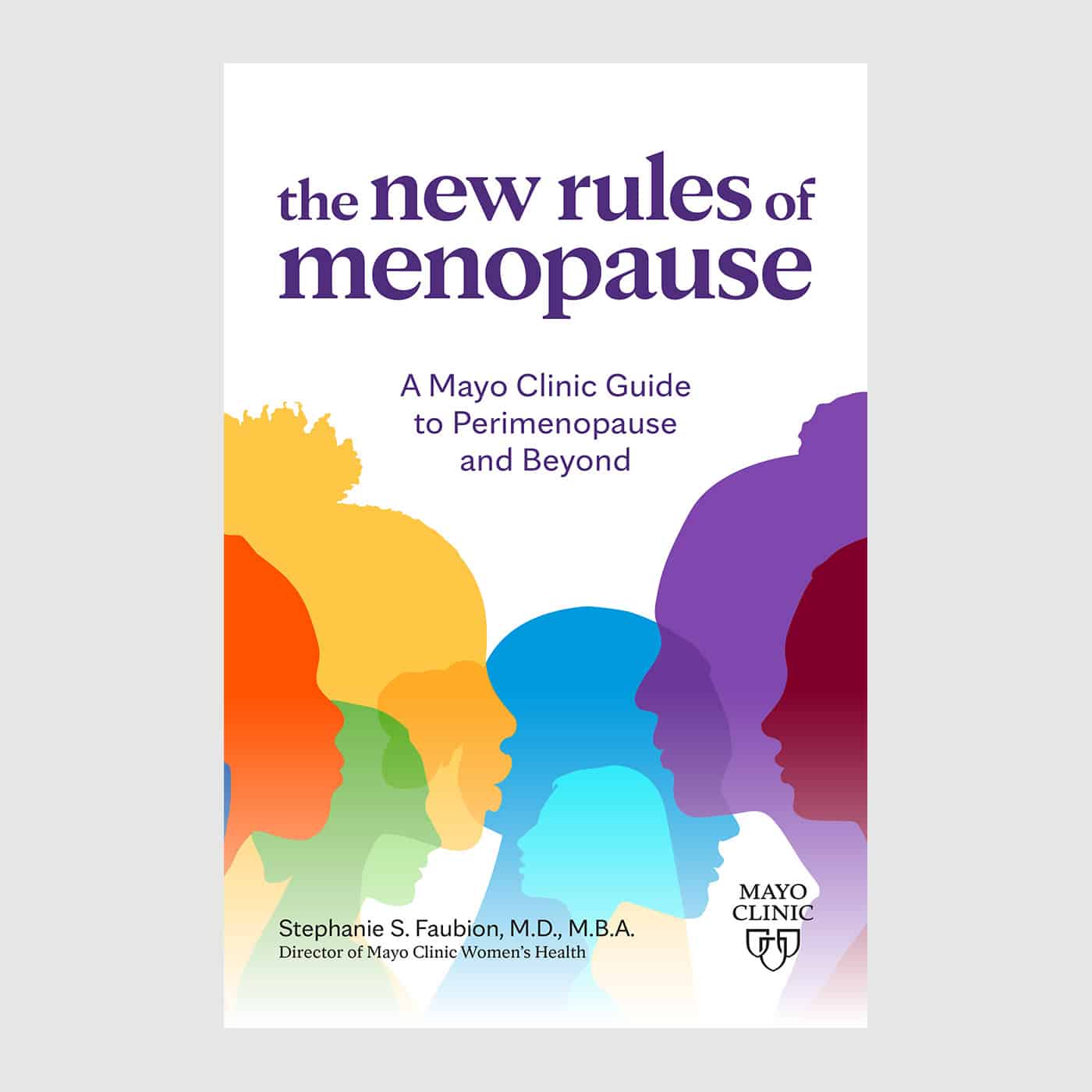
The New Rules of Menopause
The ultimate guide, offering real talk about menopause, straight, honest info for managing symptoms and the keys to optimizing your health for the long run – from one of the top doctors in the field of women’s health and other experts from Mayo Clinic.