



The new facility provides overlapping services that meet healthcare, wellness and hospitality demand for an ageing population
Wellness hospitality consultancy E77, run by Eglė Rukšėnaitė, worked on the concept
The site won ESPA’s Innovative Spa Concept Award
Lithuanian care operator Addere Care has launched a “wellness care hospital” in Vilnius. It’s the company’s second Lithuanian site, following a hospital in Trakai, but the first to offer professional medical care in a spa resort environment.
The new 4,400sq m facility has been developed within a reconstructed former hotel. It features 160 rooms and a day care centre that can accommodate up to 12 patients at a time. The site has treatment areas, communal spaces that resemble spa resort facilities, a restaurant and a chapel.
The concept was conceived by Lithuanian wellness and hospitality consultancy E77, run by Eglė Rukšėnaitė, in collaboration with architect-designer Jurgita Masiukaitė.
Both the Lemi and the Gharieni Group have provided wellness equipment. TR Equipment Sweden has supplied specialist therapeutic bathing systems and Voya is a skincare partner.
The European Spas Association (ESPA) Innovation Awards have recognised the project’s interiors for their calming atmosphere and ability to bring together medical care, rehabilitation, palliative support and wellbeing services in a singular environment. The site won ESPA’s Innovative Spa Concept Award.
Quality of life concept
Rukšėnaitė told Spa Business: “The facility primarily serves residents requiring longer-term nursing care, rehabilitation, recovery, palliative, or supportive care, with stays typically ranging from one to four months or longer depending on individual needs. However, from the very beginning, our ambition was never to create another healthcare institution.
“As the concept developer and design team behind the project, E77 set out to answer a much bigger question: what if healthcare environments could feel more human, restorative, and emotionally supportive? What if people undergoing treatment or long-term care could experience the same sense of comfort, dignity, and wellbeing traditionally associated with the best wellness destinations?
“This thinking led us to create what we believe is one of the first wellness care hospital concepts in Europe. Residents, visitors, family members and members of the local community can enjoy welcoming shared spaces, wellness activities, social programmes, a café, nature terraces and community-focused experiences. The objective is not simply treatment, but quality of life. Addere Care represents a new healthcare culture where recovery, prevention, wellbeing and social connection coexist within one environment.
Rukšėnaitė acknowledged that healthcare, wellness, hospitality and longevity have largely existed as independent sectors, which she and E77 have worked to bring together in this new setting. The three pillars are medical and nursing care; emotional wellbeing through biophilic design and hospitality-inspired service; and balneological wellbeing for rehabilitative water-based therapy. She said: “The result is not a hospital with a spa attached, nor a spa offering medical services. It is an entirely new model where healthcare and wellbeing become part of the same ecosystem.”
Programming
Rukšėnaitė said: “Programming at Addere Care has been carefully designed to support the whole person rather than simply address medical needs.”
Health and recovery programmes will include rehabilitation activities, physiotherapy, occupational therapy, mobility training, preventive health initiatives and recovery-support therapies. Wellbeing programmes will include relaxation sessions, mindfulness practices, sensory wellbeing experiences, wellness consultations and therapeutic rituals designed to support emotional balance.
To facilitate spiritual and emotional wellbeing, the facility includes a dedicated chapel and spaces for reflection, contemplation, meditation, psychotherapy and pastoral care. Rukšėnaitė added: “We recognise that healing is often emotional and spiritual as well as physical.”
Residents will also take part in cognitive stimulation programmes, creative workshops, music and art-based activities, social events, family engagement programmes, cultural gatherings and community experiences.
Residents explore the surrounding natural environment using walking paths and taking part in outdoor wellness programmes. In order to help guests who cannot go outside on their own be close to nature, the hospital will provide a “Forest in a Box” with plants inside to create natural smells and textures. This concept was created by Gerda Bukauskaitė Žiūkienė, a Kaunas College nursing lecturer and doctoral student.
Balneotherapy
Addercare has been designed to incorporate balneotherapy using a medically-adapted approach, rather than via a traditional thermal spa model. Rather than positioning balneotherapy as a luxury spa experience, Addere Care integrates these principles into everyday healthcare via rehabilitation and recovery-focused methodologies, hydrotherapy-inspired approaches, sensory relaxation environments and therapeutic routines that contribute to both physical and psychological wellbeing.
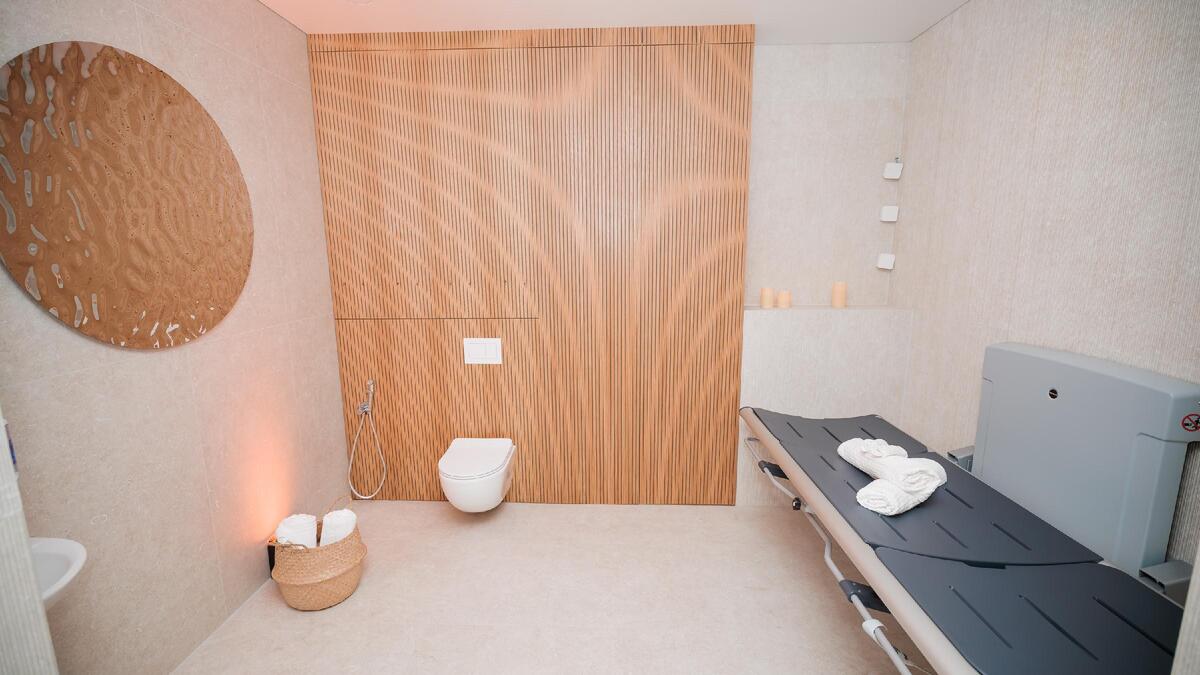
The property has dedicated facilities for hydrotherapy, underwater massage treatments and bathing systems for individuals with varying levels of mobility. There is also a mineral water buvette, inspired by traditional European balneology traditions.
Rukšėnaitė said: “While Addere Care does not feature large thermal pools or extensive sauna complexes associated with destination thermal resorts, this is a deliberate choice. The focus is not leisure-oriented spa tourism but the integration of balneology into healthcare, rehabilitation and quality-of-life improvement.”
The future
The project reflects the need for more supportive long-term care environments due to ageing populations around the world. The wellness sector can expect to see concepts that meet this demand for overlapping services that deliver healthcare, hospitality and wellbeing.
The original Trakai hospital will now become a specialist dementia-care centre and will draw on Swedish expertise.