




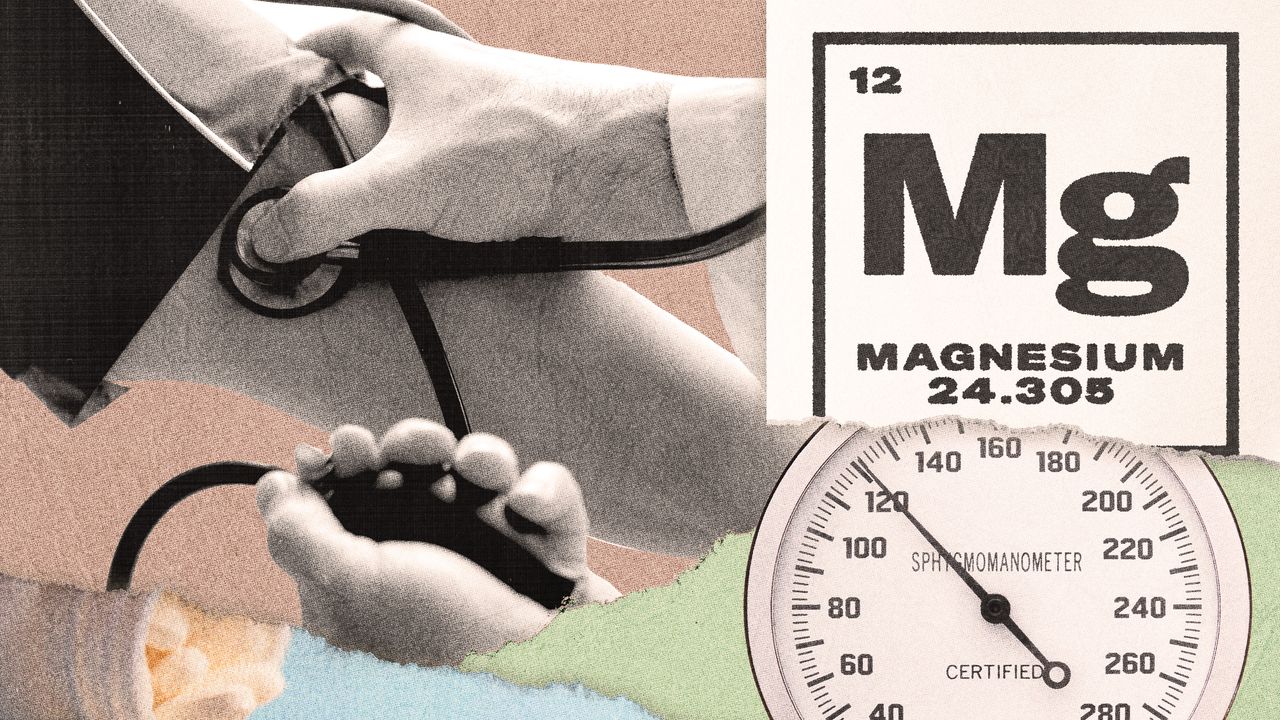
Your blood pressure is something you probably don’t think much about. In fact, having high blood pressure typically slips completely under the radar—until something catastrophic like a heart attack or stroke happens. But the condition (also called hypertension) is a lot more common than you probably think, especially for men. According to the Centers for Disease Control and Prevention, 50% of adult men in the U.S. have high blood pressure. That means it’s worth doing everything you can to keep it in check.
Maybe you already know to lay off the salty foods and be mindful of your alcohol consumption. Another habit worth having is making sure you’re getting enough magnesium and considering a supplement if you’re actively trying to lower your blood pressure. Upping your intake of the mineral can directly support your heart.
How magnesium supports blood pressure
When it comes to heart health, most of the focus is on omega-3s, fiber, and potassium. But magnesium plays a crucial role too. Menka Gupta, MBBS, a functional medicine doctor at Nutranourish, says that magnesium helps control the muscles around blood vessels. She explains that when magnesium is low, the body produces more of the substances that constrict blood vessels and cause fluid retention, which can then cause blood pressure to go up.
Cheryl Marsland, DCN, RDN, a registered dietitian and faculty member in the Integrative and Functional Nutrition Department at Saybrook University, says that magnesium supports the endothelium (which are blood vessels’ inner lining) and helps produce nitric oxide, which allows the vessels to relax and dilate properly.
You might have heard that magnesium can help with stress and anxiety. This too is connected to blood pressure. “When magnesium is low, the sympathetic nervous system becomes more reactive and harder to switch off, contributing to chronically elevated blood pressure,” Dr. Marsland says, pointing to a 2024 review in Frontiers in Physiology that shows this.
Given all these ways that magnesium supports blood pressure, not getting enough can be detrimental to your cardiovascular health. “The 2024 Frontiers in Physiology review states directly that evidence supports magnesium depletion as a contributor to hypertension, and multiple converging lines of research back that up,” Dr. Marsland says.
Andrea Colon, NMD, a licensed naturopathic medical doctor and founder of Reclaim Integrative Medicine, adds to this, saying that being low in magnesium can cause calcium to accumulate in vascular smooth muscle, causing vessels to constrict and stay tight.
Think of it this way: Not getting enough magnesium is like squeezing a garden hose. When levels are low, it causes blood vessels to tighten, narrowing the space and increasing the pressure. You need magnesium to keep the flow steady.
How to lower blood pressure using magnesium
Even if you’re not technically deficient in magnesium (which is rare in the U.S.), Dr. Colon says that most people can benefit from upping their intake, and if you already know that you have high blood pressure, you should absolutely consume more, either through magnesium-rich foods or a supplement.
“Magnesium is one of my go-to supplements to address high blood pressure in patients because it can help to relax the smooth muscle in blood vessel walls. This makes it easier for blood to flow through your vessels, which can lower blood pressure,” she says.
Jordan Glenn, PhD, the head of science at SuppCo, also says that if you’re actively trying to lower your blood pressure, getting more magnesium can help. “It’s not going to have an overly dramatic effect, but it absolutely can make a difference,” he says. Dr. Gupta adds that to this, saying, “Clinically, I see magnesium as one piece of the broader cardiovascular puzzle rather than a single magic bullet.”