





 That constant exhaustion could be your body’s way of signaling a hidden vitamin deficiency. Credit: Shutterstock
Scientists have uncovered a potential nutritional link to chronic fatigue. Healthy adults with signs of vitamin B12 and folate deficiencies were more likely to experience fatigue or lower motivation.
Chronic fatigue has become a common part of modern life. Many people struggle with long work hours, packed schedules, and persistent exhaustion that never seems to go away. While fatigue is often blamed on stress or a lack of rest, researchers say nutrition may also play an important role.
A team led by Professor Hiroaki Kanouchi from Osaka Metropolitan University’s Graduate School of Human Life and Ecology investigated whether deficiencies in certain vitamins could be linked to fatigue and motivation levels in otherwise healthy adults.
Vitamin Deficiencies and a Key Blood Marker
The researchers focused on folate (B9) and vitamin B12, two nutrients that are essential for normal body function. When levels of these vitamins are too low, concentrations of homocysteine (Hcy), a blood biomarker, tend to rise.
To explore a possible connection, the team measured blood levels of homocysteine, folate, and vitamin B12 in nearly 600 healthy Japanese adults. Participants also completed assessments of fatigue and motivation using the Chalder Fatigue Scale questionnaire and a Visual Analog Scale.
The initial analysis found that people with higher homocysteine levels generally had lower levels of vitamin B12 and folate, regardless of sex.
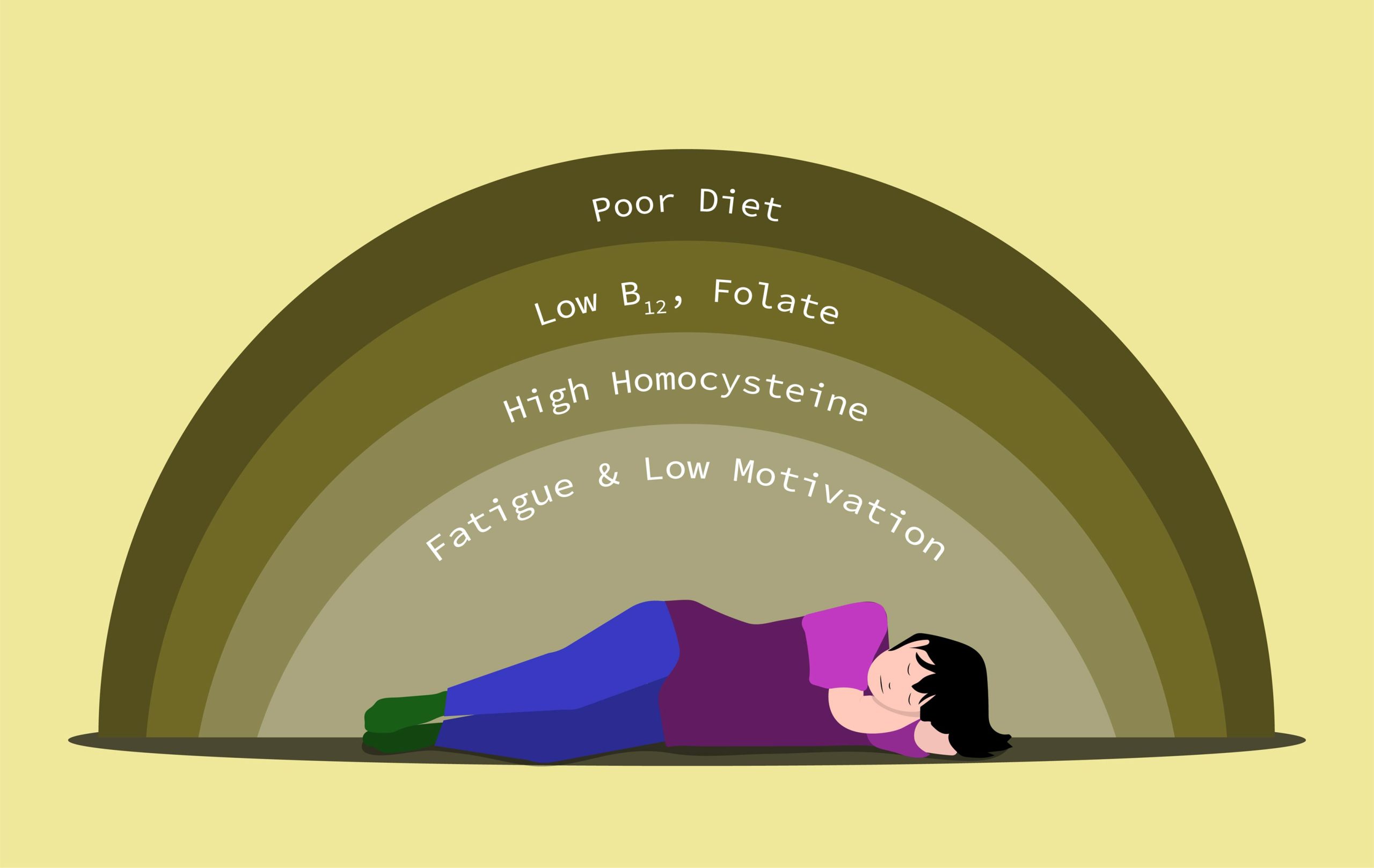 Dietary imbalance, low B12, and folate may correlate with high homocysteine levels and indicate fatigue and low motivation in participants. Credit: Osaka Metropolitan UniversityDifferent Effects in Men and Women
The researchers then examined men and women separately to better understand how homocysteine levels related to fatigue and motivation.
Their analysis took into account several factors that could influence fatigue, including age, sleep duration, workload, and dietary habits.
The results showed that men with higher homocysteine levels were more likely to report greater physical fatigue. Among women, higher homocysteine levels were associated with lower motivation.
Nutrition’s Possible Role in Chronic Fatigue
“This suggested relationship between vitamin B12, folate, and fatigue in healthy individuals may represent the first report of its kind,” said Professor Kanouchi. “Blood homocysteine levels have traditionally raised concerns in relation to cardiovascular disease, dementia, and fractures. However, our findings suggest that attention should also be paid to fatigue and motivation in the future. To prevent an increase in homocysteine levels, it is important to avoid deficiencies in vitamin B12 and folate. Maintaining a well-balanced diet on a daily basis is essential.”
The findings suggest that nutrition could be an overlooked factor contributing to feelings of fatigue and reduced motivation, even among healthy people. While homocysteine has long been studied for its connection to conditions such as heart disease, dementia, and bone fractures, this research points to another possible consequence of elevated levels: feeling more tired and less motivated.
The study was published in the journal Nutrients.
Reference: “Associations of Plasma Homocysteine Reflecting Vitamin B12 and Folate Status with Fatigue-Related Outcomes in Healthy Adults” by Hiroaki Kanouchi, Ayaka Yamamoto, Akiko Kuwabara, Shigeo Takenaka, Eiji Nishikubo, Yukihiro Nomura, Takehiro Naruto, Kyosuke Watanabe, Kei Mizuno and Yasuyoshi Watanabe, 16 March 2026, Nutrients.
DOI: 10.3390/nu18060941
Never miss a breakthrough: Join the SciTechDaily newsletter.
Follow us on Google and Google News.