





 7 min read
You don’t have to be a skincare aficionado to know that South Korea is the origin place of seemingly countless innovations in topical cosmetics. We have K-beauty to thank for popularizing ingredients such as madeca cream, snail mucin, Korean ginseng, and salmon sperm, just to name a few. Inescapable trends such as glass skin and 10-step skincare routines first gained traction in South Korea, too.
But now it’s time to add the latest K-beauty ingredient du jour to your must-try list: spicules—the tiny, needle-like structures that are derived from marine sponges and infused into serums, ampoules and exfoliating treatments enhance the performance of active skincare ingredients actually proven to work.
Spicule skincare is rapidly filling up shelves and is only projected to become more popular in coming years: While the spicule market was valued at $9.3 million in 2025, it’s forecasted to expand to more than $32 million by 2036, according to Future Market Insights, a global market research and business consulting firm. And on social media platforms like TikTok, users are posting videos raving about their results. “They are marketed as microneedling treatments in a bottle,” says Ron Robinson, cosmetic chemist and founder BeautyStat.
Meet the experts: Ron Robinson is a cosmetic chemist and founder of skincare brand BeautyStat. Whitney Hovenic, MD, is a board-certified dermatologist and co-founder of the skincare brand SPOOGE. Mihwa Kim is the founder of Korean skincare brand Biodance. Danny Guo, MD, is a double board-certified cosmetic dermatologist in Alberta, Canada.
For the uninitiated, microneedling is a popular minimally-invasive cosmetic procedure that uses small, surgical-grade needles in a pen-like device to create controlled micro-injuries in the middle layer of skin. This stimulates the skin’s natural healing process and results in enhanced radiance and increased collagen production, leading to a younger-looking complexion. So how great would it be to reap similar benefits without the use of real needles? Well, that’s what some brands selling spicule-infused skincare claim their products bring to the table.
But before you start stocking your cart full of spicule skincare, here’s what experts want you to know, including the science behind the clever ingredient, its potential benefits for the skin, the risks, and how to incorporate it into your routine.
What are spicules?
Most spicules found in skincare products are composed of a natural mineral called silica, and they’re extracted from marine and freshwater sponges grown under controlled conditions, says Whitney Hovenic, MD, a board-certified dermatologist and co-founder of the skincare brand SPOOGE . These microscopic needle-like structures are then meticulously harvested and stripped of unnecessary organic tissue—a process called purification—so that they can safely be used in topical cosmetics, she adds.
Spicules can be purified using fermentation enzymes, proteins produced by microbes like yeast and bacteria, which help break down molecules into simpler compounds, explains Mihwa Kim, the founder of Korean skincare brand Biodance. Certain acids are used to purify spicules, too, Kim adds.
The purification process used can influence how spicules feel when rubbed onto the skin: For instance, acid-based methods, while speedier, can often butcher the surface and structure of the spicule, leading to more irritation when consumers apply the final product. Enzyme purification, meanwhile, helps reduce unnecessary roughness. “It refines the spicule’s surface texture and reduces residual impurities while preserving its needle-like structure and functionality,” Kim says.
Due to the sharpness of spicules, products containing them usually cause some degree of a “mildly, spicy tingling sensation,” says Danny Guo, MD, a double board-certified dermatologist in Alberta, Canada. And though most products contain spicules derived from marine life, brands have increasingly opted for a silica-based synthetic versions as interest in the ingredient has grown. “With lower flexibility, synthetic structures are often associated with stronger sensations of prickliness or discomfort, and sponge spicules with a more gentle, skin-friendly experience,” Kim adds.
How do spicules benefit the skin?
You’ll often hear spicules touted as liquid microneedling, but “true microneedling creates precise micro-wounds on the skin that stimulate skin repair and boost collagen production. Spicules don’t penetrate deep enough to offer the same skin-repairing effect,” Robinson says. After all, spicules are about 200 micrometers long, on average, explains Dr. Guo. Microneedling tools, meanwhile, can penetrate up to 40 times deeper than that, experts say, allowing the procedure to reach the middle layer of the skin (the dermis) and stimulate the cells responsible for generating new collagen.
Instead, spicules are often thought of as a delivery system that enhance absorption of active ingredients into more superficial layers of the skin by creating microscopic pathways. The outermost layer of skin, called the epidermis, can be as thin as 100 micrometers in some areas, Dr. Guo says, meaning spicules can penetrate that layer and infuse active ingredients into it, research suggests. Spicules may also help ingredients reach “the superficial layer of the dermis if they are perfectly perpendicular to the skin,” Dr. Guo adds, which can be especially useful for large or water-loving ingredients that struggle to benefit your complexion when they merely sit on the surface of your skin, he adds.
Spicules can also be coated in ingredients themselves and enhance absorption that way, experts say. Some ingredients spicules are paired with or coated in include niacinamide, hyaluronic acid, vitamin C, and peptides. But keep in mind: “While evidence shows that spicules can increase absorption of actives under specific situations, whether this leads to improved clinical outcomes is still mostly speculative,” Dr. Guo says.
Spicules may also help smooth skin texture and encourage skin cell turnover, experts add, though they wouldn’t exfoliate the same way chemical exfoliators like alpha and beta hydroxy acids do. Instead of removing bonds between skin cells like glycolic and lactic acid—or physically sloughing off dead skin cells like face scrubs, for instance—spicules may theoretically help smooth skin by triggering a mild, superficial wound-healing response, “activating the skin’s natural cellular renewal processes,” Dr. Hovenic says.
In short: Spicules could possibly give active ingredients a boost or help your complexion look a bit more radiant, but research involving actual humans isn’t robust enough to prove that for sure. Nevertheless, there’s nothing wrong with giving emerging skincare ingredients a try as long as your expectations are managed. Here are a few that experts and Women’s Health editors recommend:
Spicule Skincare Products to Try
Best for Uneven Skin Texture
 medicube One Day Exosome Shot 7500
This pore-minimizing ampoule is powered by exosome-coated spicules. It also includes powerhouse exfoliating acids that contribute to smoother-looking skin, as well as active ingredients such as niacinamide, which hydrates, and panthenol, which soothes.
Best for Dull Skin
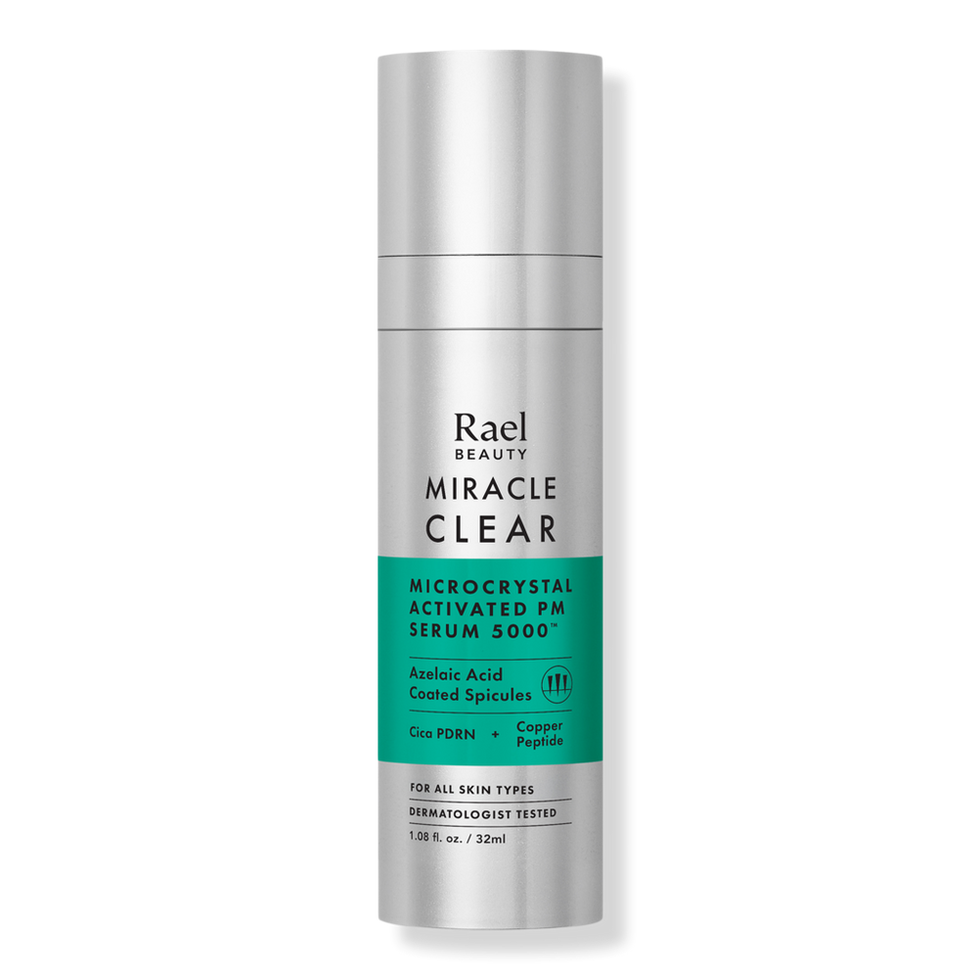 Rael Microcrystal Activated Serum 5000
If you’re already a fan of spicules, this serum is for you. Its next-level exfoliation formula combines higher-strength spicules to deliver azelaic acid, copper peptides and cica PDRN to the skin, helping to boost skin clarity, improve the look of firmness, and support healthy-looking skin.
Best for All Skin Types
 VT COSMETICS Reedle Shot 100
Glowing skin just got easier to achieve thanks to this K-beauty serum. The treatment is fortified with low molecular weight hyaluronic acid to moisturize the skin, spicules that provide gentle exfoliation, and enhanced ingredient absorption, and centella asiatica extract, which calms and soothes.
Are there any risks?
Over-the-counter spicule products typically utilize mild formulas that make them safe for most people. However, those with sensitive skin or inflammatory conditions such as rosacea and eczema should tread lightly. “As with any exfoliating or stimulating skincare ingredient, overuse can lead to irritation, redness, dryness, or barrier disruption, all of which can be exacerbated in sensitive skin types,” says Dr. Hovenic. Combining spicules with more potent ingredients like retinoids, exfoliating acids, and physical exfoliants increases risk of irritation as well.
Another lesser-known risk associated with using spicules is the development of granulomas—tightly clumped masses of immune cells that form as a response to foreign substances and look like firm, raised lumps that are often pink or purple in color, according to the Cleveland Clinic. “They occur when the immune system attempts to isolate or wall off a material that it cannot easily break down or eliminate,” Dr. Hovenic says. Spicules are indeed foreign bodies that have the potential to trigger granuloma formation. That may sound scary, but because most over-the-counter formulas don’t penetrate deeply into the skin, this risk is believed to be low, Dr. Hovenic says.
How to Use Spicules in your Skincare Routine
Since spicules are primarily used to increase skincare penetration, they should be used after cleansing your face and before using more potent active ingredients, such as retinoids, vitamin C, and exfoliants. And to avoid some of the overuse side effects mentioned above, start low and slow, experts say. When you’re first starting out, consider using spicule products just twice a week, Dr. Guo says. Once your skin has adjusted, you can ramp it up to three times, he says.
To further mitigate irritation, the experts suggest gently massaging the spicule product into your skin rather than aggressively rubbing an area. Purchasing spicule products from reputable brands also decreases the chance of discomfort. “Seek out companies that are transparent about their ingredients, testing, formulation process, and provide clear usage instructions, concentration information, and have clinical testing or safety data to support their claims,” Dr. Hovenic says. While phrases like “instant results” and “needle-free microneedling” are enticing, the promises are often too good to be true. Instead, stick to brands that prioritize skin health over aggressive marketing.
The Bottom Line: Spicules are promising, but they’re not miracle workers.
As far as innovation goes, spicules are ahead of the curve. They may help increase penetration to deliver functional ingredients to your skin and boost their performance. Over time, you may notice results like improved skin smoothness, radiance, texture, and overall clarity. But based on the state of the evidence, they should never replace staples with decades of evidence such as sunscreen, retinol, and exfoliating acids.
And while spicules present minimal risks, you should still take precautions before adding them to your routine: Less is more here. “Skin stimulation requires balance to support the skin barrier,” says Dr. Hovenic, “so spicules should be used thoughtfully in addition to a well-rounded skincare routine.”

Jessica Fields is a freelance writer and editor covering beauty and lifestyle topics, such as health and wellness. Her work has appeared in The Zoe Report, NewBeauty, Byrdie, Allure, Essence, Coveteur, InStyle, and many more.

Katie Mogg is the beauty editorial assistant at Women’s Health. Since starting college at Northeastern University in 2020, her bylines have appeared in The New York Times, The Wall Street Journal, NBC News and The Boston Globe. She strives to help readers lead happier and healthier lives through science-backed stories that explain how to care for hair, skin and nails. When she’s not working, Katie enjoys live music, strolling through Central Park, planning her next beach getaway, and sharing hotpot with friends.