




Strength training is fantastic for your health. Recent research published in the British Journal of Sports Medicine (BJSM) found that people who did it consistently significantly reduced their likelihood of early death and several other serious health conditions. That still doesn’t mean you need to lift weights, though.
Your nervous system doesn’t know what a dumbbell, barbell or kettlebell is. The benefits that stem from strength training simply come from your muscles overcoming resistance in any form – be that a resistance band or a bodyweight exercise like squats and press-ups. If you can challenge yourself with minimal equipment on a regular basis, you will see results.
Or, as the American College of Sports Medicine puts it: “Training all major muscle groups at least twice a week matters far more than chasing the idea of a ‘perfect’ or complex training plan. Whether it’s barbells, bands or bodyweight, consistency and effort drive results.”
Below, you can find a guide to building strength without lifting weights.
It’s all about the challenge
We exercise to trigger some form of adaptation; we want to look better, feel better or perform better. The human body is an adaptation machine, and it can adapt to tackle most physical tasks if given the time and fuel to do so. However, it takes a bit of persuading.
That’s why it helps to think of exercise as a conversation with your body. You need to make a case for it to change, and you need to be convincing.
That’s what strength training is. You are lifting weights that are heavy enough to be challenging but not so heavy that you hurt yourself, and you are doing it often enough that your body acknowledges the merits of becoming stronger. This triggers a cascade of reactions which should ultimately deliver a more robust, mobile and functional body.
The equipment found in gyms is arguably the most straightforward way to build muscle. Exercise machines allow you to select a specific weight, then work a muscle through a large range of motion in a controlled, stable environment; dumbbells and barbells offer a similar experience, albeit removing the stability element and giving you a bit more creative freedom. For these reasons, they are usually the first port of call for advanced gym-goers.
But if you can train in a way that is appropriately challenging for you, resistance bands and bodyweight exercises can also deliver the many perks of strength training. This is particularly true for those newer to strength training, who require a less intense stimulus to see results.
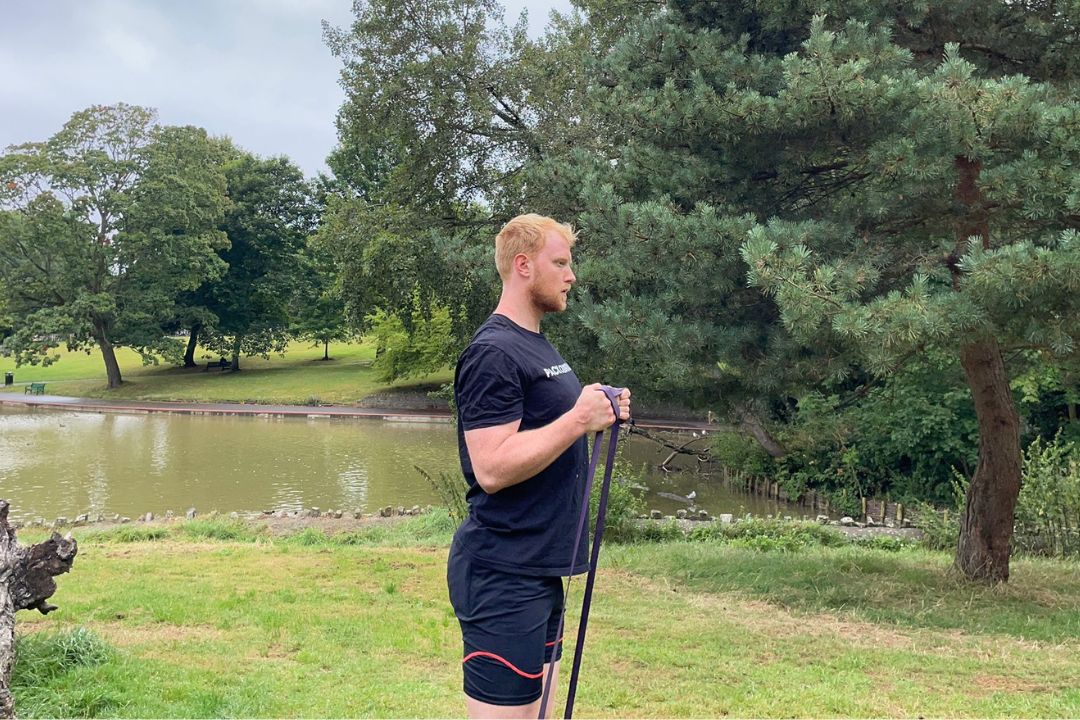 Resistance bands provide you with extra exercise options when added into your regular bodyweight workouts – for example, the biceps curl Harry’s doing here (The Independent/Harry Bullmore)
How to build muscle without lifting weights
According to the BJSM study roughly two hours of strength training per week offers the most bang for your buck when it comes to lowering all-cause mortality. Similarly, NHS guidelines prescribe “doing strengthening activities that work all the major muscle groups on at least two days a week”.
You can ensure you are hitting all major muscle groups by incorporating five foundational types of movement in each of your workouts: squat, hip hinge, lunge, push and pull. Many exercises that incorporate these movements will recruit multiple muscles at once, delivering a time-savvy workout. These are called compound exercises.
Access to more gym equipment gives you more exercise options, but you can still cover all bases with minimal kit. The lists below share sample compound exercises for each movement pattern, naming them in order of difficulty from beginner to advanced.
Bodyweight exercises for each major muscle group
Squat: sit-to-stand > bodyweight squat > Bulgarian split squat > pistol squat
Hinge: glute bridge > hip thrust > good morning > single-leg Romanian deadlift
Lunge: step-up (to low step) > lunge > lateral lunge > curtsy lunge
Push: wall press-up > hands-elevated press-up > kneeling press-up > press-up > deficit press-up > decline press-up > pike press-up > dip
Pull: prone snow angel > doorway row > inverted row > pull-up
Resistance band exercises for each major muscle group
Squat: front squat > Bulgarian split squat
Hinge: deadlift > b-stance Romanian deadlift
Lunge: reverse lunge > lunge
Push: shoulder press > chest flye > banded press-up
Pull: seated row > bent-over row > single-arm bent-over row
There are plenty more exercise options available for both bodyweight and resistance band training. But the movements above offer a few solid options for starting with, as well as progressions you can move on to as you become stronger.
If you do one exercise from each section, two or three times per week, for two sets of 10-15 repetitions, you will very likely see progress as a beginner. You can also take a look at our four-week bodyweight training plan for another accessible starting point.
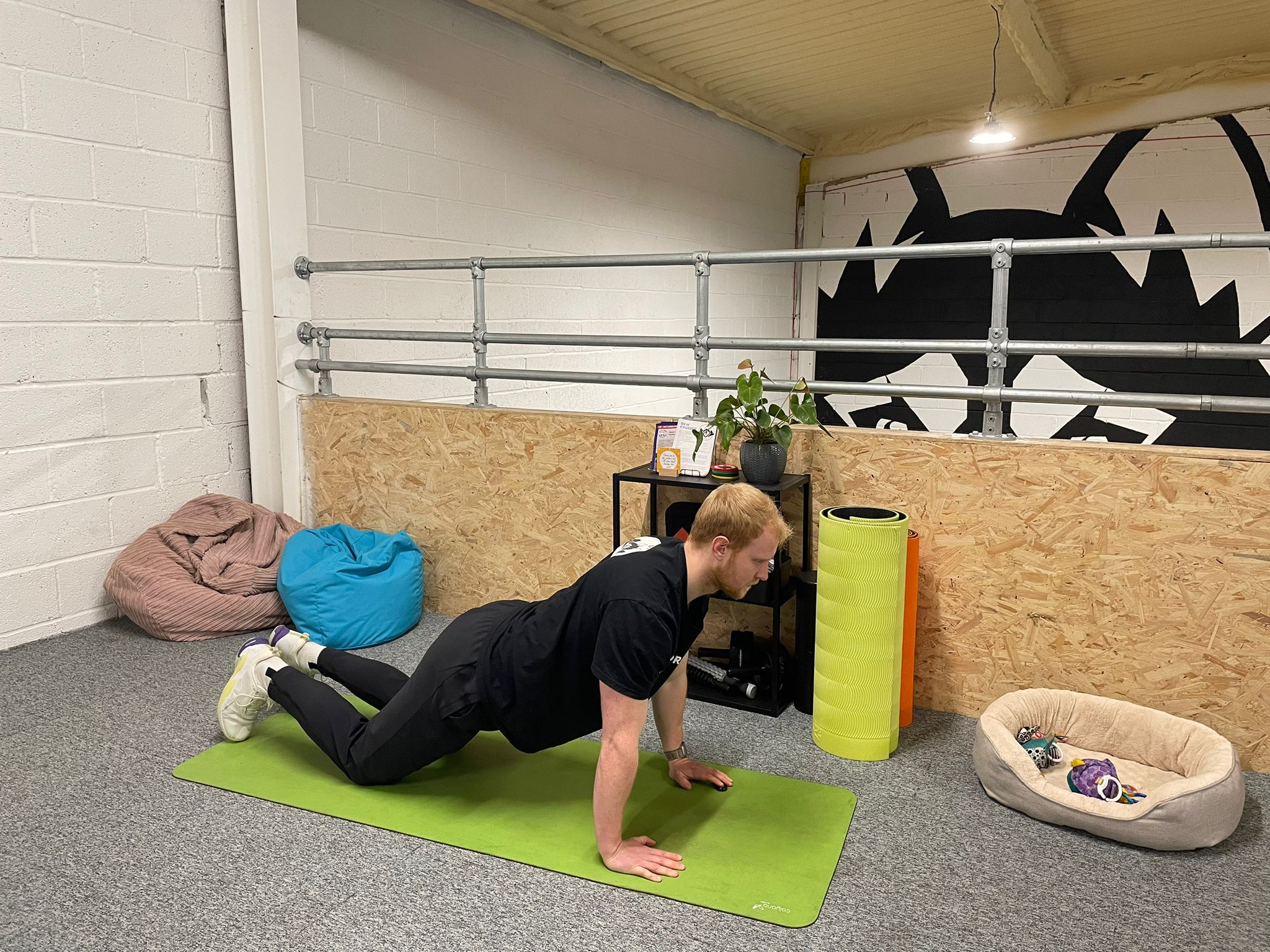 There are variations of bodyweight exercises such as the press-up to suit most fitness levels (Harry Bullmore / The Independent)
The other ingredients to a successful strength training plan
Picking the right exercises is one part of the battle when building a successful strength-boosting workout. But the exercises also have to be performed with good technique and an appropriate intensity to be effective.
For developing good exercise technique, spending one or two sessions with a trainer and rehearsing a few foundational exercises can be invaluable.
For intensity, or how difficult the exercise feels, each set should be challenging for your muscles, but not to the point your technique breaks down. Finding that Goldilocks premium is key.
When lifting weights, you can increase the weight gradually over time as you become stronger to ensure your workouts remain challenging – we need to continue to make a strong case to our body to adapt, after all. This process is called progressive overload, and this link will take you to our handy guide.
But when using resistance bands or bodyweight exercises, we have to play with other variables to achieve this. My three go-to options are the number of sets and repetitions you perform, the tempo of the exercise and the exercise you do.
Read more: The easiest way to strengthen your entire body, according to this expert coach
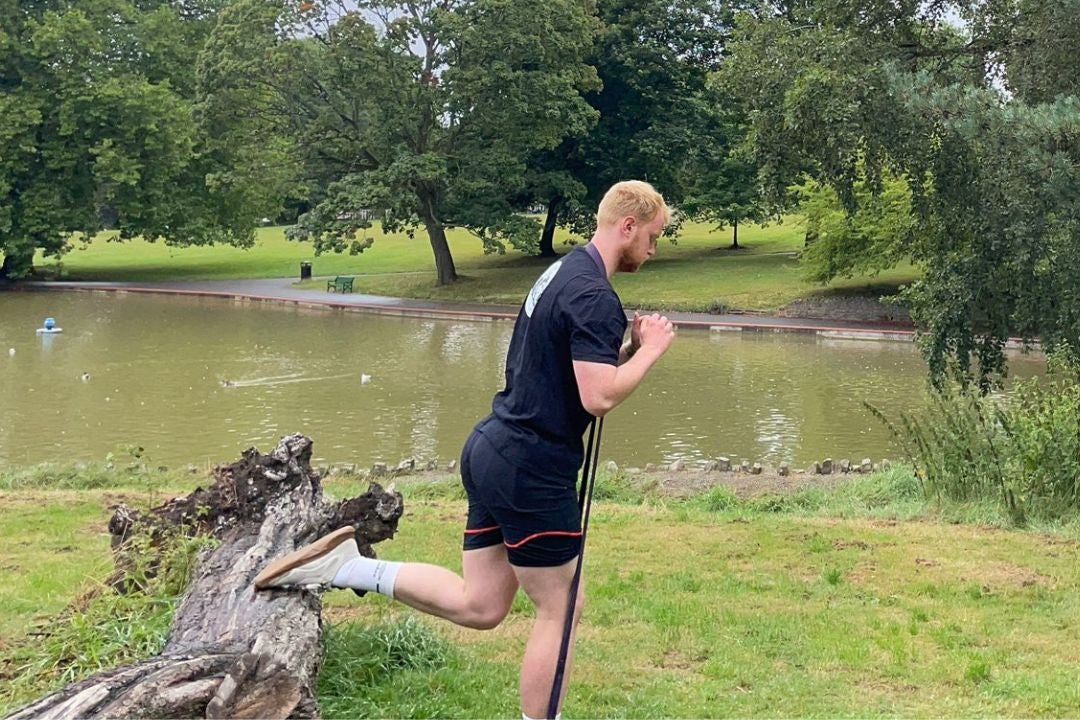 Resistance bands can be an effective tool for building strength and muscle, provided they provide an adequate challenge to your muscles. Here, Harry uses a band to make bodyweight Bulgarian split squats more taxing, and it worked a treat (Harry Bullmore/The Independent)
How to apply progressive overload to bodyweight exercises
I’ll use the squat movement to demonstrate how to employ progressive overload with bodyweight exercises. If you do two sets of 15 repetitions on the sit-to-stand exercise each week and it starts to feel easy, this is great news – you’ve become stronger, more coordinated and more efficient at moving your body. To see continued progress, we need to tweak what we are doing.
Next week, you might increase your workload to three sets of 15 repetitions, or two sets of 18 repetitions. You might also slow the exercise down, controlling the movement and taking two seconds to lower yourself to the seat rather than one. Or you could switch to a more difficult variation of the squat movement such as the bodyweight squat.
In one way or another, all of these slight variations challenge your body to do more work per workout. The key to continued progress is to upgrade your exercises at an appropriate rate, in line with your increasing fitness levels. And that is how you can build strength and muscle without lifting weights.