




image:
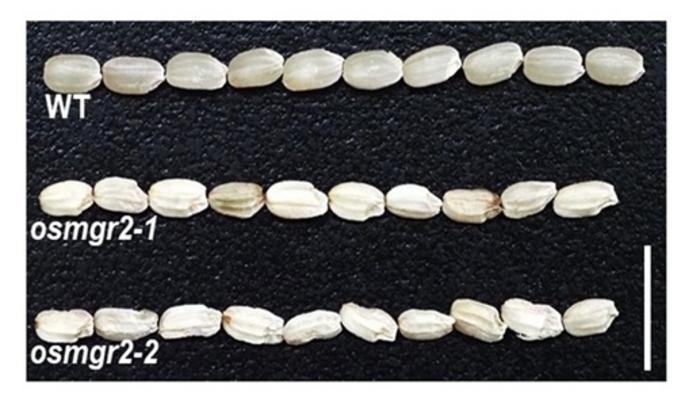
Researchers identified the magnesium transporter OsMGR2, which helps move magnesium into developing rice grains. Rice plants lacking this transporter produced smaller, lighter, and lower-quality grains, highlighting the transporter’s role in grain development, nutrient accumulation, and cooked rice quality.
Credit: Professor Jian Feng Ma from Okayama University, Japan
Source: https://www.pnas.org/doi/10.1073/pnas.2536813123
Rice is a staple food for nearly half of the global population and an important dietary source of magnesium, a mineral essential for human health, plant growth, and energy metabolism. Although magnesium is known to influence grain quality and taste, the biological mechanism controlling how the mineral reaches rice grains has remained largely unknown. Understanding this pathway has become increasingly important as scientists seek ways to improve both crop nutrition and resilience under nutrient-limited conditions.
Addressing this challenge, a research team led by Professor Jian Feng Ma at the Institute of Plant Science and Resources, Okayama University, Japan, along with Dr. Sheng Huang from the same institute, and Dr. Kiyosumi Hori from the National Institute of Crop Science, National Agriculture Research Organization, Japan, investigated how magnesium is transported inside rice plants and eventually delivered into grains. The researchers focused on a previously uncharacterized transporter protein called OsMGR2, which belongs to the Magnesium Release transporter family. Their findings were made available online on April 22, 2026, and were published in Volume 123 Issue 17 of the journal Proceedings of the National Academy of Sciences of the United States of America (PNAS) on April 28, 2026.
Using gene expression analysis, isotope tracing, imaging, transport assays, and CRISPR/Cas9-generated mutant rice plants, the team demonstrated that OsMGR2 functions as a magnesium efflux transporter located in the plasma membrane. The transporter was highly expressed in vascular tissues responsible for nutrient distribution throughout the plant. When the researchers disabled the OsMGR2 gene, magnesium accumulated abnormally in roots and husks instead of being efficiently delivered to shoots and grains.
The mutants displayed severe growth defects under low-magnesium conditions, including leaf chlorosis, reduced biomass, and poor grain development. Their rice grains were smaller, lighter, shriveled, and less transparent compared with normal rice plants. The team also discovered that cooked rice from the mutant plants had significantly lower eating quality scores, with reduced stickiness and altered texture. These findings revealed that magnesium transport is closely linked not only to crop productivity but also to sensory traits valued by consumers.
Prof. Ma explained the motivation behind the work: “Rice is one of our major dietary sources of magnesium, yet the mechanism of magnesium accumulation in grains was unknown. We wanted to uncover how this important nutrient reaches the grain.” The researchers further found that OsMGR2 helps direct magnesium toward actively growing tissues and developing grains, ensuring proper starch synthesis and grain filling during maturation.
The discovery may open new opportunities for agricultural innovation. Magnesium deficiency in soils is becoming a growing concern in several rice-producing regions, reducing yields and grain quality. By understanding the molecular basis of magnesium transport, breeders may eventually develop rice varieties that tolerate magnesium-poor environments while maintaining nutritional value and eating quality. “Our findings provide a foundation for improving both grain nutrition and rice quality through future breeding programs,” Prof. Ma noted.
Overall, the study highlights how a single transporter can coordinate nutrient allocation, seed development, and food quality in one of the world’s most important crops. Beyond rice, the findings may also inspire broader research into mineral transport systems in cereals and other staple foods, potentially supporting future strategies for global nutritional security.
***
Reference
DOI: 10.1073/pnas.2536813123
About Okayama University, Japan
As one of the leading universities in Japan, Okayama University aims to create and establish a new paradigm for the sustainable development of the world. Okayama University offers a wide range of academic fields, which become the basis of the integrated graduate schools. This not only allows us to conduct the most advanced and up-to-date research, but also provides an enriching educational experience.
Website: https://www.okayama-u.ac.jp/index_e.html
About Professor Jian Feng Ma from Okayama University, Japan
Prof. Jian Feng Ma is a Full Professor and Director at the Institute of Plant Science and Resources, Okayama University, Japan. He earned his Ph.D. in plant nutrition from Kyoto University in 1991 and later conducted postdoctoral research at the Suntory Institute for Bioorganic Research. His research focuses on mineral transporters and aluminum stress tolerance mechanisms in plants, particularly rice and barley. He has published over 340 papers in leading journals, including Nature and PNAS. Recognized globally, he has received prestigious honors such as the JSPS Prize, Japan Academy Medal, National Medal with Purple Ribbon, and Frontier Planet Prize in 2023.
Funding information
1. Japan Society for the Promotion of Science (JSPS) KAKENHI: 21H05034, 25H01332
2. JSPS Program for Forming Japan’s Peak Research Universities (J-PEAKS): JPJS00420230010
Journal
Proceedings of the National Academy of Sciences
Method of Research
Experimental study
Subject of Research
Cells
Article Title
A magnesium efflux transporter required for seed development and eating quality in rice
Article Publication Date
28-Apr-2026
COI Statement
The authors declare no competing interest.
Disclaimer: AAAS and EurekAlert! are not responsible for the accuracy of news releases posted to EurekAlert! by contributing institutions or for the use of any information through the EurekAlert system.