




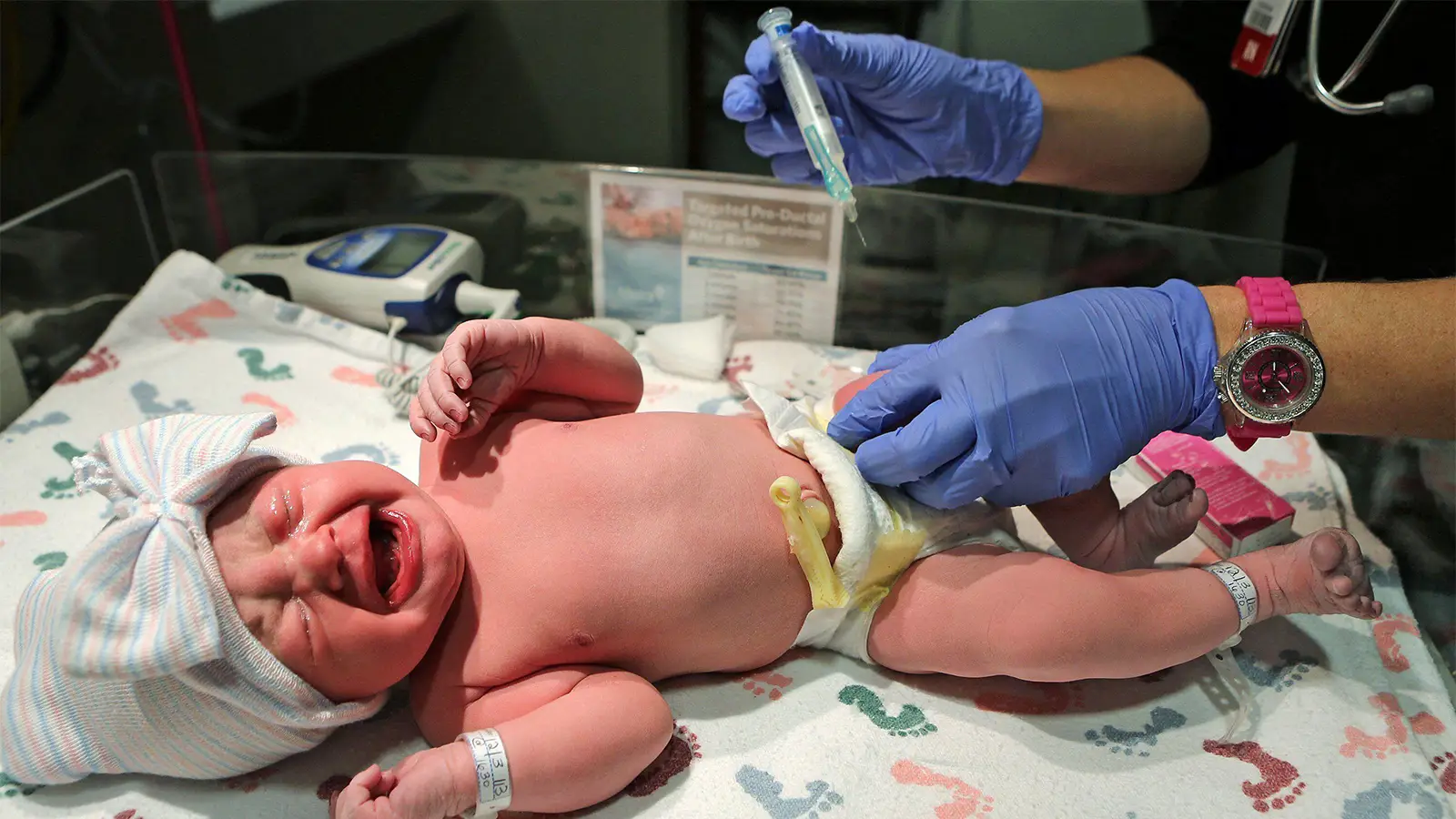
A ProPublica investigation published last month documented something troubling: parents across the country are declining a simple vitamin K shot for their newborns, and some of those babies are dying of preventable hemorrhages. The piece, like so much coverage of vaccine and medical hesitancy, frames the problem as misinformation. Parents are being misled. Parents need to be educated. If we could just get the right facts in front of them, the problem would stop.
I am a physician and maternal health researcher. I have read the studies. I know the data is unambiguous: intramuscular vitamin K at birth has been standard of care since 1961, it prevents a rare but devastating bleeding disorder, yet the percentage of infants not receiving the shot rose from under 3% in 2017 to over 5% by 2024.
But based on my experiences, the core of the problem is not misinformation. The parents who have declined the shot are not stupid. They are not malicious. They are people who have stopped trusting medical institutions, and we have given them reasons to.
The misinformation framing gets something fundamentally wrong about what is happening. Misinformation implies a deficit, that parents are missing facts, and that supplying the facts will correct the problem. But anthropologists who study conspiracy theories and health rumors understand that misinformation does not spread in a vacuum. It spreads in the gaps left by broken trust, gaps created when institutions suppress information, when power dynamics silence patient concerns, when communities feel dismissed or harmed. You cannot fact-check your way out of a trust crisis.
In the months leading up to my pregnancy in 2023 I’d been doing research on birth outcomes and asked my ob/gyn if she recommended any birthing classes, such the Bradley Method, Lamaze, or Hypnobirthing. She enthusiastically supported my decision to enroll in a 12-week Bradley Method birthing class; these courses are designed to help couples achieve an unmedicated, “natural” childbirth. The classes seemed harmless at first, focusing initially on healthy diet during pregnancy, labor positions, and relaxation strategies. However, as the weeks went by, I had a front row seat to a room full of loving, intelligent, deeply motivated parents being coached to refuse every medical intervention offered to their newborns — including vitamin K.
Studies find that parents who refuse vitamin K are significantly more likely to also refuse newborn eye prophylaxis and hepatitis B vaccination. This is not a cluster of people who read one bad article about vitamin K specifically. This is a cluster of people who have broadly opted out of the medical encounter for their newborn. The refusals are expressions of a consistent worldview: that the medical system cannot be trusted to act in their baby’s interest.
Where does that worldview come from? In the Bradley class I attended, it was being carefully cultivated. The instructors, neither of them clinicians, presented interventions as threats and doctors as adversaries. An official course handout described a pharmacological group called “the Caines,” likened lidocaine to cocaine, and warned that pain management during childbirth could lead to addiction and child maltreatment.
During a session on newborn care, the instructor told parents they did not need a newborn hearing screening because they could simply speak to the baby and watch its eyes. These were not random posts from a fringe corner of the internet. This was a structured curriculum that my own obstetrician (who was mortified when I told her) had been recommending to her patients. Every week I found myself internally debating whether I should speak up in class and “educate” my peers. I never did. My husband and I ended up dropping out of the course at week 10.
Telling those parents that vitamin K is safe will not undo 12 weeks of instruction in medical adversarialism. And more importantly, it misses the point. The parents in that room were there because something had failed them before they ever walked through the door. Many had felt dismissed in medical appointments, rushed through prenatal care, or treated as bodies to be managed rather than people to be heard. The Bradley classroom offered them community, attention, validation, and a framework for understanding what was happening to them. The medical establishment was offering them pamphlets.
Here is the assumption I want us to begin with: parents who refuse vitamin K are not hoping their baby will bleed. Every parent declining that injection is doing so from a place of love and a desire to protect their child. They have been told, by sources they have come to trust more than doctors and researchers, that the injection poses a danger. The solution is not to assert our authority more forcefully, nor provide them the same information (or “education”) in a different package. The solution is to work to become trustworthy again.
Doing so looks like prenatal care that makes time for questions. It looks like providers who know what their patients are learning outside the clinic — who are familiar enough with the Bradley Method, and the online communities their patients frequent, to meet them where they are. It looks like health systems that acknowledge where we have caused harm: the long history of dismissing women’s pain, the well-documented disparities in maternity care for Black women. Trust is not built by correcting misconceptions. It is built by showing, over time and through relationship building, that you are on someone’s side.
The ProPublica story is alarming. Babies are being harmed. This should absolutely be treated as the urgent public health crisis it is. But if our response is another campaign to educate parents about vitamin K, we will be doing exactly what the research predicts: reinforcing the perception that doctors lecture instead of listen, and sending more families into the arms of the unqualified instructors who will take the time and listen.
We do not have a misinformation problem. We have a relationship problem. And you cannot solve a relationship problem with a fact sheet.