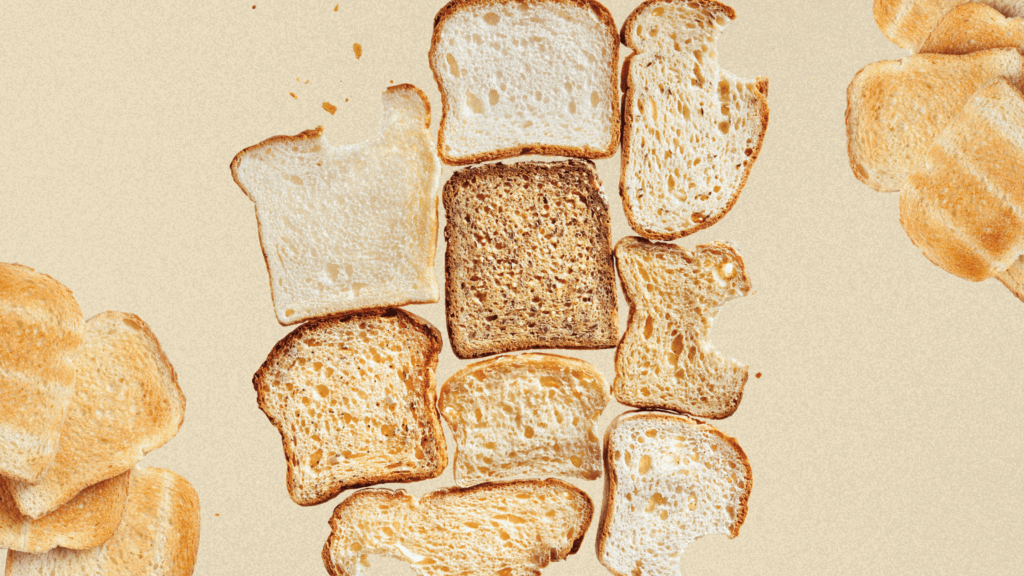
Only about 16% of American adults’ total intake of grains comes from whole grains—so the rest is further removed from its natural form. As with most foods, whether bread is good for you depends on which type, how it’s consumed, and what else you’re eating.
White bread vs. whole-wheat bread
An important distinction for health is whether bread is white or whole wheat.
White bread is made from flour that was refined, which strips away much of the grain’s nutrition. Whole-wheat bread leaves the grain intact, offering more fiber, vitamins, minerals, and other beneficial compounds. (“Whole grain” is a broader category that can include other grains besides wheat, such as oats, rye, and barley.) During digestion, these qualities slow down absorption of carbohydrates, which is better for metabolism than quickly digested white bread.
The U.S. Dietary Guidelines recommend whole grains, including bread, since studies link diets with these grains to lower rates of diabetes, heart disease, and premature death. “Research suggests whole grains can benefit blood sugar, cholesterol, and even weight,” says Stephanie Lopez-Neyman, a registered dietitian, public-health researcher, and former assistant professor at the University of Arkansas for Medical Sciences.