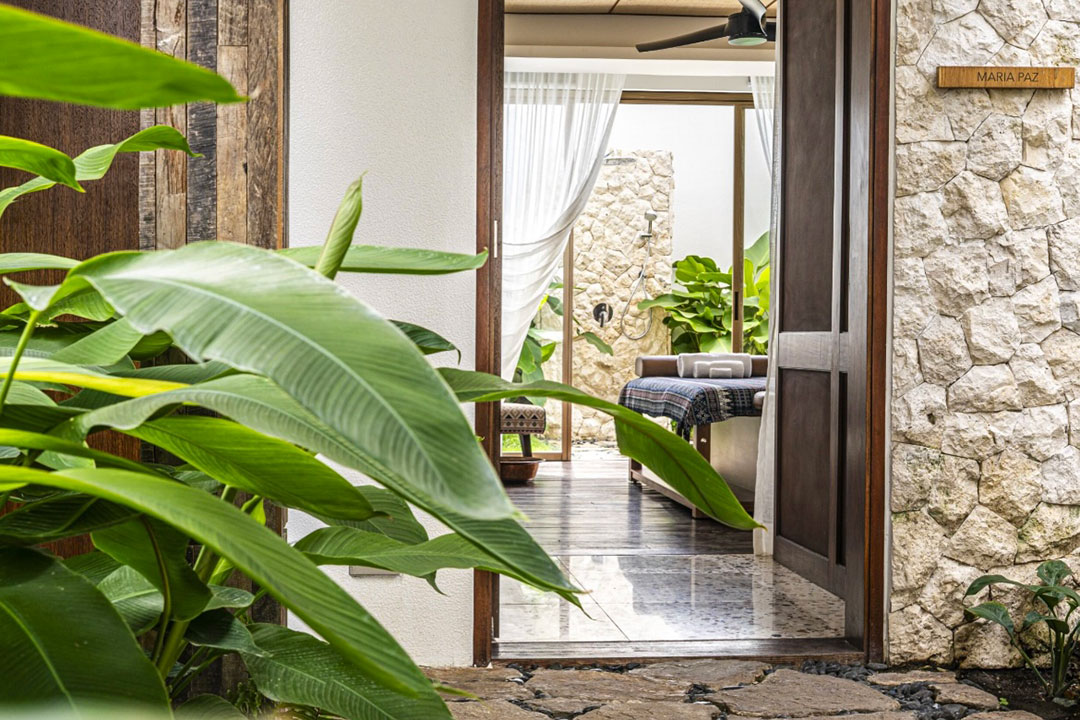
 South Palms Panglao
By Beatriz Marie D. Cruz, Senior Reporter
THE Philippines must upgrade its infrastructure and overhaul the regulation of its wellness industry to capture a slice of the wellness-tourist market, analysts said.
“We have a strong opportunity to differentiate by building a distinctly Filipino wellness brand anchored on indigenous healing traditions, local biodiversity, and community-based experiences,” Philippine Institute for Development Studies (PIDS) Senior Research Fellow John Paolo R. Rivera said via Viber.
Cyndy Tan Jarabata, president and chief executive officer of TAJARA Leisure & Hospitality Group, Inc., said traditional but modern wellness services are in demand from travelers.
“Global travelers actively seek active transformation, prevention and longevity programs — (which suits) our domestic market, which has seen explosive acceleration post-COVID,” she said in an e-mail in response to questions from BusinessWorld.
Ms. Jarabata noted opportunities to develop new active wellness resorts in key Philippine destinations.
The Philippines can position itself as lifestyle wellness destination by establishing the “Filipino brand of wellness,” she said.
“Our real edge lies in bridging the gap between tradition to a more pro-active integrated health destination, moving past physical fitness to address mental wellness, burnout, and sleep restoration,” Ms. Jarabata added.
Joey Roi Bondoc, director and head of research at Colliers Philippines, said the hotel industry can integrate traditional practices like hilot in their spa offerings.
He noted that beach and mountain properties can be upgraded with distinctly Filipino wellness facilities and services.
“We already see property firms anchoring their masterplanned projects on wellness and we believe that this is a smart move,” he said via Viber.
The Philippine wellness economy was valued at $47.3 billion in 2024, equivalent to 10.24% of gross domestic product that year, according to the Global Wellness Institute (GWI).
The personal care and beauty industry was the top segment of the overall market, accounting for $27.91 billion in 2024. It was followed by the healthy eating, nutrition, and weight loss segments ($7.18 billion); wellness tourism ($3.70 billion); and traditional and complementary medicine ($2.58 billion).
Asia-Pacific wellness tourism has grown increasingly competitive in recent years, with markets like Thailand and Indonesia leveraging their traditional healing practices and wellness destinations.
The Department of Tourism (DoT) plans to leverage Philippine traditional healing and wellness practices to stimulate demand.
“At the DoT, we are working fast and furious to build our Filipino brand of wellness. We want to focus on traditional Filipino healing,” Paulo Benito S. Tugbang, director of the DoT Office of Product Development, told reporters on the sidelines of an event last week.